The solar energy sector is growing faster than ever. Yet many manufacturers still struggle to fill their pipeline with qualified buyers. The problem is not production capacity or product quality – it is the absence of a reliable solar panel manufacturer’s B2B lead generation system that connects them directly to bulk buyers, EPC contractors, and institutional clients.
If your sales team still depends heavily on distributor networks and trade show referrals, this guide will show you a smarter path forward.
Why B2B Lead Generation Is Different for Solar Manufacturers
Solar is not a retail impulse purchase. Buyers in this space are procurement managers, construction developers, government agencies, and commercial facility operators. They conduct deep research before making contact.
Moreover, decision cycles are long. A single bulk order can take weeks – sometimes months – to close. That is why traditional marketing tactics rarely work here. You need a strategy built for B2B buying behaviour, not consumer shopping.
Understanding what SEO lead generation really means is the first step toward building that strategy correctly.
The Core Challenges Solar Manufacturers Face
Before building a solution, it helps to identify what is holding most manufacturers back. These are the four most common challenges:
- Over-dependence on distributors – Distributors reduce your pricing control and limit your margins. When their performance dips, your revenue follows.
- No direct demand engine – A website alone is not a sales system. Without an active funnel, you remain invisible to high-value buyers.
- Low-quality inquiries – Many manufacturers receive large volumes of inquiries from retail buyers or window shoppers. Meanwhile, real bulk buyers go elsewhere.
- Competitors winning online – Procurement managers search Google and B2B platforms daily. If your competitors rank there and you do not, they get the order.
Addressing these issues requires a multi-channel approach – not a single tactic.
Build a Keyword Strategy That Targets Real Buyers
Every strong B2B lead generation campaign starts with keywords. However, not all keywords are equal. Solar manufacturers must target terms that signal buying intent – not just research intent.
High-value B2B keyword types include:
- Supplier intent: “bulk solar panel supplier India,” “OEM solar manufacturing partner”
- Product-specific: “monocrystalline solar panels wholesale,” “bifacial solar modules bulk order”
- Location-based: “solar panel manufacturer Gujarat,” “solar module factory Rajasthan”
Understanding competitive keyword analysis helps you identify which terms your competitors already rank for – and where the gaps exist. Furthermore, targeting low-competition searches can help you gain early traction without outspending larger players.
SEO: Your Long-Term Demand Engine
Search engine optimization is the backbone of sustainable B2B lead generation. When a procurement manager searches for “solar panel manufacturers India,” your website must appear prominently. Otherwise, that potential order goes to a competitor.
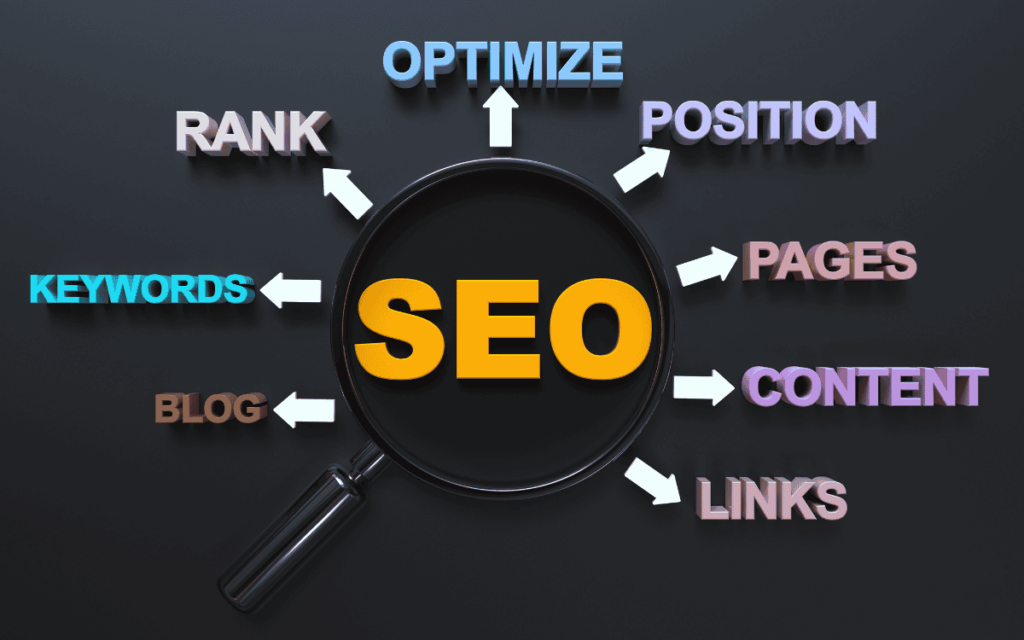
Effective SEO for solar manufacturers covers four key areas:
1. On-Page Optimization Every product page, category page, and landing page must be optimized with the right keywords, meta tags, and structured content. Thin or duplicate content will hurt your rankings.
2. Technical SEO Your website must load fast, work on mobile, and be easily crawled by search engines. A slow or broken site pushes buyers away before they even read your offer.
3. Content Marketing Publish educational content that answers the questions your buyers are asking – specification guides, comparison articles, installation guides, and case studies. This builds topical authority over time.
4. Local and Regional SEO Many B2B buyers prefer local or regional suppliers. Optimizing for state- and city-level keywords helps you capture those geographically targeted searches.
Exploring SEO services designed for organic traffic growth can help manufacturers understand what a structured SEO campaign actually delivers over 6–12 months.
Google Ads: Immediate Pipeline While SEO Compounds
SEO takes time. In the early months, Google Ads fills that gap and delivers qualified inquiries quickly. For solar manufacturers, search ads work best when campaigns are tightly structured around buyer-intent keywords.
Key best practices for B2B solar Google Ads:
- Use exact and phrase match keywords to avoid wasting budget on irrelevant clicks
- Exclude retail buyers using negative keywords like “home solar,” “1kW solar,” and “residential installer”
- Write ads that speak to bulk buyers – mention minimum order quantities, certifications, and manufacturing capacity
- Send traffic to dedicated landing pages – not your homepage
Additionally, LinkedIn Ads are valuable for reaching procurement professionals and facility managers in corporate and government sectors. Retargeting campaigns re-engage visitors who browsed your site but did not convert.
Build a High-Converting B2B Landing Page
Your landing page is where ad traffic either becomes a lead or bounces. For solar manufacturers, generic websites consistently underperform. You need a purpose-built B2B landing page that communicates credibility and capacity immediately.
A strong solar manufacturer landing page includes:
- Manufacturing capacity and specifications – MW production capacity, panel wattage range, cell technology
- Certifications and quality standards – BIS, IEC, ISO, ALMM listing
- Client logos and testimonials – proof that serious buyers trust you
- Clear B2B call to actions – bulk inquiry forms, WhatsApp contact, direct call options
- Case studies or project references – institutional or commercial projects completed
Conversion-focused design is not just about aesthetics. It is about removing friction between a buyer’s interest and their decision to contact you.
Lead Qualification: Protect Your Sales Team’s Time
Generating inquiries is only half the battle. The other half is making sure your sales team focuses only on genuine bulk buyers.
Without a qualification layer, your team wastes hours chasing retail buyers, price shoppers, and non-decision-makers. Therefore, implement these qualification mechanisms:
- Smart inquiry forms – ask for order quantity, timeline, product type, and end-use
- WhatsApp automation – instantly respond to new inquiries with qualification questions
- CRM integration – route leads based on size and buyer type, not just first-come-first-served
- Lead scoring – prioritize leads based on order value signals and response behaviour
Understanding how digital marketing drives manufacturing sales leads can help you see how qualification fits into the broader revenue funnel.
LinkedIn and B2B Social Media for Solar Manufacturers
LinkedIn is the most effective social platform for reaching B2B decision-makers. For solar manufacturers, it provides direct access to:
- EPC project managers
- Commercial real estate developers
- Government renewable energy procurement officers
- Industrial facility managers
Effective LinkedIn strategies include regular company updates, thought leadership posts, and targeted InMail campaigns to key decision-maker personas. Moreover, sharing project case studies and certifications builds credibility over time.
Beyond LinkedIn, industry directories and B2B marketplaces such as IndiaMART, TradeIndia, and Alibaba also play a role in generating inbound inquiries. However, these platforms work best when combined with your own owned marketing channels.
Content That Builds Authority and Trust
B2B buyers in the solar sector conduct significant research before making contact. Therefore, your content must educate, inform, and build confidence in your manufacturing credentials.

Recommended content types for solar manufacturers:
- Technical specification guides – wattage, efficiency ratings, degradation rates, temperature coefficients
- Comparison content – monocrystalline vs. polycrystalline vs. bifacial panels
- Project case studies – before-and-after results for institutional or commercial installations
- Regulatory and policy updates – ALMM listings, BIS certification requirements, government incentive schemes
- Buyer’s guides – how to evaluate a solar panel manufacturer before placing a bulk order
This kind of content targets buyers at every stage of their research journey. In addition, it signals to search engines that your site is an authoritative resource in the solar manufacturing space.
Understanding what elements are foundational for SEO with AI is increasingly relevant as buyers use AI-powered search tools to shortlist suppliers.
Email Marketing and Lead Nurturing
Not every inquiry converts immediately. In B2B solar sales, many buyers are evaluating multiple suppliers over a 4-12 week period. Email nurturing keeps you top of mind throughout that decision process.
A structured email nurture sequence for solar manufacturers might include:
- Welcome email – introduce your manufacturing facility, certifications, and core offerings
- Case study email – share a relevant project success story
- Product deep dive – technical comparison of your panel range
- Proof and trust email – client testimonials, industry certifications, audit results
- Direct offer email – invite the buyer to schedule a call or request a sample
Segmenting your list by buyer type – EPC contractor vs. institutional client vs. dealer – allows you to send more relevant messages. This increases open rates and shortens the sales cycle.
How SurgeAIO Can Help in Terms of SEO
SurgeAIO brings a data-driven approach to SEO for solar panel manufacturers who want to generate consistent B2B leads from organic search.
Here is how SurgeAIO adds value across every stage of the lead generation process:
Keyword Research and Gap Analysis SurgeAIO identifies the exact B2B keywords your buyers use – and maps them against what your competitors already rank for. This reveals clear opportunities to capture search demand your rivals are missing.
Content Optimization Every page on your website – from product pages to landing pages – gets optimized using SurgeAIO’s content analysis tools. This ensures your pages match search intent and rank for high-value queries.
AI Visibility and GEO As more buyers use ChatGPT, Gemini, and Perplexity to research suppliers, appearing in AI-generated answers becomes a competitive advantage. SurgeAIO helps manufacturers optimize for AI visibility – so your brand gets referenced when buyers ask AI tools for solar panel manufacturer recommendations.
Competitor Tracking SurgeAIO monitors competitor rankings, backlink profiles, and content strategies in real time. This allows you to react quickly when competitors gain ground and capitalize when they fall behind.
Performance Reporting Clear dashboards show which keywords drive traffic, which pages generate leads, and where drop-offs occur in the funnel. Furthermore, SurgeAIO’s content performance data tools tie organic traffic directly to business outcomes – not just vanity metrics.
For manufacturers serious about building a long-term SEO-driven lead generation engine, SurgeAIO provides the infrastructure, insights, and execution support to make it happen.
Measuring What Matters
Every lead generation campaign must be tied to measurable outcomes. However, many manufacturers track the wrong metrics. Impressions and click volumes are useful – but they do not tell you whether your marketing is generating real business.
Focus on these metrics instead:
- Qualified leads generated per month – filtered out retail buyers
- Cost per qualified lead – what you pay per genuine bulk buyer inquiry
- Lead-to-conversation rate – how many inquiries become active sales conversations
- Sales cycle length – how long from first contact to order placement
- Revenue influenced by organic traffic – the business value of your SEO investment
Tracking AI visibility metrics is also becoming important as AI-generated answers increasingly influence which suppliers buyers shortlist.
Final Thoughts
Solar panel manufacturers’ B2B lead generation is not about running a few ads or publishing occasional blog posts. It is about building a connected system – from search visibility to landing page conversion to lead qualification to sales handoff.
The manufacturers who invest in this infrastructure today will build a sustainable pipeline that does not depend on distributors, trade events, or tender cycles. Instead, they will attract qualified bulk buyers directly – on their own terms.
Start by auditing where your current process breaks down. Then build each stage deliberately, measure what matters, and optimize continuously.
The solar market is growing. The question is whether your pipeline is growing with it.
Frequently Asked Questions
Q1: How long does it take to see results from B2B lead generation for solar manufacturers?
Google Ads typically delivers qualified inquiries within 2-4 weeks of launch. SEO builds compounding organic traffic over 3-6 months. Most manufacturers see a measurable improvement in inquiry quality within the first 4-6 weeks of running both channels together.
Q2: What types of buyers can digital marketing help solar manufacturers reach?
A well-structured campaign can reach EPC contractors, institutional purchasers (hospitals, factories, housing projects), government project consultants, commercial developers, and solar dealers seeking manufacturer partnerships. Smart qualification filters ensure your team only engages with bulk buyers and decision-makers.
Q3: Is SEO really useful for a B2B manufacturer?
Absolutely. Procurement managers and project developers actively search Google for supplier options. If your website ranks for the right keywords, you appear in front of buyers who are already in research or evaluation mode – without paying for every click.
Q4: Do I need a new website to start generating B2B leads?
Not necessarily. A dedicated B2B landing page – purpose-built for paid traffic and conversions – can be deployed alongside your existing website. This approach is faster and typically outperforms sending ad traffic to a generic homepage.
Q5: How is lead quality controlled in a digital campaign?
Smart multi-step inquiry forms capture order quantity, timeline, and buyer type before your sales team is contacted. WhatsApp automation adds a qualification layer. Weekly reports then break down lead volume, lead quality, cost per qualified inquiry, and campaign performance.
Q6: What makes solar B2B lead generation different from other industries?
Solar B2B sales involve high-ticket orders, long decision cycles, and technical evaluation criteria. Buyers compare certifications, manufacturing capacity, product efficiency, and after-sales support before shortlisting suppliers. Your marketing must address all of these factors – not just generate clicks.
