Getting traffic to your website is one thing. Turning that traffic into real business leads is another.
That’s exactly what SEO lead generation is designed to do. It bridges the gap between visibility and revenue – helping you attract the right people at the right moment.
In this guide, you’ll learn what SEO lead generation is, why it matters, and how to build a strategy that actually converts. If you’re wondering whether you need SEO for your website, this article will give you a clear answer.
What Is SEO Lead Generation?
SEO lead generation is the process of attracting and converting potential customers through search engine optimization strategies. By optimizing your website and content for search engines, you increase organic traffic and generate high-quality leads.
In simpler terms – when someone searches “best plumber near me” or “top SEO agency,” they’re already looking for a solution. SEO puts your business in front of that person at the exact right moment.
SEO involves optimizing website content using targeted keywords, images, and web copy to enhance visibility and engagement. The leads you generate this way cost far less than paid ads. Moreover, they tend to be more qualified.
Think of SEO lead generation as your 24/7 sales engine. It works while you sleep, attracts prospects who are actively searching, and delivers consistent results over time.
Why Does SEO Lead Generation Matter?
Many businesses still rely heavily on cold outreach or paid ads. However, both of those tactics have a major flaw – the moment you stop spending, the leads stop coming.
SEO is different. It builds compounding value over time.
A recent study found SEO to be the highest-ROI online lead generation strategy available to marketers in 2025. The reason? People trust search engines. When your business ranks on page one, it immediately gains credibility.
Here’s why SEO lead generation deserves a central place in your strategy:
- Consistent, qualified traffic – You attract people who are actively searching for what you offer
- Lower cost per lead – Organic traffic doesn’t require ongoing ad spend
- Builds long-term authority – Rankings compound over months and years
- Works across industries – From plumbing to SaaS to manufacturing
- Supports the full sales funnel – From awareness to conversion
Understanding what is SEO and GEO are together will help you see the full picture of modern search visibility.
How Does SEO Lead Generation Work?
SEO lead generation works through a clear process. You optimize your website so search engines rank it higher. Higher rankings bring more organic visitors. Those visitors convert into leads through calls-to-action, forms, and landing pages.
SEO Lead Generation works by using various SEO techniques such as keyword research, on-page optimization, content creation, and link building to improve your website’s ranking on search engine results pages (SERPs). Higher rankings lead to more organic traffic, which can then be converted into leads through effective calls-to-action and landing pages.
The process follows these core stages:
Stage 1 – Attract: Rank for keywords your target audience is searching. This brings the right people to your website.
Stage 2 – Engage: Deliver content that solves their problem. This builds trust and keeps them on your site longer.
Stage 3 – Convert: Guide them toward a clear next step – a contact form, free consultation, or lead magnet.
Therefore, every stage of SEO must be intentional. Traffic without conversion is just vanity. You want leads that turn into customers.
Understanding Search Intent in SEO Lead Generation
Not all searches are equal. Some people are just curious. Others are ready to buy. Understanding the difference is critical for generating quality leads.
Search intent describes the purpose behind a search query. Some users seek information, others compare solutions, and some look to purchase immediately. Treating all search queries equally results in low-quality traffic that rarely converts.
There are four main types of search intent:
- Informational – “What is SEO lead generation?” (learning stage)
- Navigational – “SurgeAIO SEO tools” (looking for a brand)
- Commercial – “Best SEO agencies for small business” (comparing options)
- Transactional – “Hire SEO consultant for lead generation” (ready to act)
Transactional searches indicate readiness to act. Content targeting transactional intent should clearly present services, benefits, and calls to action. This is where SEO directly converts traffic into qualified leads and revenue.
In addition, you should optimize for commercial intent keywords. These attract people in the comparison stage – they’re close to making a decision. Aligning your content with AI visibility optimization techniques can further sharpen how you capture these high-intent searchers.
Key Elements of an Effective SEO Lead Generation Strategy
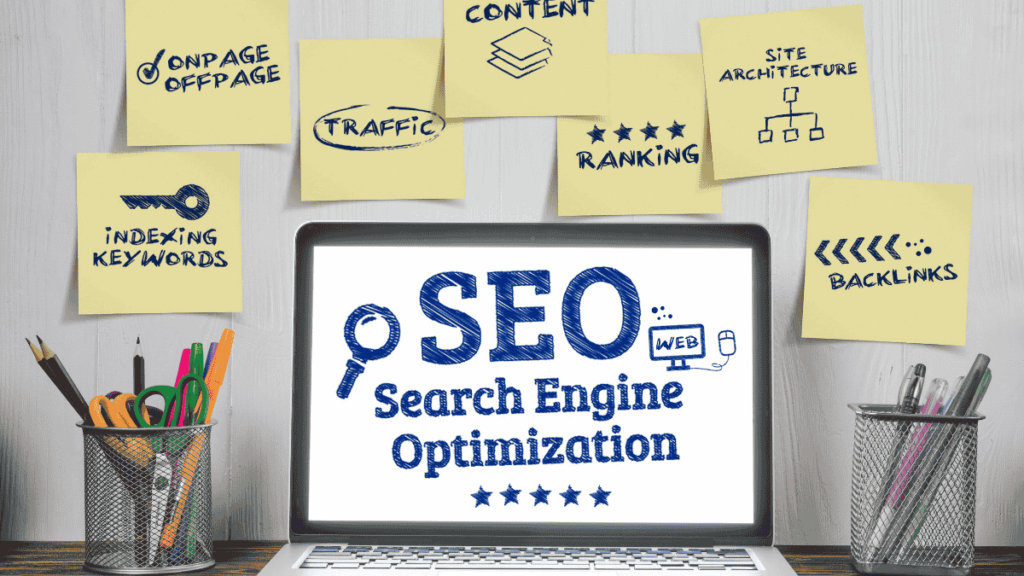
1. Keyword Research Focused on Buyer Intent
Start with keywords that your ideal customers actually search. Don’t just chase high-volume terms. Instead, focus on terms that signal buying intent.
Keyword research is a critical step in attracting the right audience to your website. However, not all keywords will generate leads. For example, “what is digital marketing” attracts beginners. “Digital marketing agency for manufacturers” attracts buyers.
Understand who you’re targeting. Build keyword lists around their pain points, goals, and decision-making language. This makes your content work harder for lead generation.
2. High-Quality, Consistent Content
Content is the engine of SEO lead generation. However, publishing mediocre content won’t move the needle.
Publishing new content on a regular basis works not just because each new piece is another opportunity to use important keywords in the title, but because doing so consistently for four to six months gains the publisher a bonus in authority.
The most effective content answers real questions. It solves specific problems. Moreover, it positions your brand as the go-to expert in your niche.
Focus on:
- Long-form guides (2,000+ words) that thoroughly cover a topic
- Case studies and success stories that build credibility
- FAQs and glossary pages that capture informational searches
- Local landing pages that attract nearby buyers
3. On-Page SEO Optimization
Even great content needs proper optimization to rank. On-page SEO ensures search engines understand what your page is about.
Key on-page elements include:
- Title tags – Include your primary keyword naturally
- Meta descriptions – Write compelling summaries that earn clicks
- Header tags (H1–H3) – Structure content clearly for readers and crawlers
- Internal linking – Connect related pages to pass authority and improve navigation
- Image alt text – Describe images with relevant keywords
Understanding keywords important for SEO will help you prioritize what to optimize first.
4. Technical SEO Foundations
A slow, broken, or mobile-unfriendly website kills your lead generation efforts. Technical SEO ensures your website performs at its best.
Ensure your website is technically sound, with fast loading times and mobile-friendly design, to enhance user experience and improve search engine rankings.
Core technical factors to address:
- Page speed – Fast-loading pages reduce bounce rates
- Mobile optimization – Over 60% of searches happen on mobile
- HTTPS security – Google prioritizes secure websites
- Clean site architecture – Easy crawling for search bots
- No broken links or duplicate content
5. Conversion Rate Optimization (CRO)
Ranking high is only half the job. You also need your website to convert visitors into leads.
Use a clean, professional design that makes it easy for visitors to find information and take action. Include clear and compelling calls-to-action (CTAs) on your pages to guide visitors toward conversion.
Strong CTAs make a massive difference. Place them strategically throughout your pages – in the hero section, within content, and at the end of blog posts.
Also, consider:
- Contact forms with minimal fields
- Free consultations or audits as lead magnets
- Exit-intent popups to capture leaving visitors
- Live chat to engage visitors in real time
6. Link Building for Authority
Backlinks tell search engines your site is trustworthy and authoritative. More quality backlinks mean higher rankings – and more leads.
Focus on earning links from relevant industry publications, guest posts, and PR mentions. Over time, this compounds your SEO lead generation results significantly.
7. Local SEO for Location-Based Leads
If you serve local customers, local SEO is a powerful lead driver. Optimizing your Google Business Profile helps you appear in local search results and map packs.
A hardscaping company using SEO can use its first-page ranking to reach potential clients in its area. Local businesses that invest in AI local SEO see significantly better visibility in location-based searches.
SEO Lead Generation Across the Sales Funnel
SEO lead generation isn’t just for bottom-of-funnel buyers. It works across every stage of the customer journey.

To generate leads from search, your SEO efforts need to integrate with your overall marketing funnel strategy. You should output content that addresses your prospects’ needs, building trust and guiding them throughout the sales cycle.
Here’s how to align content with each funnel stage:
| Funnel Stage | Intent | Content Type |
| Top of Funnel (TOFU) | Awareness | Blog posts, guides, FAQs |
| Middle of Funnel (MOFU) | Consideration | Case studies, comparison pages |
| Bottom of Funnel (BOFU) | Decision | Service pages, testimonials, CTAs |
Ultimately, the goal is to guide each visitor from curiosity to conversion. Each piece of content should serve a specific purpose in that journey.
Common SEO Lead Generation Mistakes to Avoid
Even experienced marketers make these errors. Avoid them to get better results faster.
Targeting the wrong keywords – High traffic doesn’t always mean high conversions. Focus on intent, not just volume.
Ignoring technical SEO – A slow or broken site will tank your rankings regardless of content quality.
No clear CTAs – If visitors don’t know what to do next, they’ll leave without converting.
Publishing without strategy – Random content doesn’t build authority. Every piece should serve a specific keyword and intent.
Not tracking results – Without monitoring and analyzing your SEO efforts, you won’t know if they’re impactful lead generators. Use Google Analytics and Google Search Console consistently.
Also, understanding whether AI-generated content is bad for SEO will help you make smarter content decisions.
How SurgeAIO Can Help in Terms of SEO
SEO lead generation requires consistency, strategy, and the right tools. That’s where SurgeAIO comes in.
SurgeAIO is built for businesses that want to generate leads through search – not just traffic. Here’s how it supports your SEO lead generation efforts:
AI-Powered SEO Analysis – SurgeAIO’s AI SEO analyzer audits your website, identifies technical issues, and surfaces opportunities faster than manual review.
Keyword & Content Strategy – SurgeAIO helps you identify high-intent keywords and build content strategies that attract buyers, not just browsers.
AI Visibility Tracking – Beyond traditional SEO, SurgeAIO tracks how your brand appears in AI-generated answers and AI overviews. This is increasingly important as AI-driven search reshapes how leads discover businesses.
GEO Optimization – SurgeAIO helps you optimize for generative engine optimization (GEO), ensuring your content is cited by AI tools like ChatGPT and Perplexity – a new and growing channel for lead generation.
Reporting & ROI Tracking – Clear dashboards show you which pages are generating leads, what keywords are driving traffic, and where your strategy needs adjustment.
Whether you’re a local service business, B2B company, or e-commerce brand, SurgeAIO gives you the tools to turn search rankings into real revenue.
Final Thoughts
SEO lead generation is one of the most powerful, cost-effective ways to grow your business online. It attracts the right people, builds trust over time, and converts organic visitors into real customers.
The key is to take a strategic approach. Focus on search intent. Create content that answers real questions. Optimize your technical foundation. And track your results consistently.
Moreover, the landscape is evolving. AI-powered search is changing how people discover businesses. That means your SEO lead generation strategy must evolve too – incorporating GEO, AI visibility, and structured content that AI tools can surface and cite.
Start with the fundamentals. Build consistently. And let tools like SurgeAIO help you stay ahead of the curve – so your website becomes your most powerful lead generation asset.
Frequently Asked Questions (FAQs)
What is SEO lead generation in simple terms?
SEO lead generation is the process of using search engine optimization to attract potential customers organically. Instead of paying for ads, you rank your website in search results so qualified buyers find you naturally.
How long does SEO lead generation take to work?
SEO typically takes 3 to 6 months to show meaningful results. However, the leads you generate through SEO tend to have a lower cost and higher lifetime value than paid channels.
Is SEO better than paid ads for lead generation?
Both have their place. However, SEO delivers compounding returns over time. Our internal data shows average organic revenue increases of $385,000 in the first year, $1.2 million in the second year, and $3.3 million in the third year for businesses that invest consistently in SEO.
What types of businesses benefit most from SEO lead generation?
Every business benefits. However, service-based businesses, B2B companies, local businesses, and e-commerce stores see especially strong results from SEO lead generation strategies.
Do I need technical SEO for lead generation?
Yes. Technical SEO ensures search engines can crawl and index your site properly. Without it, even great content may not rank – which means fewer leads.
How do AI tools affect SEO lead generation?
AI search tools like ChatGPT and Google’s AI Overviews are changing how people find information. Understanding what is LLM in SEO will help you adapt your strategy for this new landscape.
What’s the difference between SEO and GEO for lead generation?
SEO focuses on ranking in traditional search engines. GEO (Generative Engine Optimization) focuses on appearing in AI-generated answers. Both are now essential for a complete lead generation strategy.
