B2B buyers rarely decide after a single ad or one email. They search, read, compare, forward links to colleagues and often take weeks to respond. A partner that handles only one channel therefore leaves gaps. The best B2B marketing agencies integrated strategy paid organic email campaigns depend on is one where every channel supports the others, and where results are measured as a whole rather than in silos.
Instead of handing you a ranked list that changes every quarter, this guide explains what integration really means, which capabilities separate strong agencies from average ones, and how to evaluate any partner against your goals and budget.
What “Integrated” Actually Means in B2B Marketing
Many agencies claim to offer “full-service” marketing. In practice, that often means separate teams running separate campaigns that never share data. A truly integrated approach works differently.
An integrated B2B strategy means:
- One shared goal, such as qualified pipeline, rather than separate targets for each channel
- Shared audience insight, so paid, organic and email all speak to the same buyers
- Connected messaging, so a prospect sees a consistent story everywhere
- Unified reporting, which shows how channels influence each other
- Coordinated timing, so campaigns reinforce rather than compete
When these pieces connect, each channel becomes more efficient. When they don’t, budget gets wasted on duplicated effort and mixed messages.
Why B2B Buyers Need Multiple Touchpoints
B2B purchases involve several people, long evaluation periods and significant risk. A buyer might discover a company through a search result, see a retargeting ad a week later, download a guide and then receive a nurture email before ever speaking to sales.
Consequently, no single channel carries the whole journey. Paid media creates fast visibility. Organic search builds trust and compounding traffic. Email turns interest into conversations. Together, they cover awareness, consideration and decision.
The Three Channels and Their Roles
Paid Media: Speed and Precision
Paid search, paid social and display advertising generate visibility quickly. They work well for launching products, testing messages and reaching specific job titles or industries.
However, paid traffic stops the moment spending stops. It also grows more expensive as competition rises. For that reason, strong agencies treat paid media as an accelerator, not the foundation.
Organic Search and Content: Trust and Compounding Growth
Organic content earns visibility without paying per click. Over time, strong articles, comparison pages and resource hubs keep attracting qualified visitors at a falling cost per lead.
This channel rewards patience. Understanding whether SEO is organic or paid helps teams budget for it correctly, and knowing whether SEO counts as advertising or marketing clarifies how to report it alongside other channels.
Email: Nurture and Conversion
Email remains one of the most reliable B2B channels because you own the list. It nurtures leads who aren’t ready to buy, shares proof points and keeps your brand present during long sales cycles.
Email also amplifies the other two channels. It brings readers back to new content, supports webinar promotion and re-engages visitors who first arrived through paid or organic search.
How the Three Channels Work Together
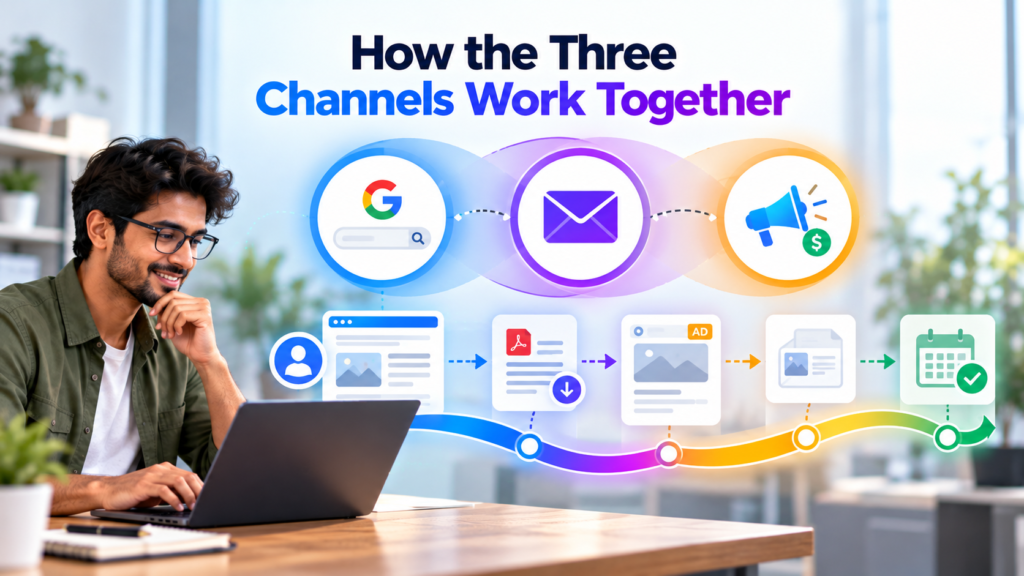
The real value appears where the channels overlap. Consider this simple example:
- A buyer searches for a solution and finds an in-depth article through organic search
- They download a guide and join the email list
- A paid retargeting ad reminds them of the guide a week later
- A nurture email shares a case study, and they book a demo
No single channel closed that deal. Each one handled a different stage. An integrated agency designs this flow on purpose, rather than hoping the pieces connect by luck.
What the Best B2B Marketing Agencies Do Differently
Strong agencies share several habits. When you evaluate a partner, look for these traits.
1. They Start With Strategy, Not Tactics
The best agencies ask about your buyers, sales cycle, deal size and competitors before proposing channels. A proposal that opens with a list of services rather than questions about your business should raise concern.
2. They Tie Marketing to Pipeline
Clicks and impressions don’t pay salaries. Strong partners measure marketing-qualified leads, sales-qualified leads, pipeline and revenue influenced. They also work closely with your sales team, so lead definitions match reality.
3. They Understand Your Competitive Landscape
Before building anything, capable agencies run a thorough competitive analysis of keywords and review how rivals position themselves. That research shows where opportunity exists and where competition is too fierce to win cheaply.
4. They Use the Right Tools
B2B marketing depends on solid data and tools. Knowing what separates top SEO platforms built for B2B audiences helps you judge whether an agency’s technology stack is genuinely suited to long, complex buying cycles.
5. They Report Transparently
Good reporting is plain and honest. It shows what worked, what didn’t and what happens next. It also connects activity to outcomes. Regular reviews of content performance data should be standard, not an optional extra.
Types of B2B Marketing Agencies
Agencies come in several shapes, and the right one depends on your size and needs.
| Agency Type | Strength | Best For |
| Full-service integrated agency | Coordinates every channel under one team | Mid-size and larger companies |
| Specialist (SEO, paid or email) | Deep expertise in one channel | Teams filling a specific gap |
| Boutique B2B agency | Close attention and senior involvement | Growth-stage companies |
| Performance-focused agency | Strong measurement and optimization | Teams with clear lead targets |
| Industry-specific agency | Deep sector knowledge | Regulated or highly technical fields |
Many companies end up combining a lead agency with one or two specialists. That can work well, provided someone owns the overall strategy and reporting.
How to Evaluate B2B Marketing Agencies Step by Step
Step 1: Define Your Goals
Decide what success looks like before speaking with any agency. Examples include more qualified demos, shorter sales cycles or lower cost per opportunity. Clear goals make proposals easier to compare.
Step 2: Ask for Relevant Experience
Request examples from companies with similar buyers, deal sizes and sales cycles. A strong consumer campaign says little about your ability to sell enterprise software to a committee.
Step 3: Probe the Integration
Ask exactly how paid, organic, and email will share data and messaging. Ask who owns cross-channel reporting. Vague answers usually mean the channels run separately behind the scenes.
Step 4: Review Their Own Marketing
An agency should practice what it sells. Check whether their site ranks for relevant terms, whether their content shows real expertise and whether their own email nurture feels thoughtful.
Step 5: Understand Pricing and Scope
Fees vary widely by agency size and scope. Reviewing typical SEO service costs beforehand helps you spot proposals that are unrealistically cheap or inflated.
Step 6: Decide Between In-House and Agency
Some teams build internal marketing functions, while others rely on partners. Weighing the basics of hiring an SEO company against building internal skills clarifies where outside help adds the most value.
Sample Budget Split for an Integrated Strategy
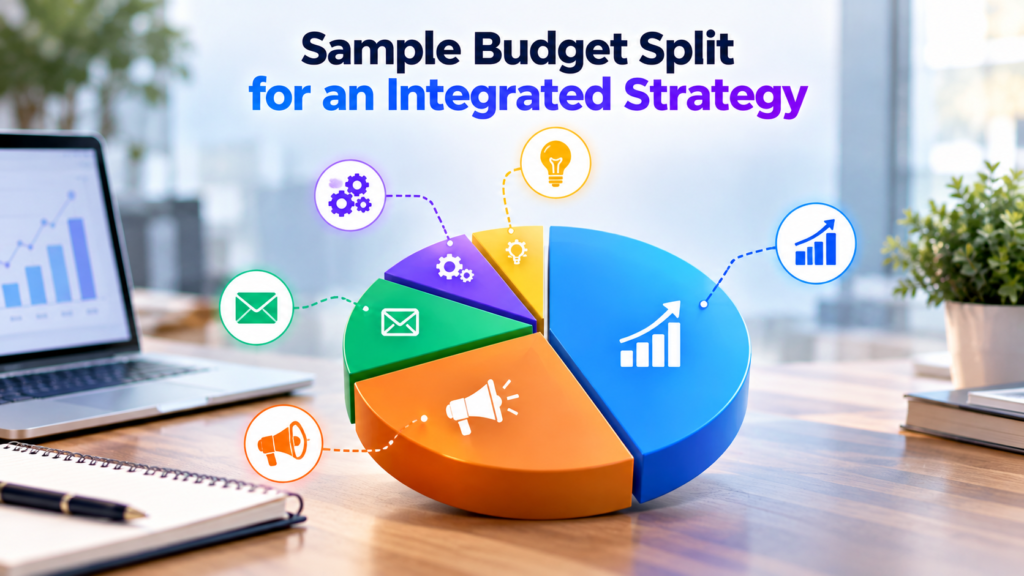
There is no universal formula, but a balanced starting point might look like this for a growth-stage B2B company:
- Organic search and content: a significant share, since it compounds over time
- Paid media: a moderate share for speed and testing
- Email and marketing automation: a smaller share, since it multiplies the other channels
- Analytics and tooling: a small but essential share
- A flexible reserve for testing new ideas
Adjust the proportions based on your sales cycle, competition and growth stage. Younger companies often lean more on paid media at first, then shift toward organic and email as their content library grows.
Organic Growth Matters Most for Software Companies
Software and subscription businesses face expensive paid acquisition and long evaluation cycles. For them, organic traffic strategies can reduce acquisition costs substantially over time, which also stretches paid budgets further.
Preparing for AI-Driven Discovery
B2B buyers increasingly ask AI tools to recommend vendors and compare solutions. That changes how brands earn visibility. The best agencies now plan for it. Understanding how to rank in AI Overviews helps ensure your brand appears accurately when buyers research through AI-powered search rather than traditional results alone.
Red Flags to Avoid
- Guaranteed rankings or leads, which no honest agency can promise
- Channel silos, where paid, organic and email teams never share data
- Vanity metrics such as impressions without pipeline context
- Long, rigid contracts with vague deliverables
- Generic proposals that ignore your buyers and sales cycle
- Heavy reliance on low-quality automated content, which can damage rankings and credibility
Common Mistakes When Choosing an Integrated Partner
- Hiring for price alone instead of fit
- Skipping the conversation about sales alignment
- Expecting organic results on a paid-media timeline
- Treating email as an afterthought
- Failing to define lead quality in advance
- Neglecting to review results monthly
Practical Checklist for Choosing an Agency
- Define goals tied to pipeline, not just traffic
- Confirm experience with similar B2B buyers and sales cycles
- Ask how paid, organic, and email will share data and messaging
- Review the agency’s own search visibility and content quality
- Clarify pricing, contract length and deliverables
- Require transparent monthly reporting
- Ask how they are adapting to AI-driven search
How SurgeAIO can help in terms of SEO
Organic search is the channel that makes every other channel cheaper. When strong content ranks, paid campaigns convert better, email lists grow faster, and sales teams enter warmer conversations. SurgeAIO focuses on building that organic foundation for B2B companies, so integrated campaigns have something durable to build on.
That means research grounded in real buyer intent, content built for long sales cycles and reporting that connects visibility to qualified leads. Whether you work with a full-service agency or manage channels yourself, SurgeAIO helps ensure your search presence supports the rest of your marketing mix.
Frequently Asked Questions
1. What makes the best B2B marketing agencies’ integrated strategy paid organic email approach effective?
Integration lets each channel support the others. Paid media creates speed, organic search builds trust, and email nurtures leads, so the combined results exceed what separate campaigns would deliver.
2. Should a B2B company hire one agency or several specialists?
Either can work. One integrated agency simplifies coordination, while specialists offer deeper expertise. If you use several partners, make sure someone owns overall strategy and reporting.
3. How long does an integrated B2B strategy take to show results?
Paid media can produce results within weeks, while organic search and email nurture usually take several months. Most teams see compounding benefits after the first two quarters.
4. How much should a B2B company spend on marketing agencies?
Costs vary widely by scope and agency size. Define goals first, compare proposals on deliverables rather than price alone and review typical service costs before committing.
5. What metrics should B2B marketers track across channels?
Focus on qualified leads, pipeline influenced, cost per opportunity and conversion rates, alongside channel-level data such as organic traffic, paid return and email engagement.
