If you’ve ever searched for ways to grow your business online, you’ve probably come across the term “SEO.” And right after that, you’ve likely wondered – how does an SEO company work, and is it worth hiring one?
The short answer is yes. But understanding what these companies actually do helps you make smarter decisions. In this guide, we break it all down clearly.
What Is an SEO Company?
An SEO company is a team of specialists who help your website rank higher on search engines like Google. They use a mix of technical, creative, and strategic work to drive organic (unpaid) traffic to your site.
However, SEO isn’t a one-time fix. It’s an ongoing process that requires consistent effort, analysis, and adaptation. A good SEO company stays ahead of algorithm updates and adjusts your strategy accordingly.
These companies serve businesses of all sizes – from local shops to large enterprises. Their core goal is simple: get the right people to find your website.
How Does an SEO Company Work? The Core Process
Understanding the process helps you see exactly where your investment goes. Therefore, let’s break it down step by step.
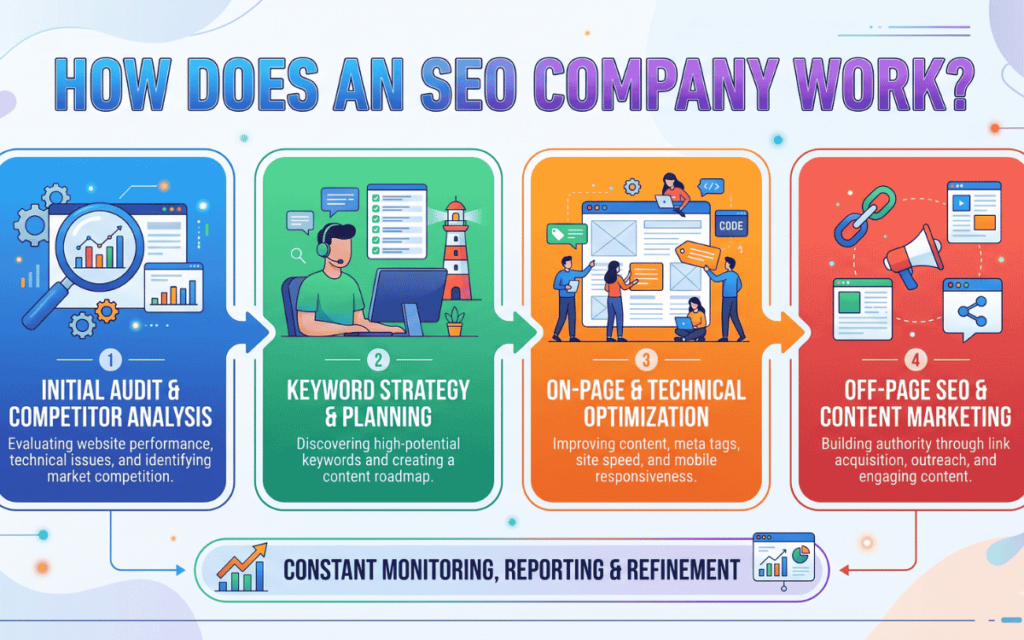
1. Website Audit and Analysis
The first thing any SEO company does is audit your current website. This involves examining:
- Site speed and performance
- Technical errors (broken links, crawl issues)
- Existing keyword rankings
- Backlink profile
- Content quality and structure
This audit reveals what’s working and what’s holding you back. Moreover, it creates a baseline to measure future progress.
Many businesses are surprised to discover major technical issues during this phase. Fixing these alone can produce significant ranking improvements.
2. Keyword Research and Strategy
After the audit, the SEO company dives into keyword research. This is where they identify the exact phrases your potential customers type into Google.
An effective keyword gap strategy ensures you’re targeting terms your competitors may be missing. It’s not just about finding high-volume keywords – it’s about finding the right ones.
Good keyword research considers:
- Search volume – how many people search for it monthly
- Search intent – what users actually want to find
- Competition level – how hard it is to rank for the term
- Business relevance – whether ranking for it drives actual revenue
In addition, SEO companies often focus on long-tail keywords. These are more specific phrases with lower competition but higher purchase intent. They convert better and are easier to rank for early on.
3. On-Page Optimization
Once keywords are identified, the team optimizes your web pages. On-page SEO includes everything visible on your website that affects rankings.
This includes:
- Title tags and meta descriptions
- Header structure (H1, H2, H3)
- Keyword placement throughout content
- Image alt text
- Internal linking structure
- URL optimization
Understanding what elements are foundational for SEO with AI is becoming increasingly important. Search engines now use AI to evaluate content quality, not just keyword presence.
Therefore, top SEO companies go beyond keyword stuffing. They focus on creating content that genuinely satisfies user intent.
4. Technical SEO
Technical SEO is the behind-the-scenes work that ensures search engines can properly crawl and index your site. It’s often overlooked but absolutely critical.
Technical SEO tasks include:
- Fixing crawl errors in Google Search Console
- Optimizing site speed and Core Web Vitals
- Implementing structured data (schema markup)
- Ensuring mobile-friendliness
- Setting up proper XML sitemaps
- Managing canonical tags to avoid duplicate content
Many business owners focus only on content and ignore technical SEO. However, even the best content won’t rank if search engines can’t properly access and index it.
5. Content Creation and Optimization
Content is the backbone of any successful SEO strategy. SEO companies either create new content or optimize your existing content to rank for target keywords.
Quality content:
- Answers specific user questions
- Demonstrates expertise and authority
- Uses natural keyword placement
- Includes internal and external links
- Is well-structured and easy to read
Moreover, content isn’t just blog posts. It includes service pages, landing pages, FAQs, case studies, and more. Each piece serves a specific purpose in your overall strategy.
Understanding how keywords are important for SEO helps you see why content creation is data-driven, not guesswork. Every article, page, or post is built around what your audience is actively searching for.
6. Link Building
Backlinks – links from other websites to yours – remain one of Google’s strongest ranking signals. An SEO company actively builds your backlink profile through various outreach strategies.
Common link-building methods include:
- Guest posting on industry blogs
- Digital PR and press coverage
- Broken link building
- Resource page outreach
- Competitor backlink analysis
Choosing the right backlink companies for SEO matters enormously. Low-quality or spammy links can actually hurt your rankings. Reputable SEO companies focus on earning high-authority, relevant links.
Quality always beats quantity in link building. A single backlink from a highly authoritative website outperforms dozens of links from low-quality sources.
7. Local SEO (If Applicable)
If you serve customers in a specific geographic area, local SEO is essential. An SEO company will optimize your Google Business Profile, build local citations, and target location-based keywords.
AI local SEO is transforming how businesses appear in local search results. AI-powered tools now help identify the most impactful local optimization opportunities faster than ever.
Local SEO efforts also include:
- Optimizing for “near me” searches
- Building consistent NAP (Name, Address, Phone) citations
- Earning local reviews
- Creating location-specific landing pages
8. Reporting and Analytics
A trustworthy SEO company provides transparent, regular reporting. You should always know what’s being done and how it’s performing.
Key metrics reported include:
- Organic traffic growth
- Keyword ranking changes
- Conversion rates from organic traffic
- Backlink growth
- Bounce rate and engagement metrics
Analyzing content performance data is how SEO teams identify what’s working and what needs adjustment. Data-driven decisions separate great SEO companies from mediocre ones.
Moreover, reporting should be easy to understand – not filled with jargon. You should walk away from each report knowing exactly how your investment is performing.
Why Businesses Hire SEO Companies
Many business owners try DIY SEO before hiring a professional team. While basic SEO knowledge is helpful, professional execution makes a significant difference.
Here’s why businesses choose to outsource:
- Time savings – SEO requires consistent, daily attention
- Expertise – algorithms change constantly; professionals stay updated
- Tools – enterprise SEO tools are expensive to purchase independently
- Faster results – experienced teams know what works
- Scalability – agencies can scale efforts as your business grows
Still wondering if you need to hire an SEO company? The honest answer depends on your goals, budget, and timeline. But for most growing businesses, the ROI justifies the investment.
What Makes a Good SEO Company?
Not all SEO companies are created equal. Here’s what separates the best from the rest:
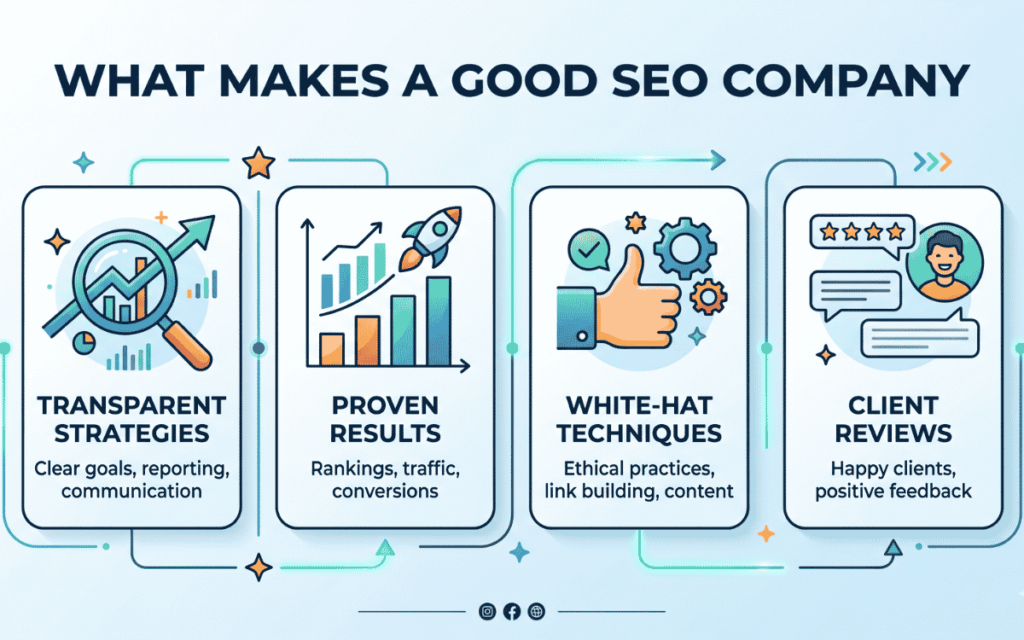
Transparency – They explain what they’re doing and why. No vague promises or mystery tactics.
Proven results – They share case studies, testimonials, and data from past clients.
White-hat methods – They use ethical, Google-approved techniques that stand the test of time.
Clear communication – You receive regular updates and can reach your team easily.
Customized strategy – They don’t apply a cookie-cutter approach to every client.
Realistic expectations – They tell you the truth about timelines. SEO takes time – usually 3 to 6 months to see meaningful results.
How SurgeAIO Can Help in Terms of SEO
SurgeAIO is built for businesses that want real, measurable SEO results – not empty promises. It combines AI-powered tools with proven SEO strategies to help you outrank competitors and drive consistent organic traffic.
Here’s what makes SurgeAIO different:
AI-Powered SEO Analysis – SurgeAIO uses advanced AI to audit your website, identify technical issues, and surface high-impact opportunities faster than traditional tools.
Keyword Research and Content Strategy – The platform identifies the exact keywords your audience searches for and builds a content strategy designed to rank and convert.
GEO and Local SEO Capabilities – SurgeAIO includes powerful geo-targeting features that help local and regional businesses dominate their geographic markets.
AI Visibility Optimization – As AI-powered search (like Google’s AI Overviews) reshapes how results appear, SurgeAIO ensures your content is positioned to appear in these new formats.
Transparent Reporting – Every campaign comes with clear, easy-to-understand reporting. You always know how your SEO investment is performing.
Scalable Solutions – Whether you’re a small business or a large enterprise, SurgeAIO’s tools and services scale with your growth.
SurgeAIO doesn’t just tell you what’s wrong – it gives you a clear roadmap to fix it and helps you execute that roadmap efficiently.
Common Misconceptions About SEO Companies
“SEO is a one-time thing.” False. SEO requires ongoing optimization, content creation, and adaptation. Algorithms change, and so does your competition.
“Results happen overnight.” False. Organic SEO typically takes 3-6 months to show significant traction. Anyone promising instant results is likely cutting corners.
“The cheapest option works just as well.” False. Very cheap SEO often relies on low-quality tactics that can result in Google penalties. Invest in quality.
“I only need SEO if I have a big website.” False. Even small, local businesses benefit enormously from proper SEO. In fact, local SEO can be transformative for small service businesses.
Final Thoughts
Understanding how an SEO company works removes the mystery and empowers you to make smarter business decisions. From technical audits and keyword research to content creation and link building, every step serves a specific purpose: getting your website in front of the right people at the right time.
The best SEO companies don’t just chase rankings. They build sustainable online visibility that drives real business growth.
If you’re ready to take your SEO seriously, SurgeAIO provides the tools, strategy, and expertise to help you get there – faster and more efficiently than traditional approaches.
Frequently Asked Questions
Q: How long does it take for SEO to show results?
Most businesses begin seeing meaningful improvements within 3 to 6 months. However, competitive industries may take longer. SEO is a long-term investment, not a quick fix.
Q: How much does an SEO company typically charge?
Pricing varies widely. Monthly retainers typically range from $500 to $5,000+, depending on the scope of work, industry competitiveness, and company reputation.
Q: Can an SEO company guarantee first-page rankings?
No legitimate SEO company can guarantee specific rankings. Google’s algorithm is complex and constantly evolving. Be cautious of any company that makes such promises.
Q: What’s the difference between on-page and off-page SEO?
On-page SEO refers to optimizations made directly on your website (content, meta tags, structure). Off-page SEO refers to external factors like backlinks and brand mentions.
Q: Do I need SEO if I’m already running paid ads?
Yes. Paid ads stop working the moment you stop paying. SEO builds long-term organic visibility that continues to deliver traffic without ongoing ad spend.
Q: How do I know if my SEO company is doing a good job?
Look for consistent improvements in organic traffic, keyword rankings, and leads generated from organic search. Regular, transparent reporting is a strong indicator of a trustworthy company.
Q: Is SEO still relevant with AI-powered search?
Absolutely. In fact, AI search makes strong SEO even more important. Content that is authoritative, well-structured, and genuinely helpful is exactly what AI-powered search prioritizes.
