Choosing the best SEO software can feel overwhelming. With hundreds of tools promising to boost rankings, track keywords, and analyze competitors, picking the right one matters more than ever. This guide breaks down the top contenders so you can make an informed decision.
SEO software has evolved significantly. Today’s platforms don’t just track Google rankings – they also monitor visibility in AI search engines like ChatGPT and Perplexity. Consequently, choosing the best SEO software now means evaluating both traditional SEO capabilities and newer AI-visibility features. Businesses that rely on outdated tools risk missing insights that competitors are already using to their advantage.
What Makes SEO Software “The Best”?
Before comparing specific platforms, it helps to understand what separates great SEO software from mediocre tools. The best SEO software typically combines several core capabilities into one platform.
Key features to look for:
- Accurate keyword research with search volume and difficulty scores
- Reliable rank tracking across desktop and mobile
- Competitor and backlink analysis
- Technical site audits (broken links, crawl errors, page speed)
- Content optimization recommendations
- AI visibility or “prompt tracking” for platforms like ChatGPT
Moreover, ease of use matters just as much as raw features. A tool packed with data is only valuable if your team can actually interpret and act on it. For businesses evaluating organic traffic strategies for SaaS, this balance between depth and usability often determines long-term ROI.
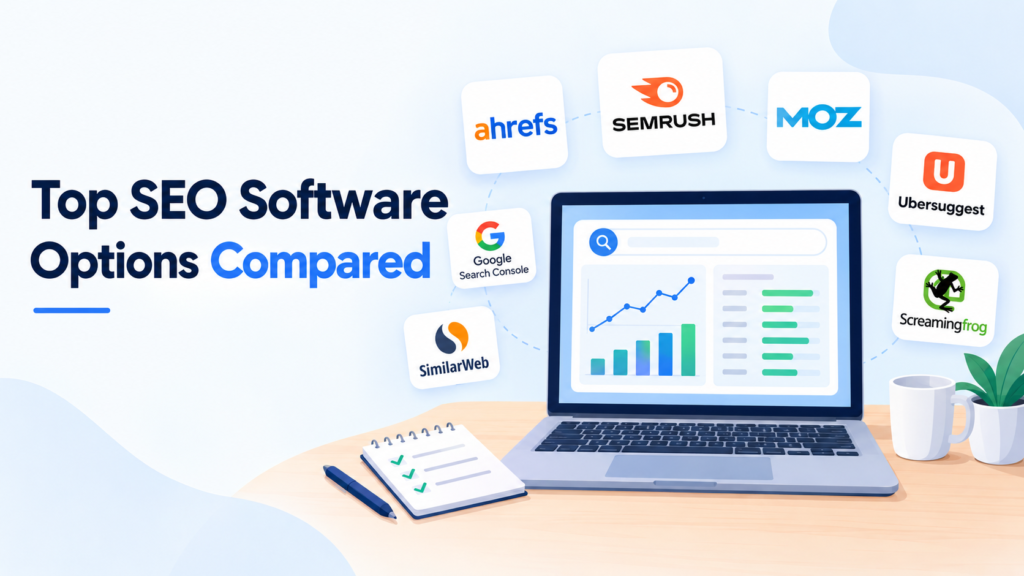
Top SEO Software Options Compared
There isn’t a single “best” SEO software for everyone. Instead, the right choice depends on your budget, team size, and specific goals. Below is an honest breakdown of the leading platforms.
1. Ahrefs – Best for Competitor and Backlink Research
Ahrefs remains one of the most trusted names in SEO, largely because of its enormous backlink index and accurate keyword data. Its Site Explorer feature lets you analyze competitor traffic, backlink profiles, and content performance in detail.
Pricing starts around $108–$129 per month, which places it firmly in the premium tier. However, many agencies consider it worth the investment because of its data accuracy. If you’re building a competitive analysis of keywords, Ahrefs is frequently the starting point professionals reach for first.
Pros:
- Industry-leading backlink database
- Strong keyword research and content gap tools
- Growing AI visibility features (Brand Radar)
Cons:
- Expensive for small businesses
- Steep learning curve for beginners
2. Semrush – Best All-in-One SEO Suite
Semrush is arguably the most widely used SEO platform on the market, offering everything from keyword tracking to site audits to PPC research under one roof. Its recent “Semrush One” bundle now folds in AI-visibility tracking as well, starting around $139–$199 per month.
Because it does so much, Semrush suits agencies and enterprise teams managing multiple client websites. That said, the sheer number of sub-tools can feel overwhelming for beginners.
Pros:
- Extremely comprehensive feature set
- Large library of tutorials and training
- Strong for PPC and content marketing combined
Cons:
- Premium pricing
- Interface can feel cluttered
3. Surfer SEO – Best for Content Optimization
If your priority is writing content that actually ranks, Surfer SEO is one of the best SEO software choices available. It analyzes top-ranking pages for a target keyword and generates a content brief showing what topics, headings, and word counts competitors are using.
Plans start at $99 per month for the essentials tier, scaling up to $219 for full SEO and AI-visibility features. This makes it a natural companion for teams focused on content performance data rather than pure technical SEO.
Pros:
- Excellent content briefs and scoring
- Google Docs and WordPress integrations
- Growing AI-search optimization tools
Cons:
- No backlink analysis included
- Requires baseline SEO knowledge to use effectively
4. Google Search Console – Best Free SEO Tool
No discussion of the best SEO software is complete without mentioning Google Search Console. It’s completely free and gives you first-party data directly from Google – the exact keywords you rank for, click-through rates, and indexing issues.
Unfortunately, GSC only shows data for your own website, so it can’t help with competitor research. Still, every website owner should have it set up. It pairs well with foundational practices like confirming how important a sitemap is for SEO.
5. Morningscore – Best for Simplicity and Gamified SEO
Morningscore has gained traction as a more approachable all-in-one platform, priced around $69 per month. It combines rank tracking, keyword research, backlink monitoring, and AI-visibility scoring, wrapped in a gamified interface that rewards completed SEO tasks.
This makes it especially appealing for small business owners who find tools like Ahrefs or Semrush intimidating.
6. SE Ranking – Best Budget-Friendly Option for Agencies
SE Ranking starts at roughly $65 per month and offers a solid mix of rank tracking, audits, and keyword research. It’s particularly well-suited to agencies managing several client sites at once, since its pricing structure rewards multi-project use.
7. Screaming Frog – Best for Technical SEO Audits
Screaming Frog is a downloadable crawler that mimics how Google’s bots read your site. It’s a favorite among technical SEOs for uncovering broken links, duplicate content, and indexing errors. A free version covers up to 500 URLs, while the paid license runs about $279 per year.
This tool pairs naturally with a broader technical strategy – for example, when planning SEO for a site migration, catching crawl errors early prevents major ranking losses.
8. AI-Focused Tools (Claude, ProductRank.ai, AlsoAsked)
As search behavior shifts toward AI assistants, a new category of software has emerged. Tools like ProductRank.ai track how often your brand appears in ChatGPT or Perplexity responses. Meanwhile, AI writing assistants such as Claude are increasingly used for proofreading and refining content – though not for wholesale content generation, since AI-generated content and SEO remain a nuanced topic worth understanding before relying on it heavily.
Free vs. Paid SEO Software: Which Should You Choose?
This is a common question for businesses just starting. Here’s a quick breakdown:
Choose free tools if:
- You’re a solo entrepreneur or small business testing SEO for the first time
- Your budget is limited, and you can invest time instead of money
- You only need to track your own site’s performance (Search Console, Bing Webmaster Tools, Google Trends)
Choose paid tools if:
- You manage multiple websites or client accounts
- You need competitor and backlink data
- You want automated reporting and AI-visibility tracking
Ultimately, most serious SEO strategies eventually require at least one paid tool, since competitor insights simply aren’t available through free platforms.
How to Choose the Right SEO Software for Your Business
Rather than chasing the “most popular” option, match the software to your actual needs. A few questions can guide the decision:
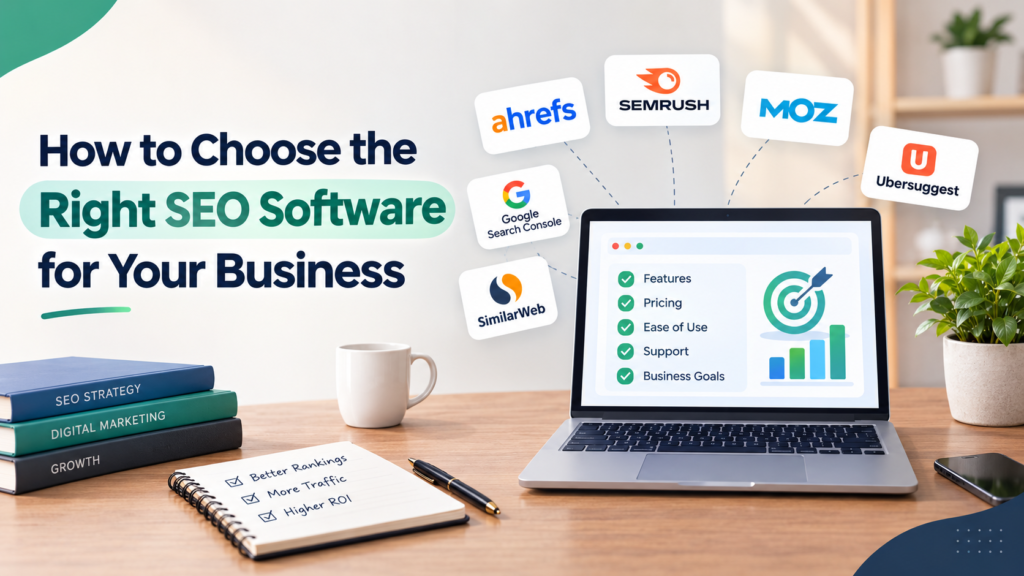
- How many websites are you managing? Agencies benefit from tools like SE Ranking or Semrush, while single-site owners may only need Ahrefs or Morningscore.
- What’s your monthly budget? Prices range from free to $500+ per month, so define your ceiling first.
- Do you need content help, technical audits, or both? Few tools excel at everything, so prioritize your biggest gap.
- Is AI visibility a priority? If ChatGPT and AI search traffic matter to your business, look for platforms with dedicated prompt-tracking features.
This decision-making process mirrors what’s involved in the most popular AI visibility products for SEO, where matching the tool to your specific visibility goals matters more than picking the flashiest option.
Common Mistakes When Choosing SEO Software
Many businesses waste money by making avoidable errors during tool selection:
- Buying the most expensive tool assuming it’s automatically the best. Price doesn’t always correlate with fit for your specific use case.
- Ignoring the learning curve. A powerful tool nobody on your team knows how to use provides little value.
- Overlooking free Google tools. Search Console and Keyword Planner remain some of the most accurate data sources available, and they’re free.
- Choosing based on price alone. Instead, weigh what SEO service costs against the traffic and revenue it can realistically generate.
- Neglecting AI search visibility. As more consumers use AI assistants for research, ignoring this dimension can leave real opportunity on the table.
How SurgeAIO can help in terms of SEO
Choosing the right software is only half the battle – knowing how to use it strategically is what actually drives results. SurgeAIO combines proven SEO tactics with AI-visibility expertise to help businesses rank higher in both traditional search and AI-powered platforms like ChatGPT and Perplexity. Whether you need help with keyword strategy, technical audits, or content built to perform, SurgeAIO’s team brings hands-on experience translating software insights into real organic growth. Instead of guessing which metrics matter, businesses working with SurgeAIO get a tailored roadmap that connects tool data to measurable outcomes.
Final Thoughts
There’s no universal answer to which is the best SEO software – it depends entirely on your goals, budget, and team’s technical comfort level. Ahrefs and Semrush lead for comprehensive research, Surfer excels at content optimization, and free Google tools remain indispensable regardless of what else you’re using.
Therefore, the smartest approach is often combining a few complementary tools rather than searching for one perfect platform. As AI search continues reshaping how people find information, prioritizing software with both traditional SEO and AI-visibility features will likely pay off longer term.
Frequently Asked Questions
What is the best SEO software for beginners?
Google Search Console and Google Keyword Planner are ideal starting points since they’re free and directly sourced from Google. Once you’re comfortable with the basics, budget tools like Morningscore or SE Ranking offer a gentler learning curve than Ahrefs or Semrush.
Is Ahrefs or Semrush better?
Both are excellent, but they serve slightly different needs. Ahrefs is generally considered stronger for backlink analysis, while Semrush offers a broader all-in-one suite that includes PPC and social media tools. If you’re only doing SEO, Ahrefs often edges ahead; if you need marketing-wide coverage, Semrush may fit better.
How much does SEO software typically cost?
Pricing varies widely, from free (Google Search Console, Google Trends) to over $500 per month for enterprise plans. Mid-tier tools like Semrush, Surfer, and Ahrefs typically range from $99 to $220 per month. For a deeper breakdown, see how much SEO services generally cost.
Do I need multiple SEO tools, or is one enough?
Most professionals use at least two tools – one for keyword/backlink research (like Ahrefs or Semrush) and one for content optimization (like Surfer). Free Google tools should supplement whichever paid platform you choose.
Can SEO software help with AI search visibility?
Yes. Newer platforms like ProductRank.ai and add-ons within Ahrefs and Semrush now track how often your brand appears in AI-generated answers, which is becoming an increasingly important part of overall visibility.
Is free SEO software good enough for small businesses?
It can be, especially in the early stages. Google Search Console, Google Trends, and Google Keyword Planner provide accurate, first-party data at no cost. However, competitor analysis typically requires a paid tool.
