Running an organic restaurant means more than sourcing clean ingredients. It means building a brand customers trust, a local presence they can find, and a marketing approach that reflects the same values driving the menu. A well-built organic restaurant marketing plan turns that commitment into consistent foot traffic, loyal regulars and steady online orders.
Many organic and farm-to-table restaurants assume good food and good intentions are enough to market themselves. In reality, without a structured plan, even the best sustainable kitchen can struggle to stand out in a crowded local dining scene. This guide walks through how to build an organic restaurant marketing plan that attracts the right customers and keeps them coming back.
Why Organic Restaurants Need a Different Marketing Approach
Marketing an organic restaurant isn’t quite the same as marketing any other dining concept. Customers choosing organic, sustainable or farm-to-table dining are often making a values-based decision, not just a hunger-based one. That shifts what messaging actually resonates.
An effective organic restaurant marketing plan needs to:
- Communicate values authentically, without coming across as self-righteous or preachy
- Prove sustainability claims with specifics, rather than vague buzzwords like “eco-friendly”
- Reach health- and values-conscious audiences through the right local channels
- Balance storytelling with practicality, since customers still care about taste, price and convenience
- Build local visibility, since most organic dining decisions start with a nearby search
Step 1: Build Your Organic Brand Identity First
Before choosing channels or writing a single social post, define what “organic” actually means for your restaurant. Vague claims don’t build trust; specifics do. A customer wants to know exactly what you’re doing and why, not just that you’re “green.”
A strong brand identity for an organic restaurant typically includes:
- A clear mission statement explaining why the restaurant exists and what it stands for
- Specific sourcing details – which local farms you work with, what’s certified organic, and what changes seasonally
- An honest tone that avoids suggesting you’re perfectly sustainable, since no restaurant is
- A consistent visual identity across your website, menu and social channels that reflects your values
Customers respond far better to a restaurant that says “we source tomatoes from a farm twelve miles away” than one that simply claims to be “committed to sustainability.”
Step 2: Understand Your Menu-Market Fit
Just because organic dining is trending doesn’t mean every neighborhood is ready to pay a premium for it. Menu-market fit measures how well your concept actually matches local demand, and it’s essential to get right before investing heavily in marketing.
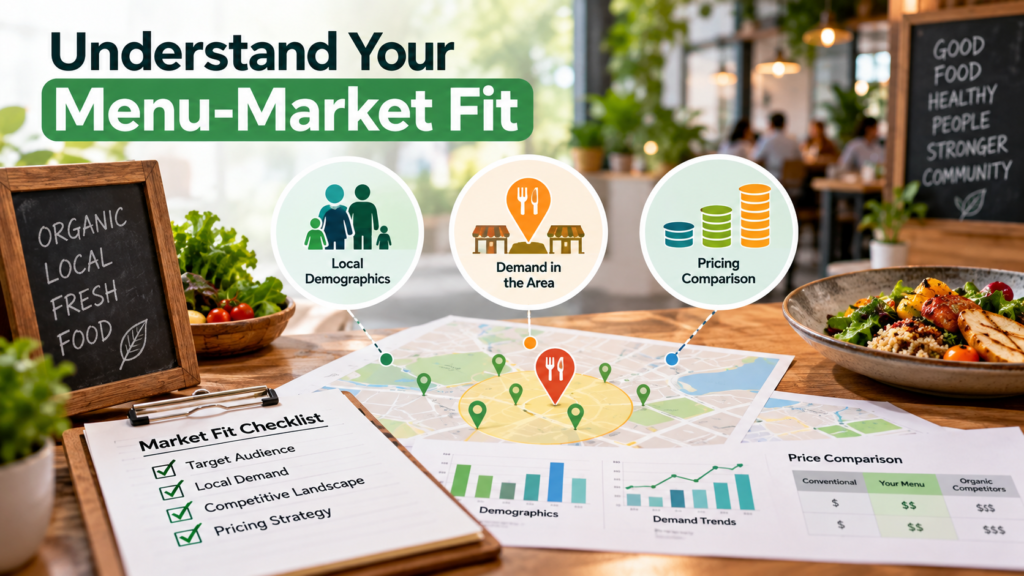
Consider:
- The age, income level and lifestyle of people living and working nearby
- Whether the local area already has strong demand for organic or farm-to-table dining
- How your pricing compares to both conventional restaurants and other organic competitors in range
An organic restaurant marketing plan built without this groundwork risks targeting an audience that simply isn’t there in sufficient numbers.
Step 3: Define a Distinct, Specific Value Proposition
What makes your organic restaurant different from the one three blocks away making similar claims? A strong value proposition goes beyond “we use organic ingredients” and gets specific about what customers actually experience.
Ask:
- What makes this restaurant different from other organic or sustainable options nearby?
- What specific sourcing, preparation or sustainability practice can’t easily be copied?
- How does dining here make customers feel, beyond just being fed?
A rotating “ingredient of the day” sourced from a named local farm, or a transparent breakdown of where each dish comes from, gives customers something concrete to connect with – and something to talk about.
Step 4: Choose the Right Marketing Channels
Trying to maintain every channel at once spreads a small restaurant team too thin. The most effective organic restaurant marketing plan focuses on channels where values-driven, local customers are already looking.
Local SEO
Most diners searching for organic or farm-to-table restaurants start with a local Google search. Claiming and fully completing a Google Business Profile, keeping your name, address and phone number consistent across directories, and collecting genuine customer reviews all directly impact whether your restaurant shows up when someone searches “organic restaurant near me.” Strong local SEO helps attract local customers at the exact moment they’re deciding where to eat.
Website and Online Presence
Your website should clearly communicate your sourcing story, menu, hours and location, while also supporting your broader SEO efforts. A well-optimized site built around relevant keywords for your organic dining niche helps you appear in searches beyond just “near me” queries, capturing customers actively researching sustainable dining options in your city.
Social Media
Instagram and similar visual platforms work especially well for organic restaurants, since photos of actual sourcing relationships – a chef with a local farmer, fresh produce arriving that morning – are far more persuasive than text claims alone. Consistency matters more than frequency here; a few well-crafted posts each week outperform scattered, inconsistent activity.
Email and SMS
Once customers opt in, email and SMS let you share seasonal menu changes, sourcing updates and limited-time dishes directly. These channels work particularly well for organic restaurants, since values-driven customers often want to stay informed about what’s changing and why.
Step 5: Set a Realistic Marketing Budget
Without a defined budget, marketing spend for an organic restaurant can either stall out or get spread too thin across too many channels. A commonly used benchmark allocates roughly 3% to 6% of annual revenue to marketing, though fine-dining organic concepts may sit toward the higher end, while high-volume, casual sustainable spots can often operate leaner.
Before settling on a number:
- Review the past year’s sales and profit margins to understand what’s realistic
- Identify seasonal patterns tied to local produce availability or community events
- Plan lighter spending during predictably slower periods, and heavier investment around launches or seasonal menu changes
Step 6: Craft Specific, Honest Messaging
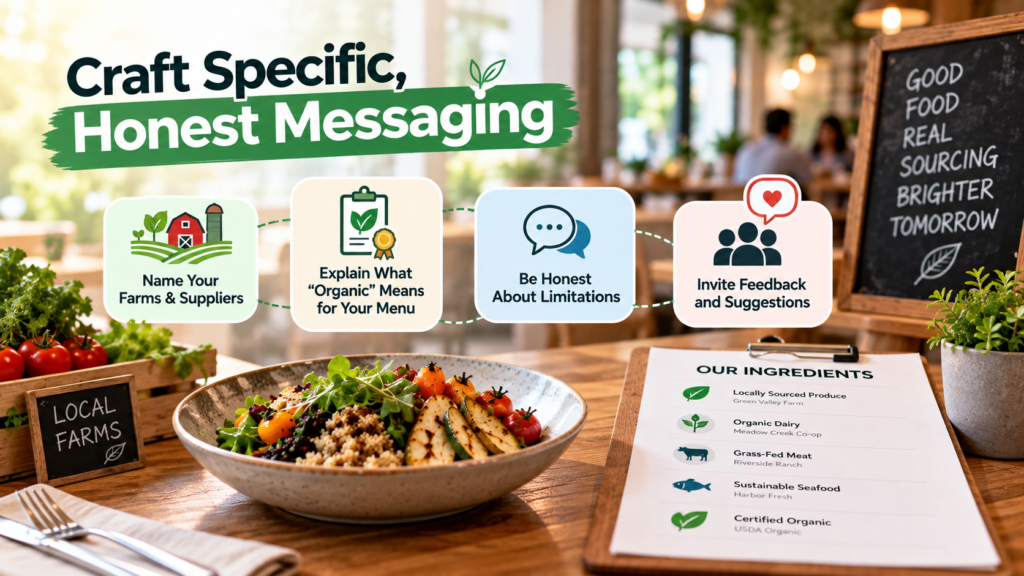
Vague sustainability language rarely builds trust. Instead, an effective organic restaurant marketing plan uses specific, verifiable details:
- Name the actual farms, suppliers or certifications involved
- Explain what “organic” means for your specific menu, since it can vary by dish
- Acknowledge limitations honestly, rather than implying everything on the menu is perfectly sustainable
- Invite feedback and suggestions, showing the restaurant is committed to genuine improvement, not just marketing
Customers tend to respect honesty about where a restaurant falls short far more than they respect polished claims that feel too good to be true.
Step 7: Measure What’s Actually Working
An organic restaurant marketing plan isn’t something you build once and leave untouched. Treat it as an ongoing cycle of testing, measuring and adjusting.
Key things to track:
- Which channels are driving actual reservations or online orders, not just engagement
- How review volume and sentiment change over time on Google and other platforms
- Whether specific sourcing-focused content (a farmer feature, a seasonal ingredient spotlight) outperforms generic posts
- Overall content performance across your website and blog, if you publish sourcing stories or recipes
Cutting underperforming campaigns and reinvesting in what’s clearly working keeps a limited marketing budget focused on real results.
Common Mistakes in Organic Restaurant Marketing
- Overusing vague buzzwords like “green” or “eco-friendly” without specific proof points
- Coming across as preachy, pressuring customers rather than simply informing them
- Ignoring local SEO, missing the exact moment customers search for nearby options
- Spreading effort across too many channels, instead of doing one or two well
- Never adjusting the plan, treating it as a static document rather than a living strategy
Organic Restaurant Marketing Plan: A Practical Checklist
- Define a clear, specific brand identity around your sourcing and values
- Confirm menu-market fit with your local area’s demographics and demand
- Build a distinct value proposition beyond generic organic claims
- Optimize your Google Business Profile and website for local search
- Choose one or two primary social channels and post consistently
- Set a realistic marketing budget tied to actual revenue and seasonality
- Track performance regularly and reallocate budget toward what works
How SurgeAIO can help in terms of SEO
An organic restaurant marketing plan only works if customers can actually find you online before they ever see your menu. SurgeAIO helps local and values-driven businesses strengthen their visibility exactly where it matters most.
For restaurants unsure whether to manage SEO in-house or bring in outside help, understanding the basics of hiring an SEO company and typical SEO service costs makes budgeting far more straightforward. Since SEO works differently from paid promotion, understanding that it’s generally organic marketing rather than advertising helps set the right expectations from the start.
Building visibility begins with a solid competitive analysis of keywords to see exactly how nearby organic and farm-to-table restaurants are being found online. As search behavior shifts toward AI-powered results, understanding how to rank in AI Overviews is increasingly important for restaurants hoping to be recommended when customers ask AI tools for dining suggestions nearby.
Final Thoughts
A strong organic restaurant marketing plan combines authentic storytelling, specific sourcing details and strong local visibility into one coherent strategy. Rather than relying on buzzwords or scattered promotions, the most successful organic restaurants build trust through transparency, show up consistently where local customers are searching, and keep refining their approach based on what actually drives reservations and orders. Done well, marketing becomes less about convincing customers to care and more about helping the right ones find you.
Frequently Asked Questions
1. What makes an organic restaurant marketing plan different from a regular restaurant’s plan?
It centres on authentic, specific storytelling around sourcing and sustainability, rather than generic promotions, since values-driven customers are making a decision based on trust as much as taste.
2. How much should an organic restaurant budget for marketing?
A common benchmark is 3% to 6% of annual revenue, with the exact figure depending on concept type, local competition and whether the restaurant leans toward fine dining or casual, high-volume service.
3. Is local SEO really that important for an organic restaurant?
Yes. Most diners researching organic or farm-to-table options start with a local search, so a complete, well-optimized Google Business Profile and website are often the first thing a potential customer sees.
4. How can I market “organic” without sounding preachy?
Focus on specific, verifiable details – named farms, actual sourcing practices, honest acknowledgement of limitations – rather than broad claims or moral pressure on customers to care as much as you do.
5. Which social media platform works best for organic restaurants?
Instagram tends to perform particularly well, since visual proof of sourcing relationships and fresh ingredients resonates more strongly than text-based claims alone.
