Searching for the best companies for organic app marketing strategy usually means one thing: you’re tired of paying for every single install and want sustainable, long-term visibility instead. Paid user acquisition works, but costs climb constantly, and visibility disappears the moment ad spend stops. Organic growth – through App Store Optimization, content, SEO and genuine user engagement – builds something that keeps working long after a campaign ends.
Rather than naming a fixed “best” list that changes constantly as agencies rebrand, merge or shift focus, this guide explains exactly what organic app marketing involves, what a genuinely strong partner looks like, and how to evaluate any company claiming to deliver it.
What Is Organic App Marketing, Exactly?
Organic app marketing covers every strategy that drives app discovery and installs without directly paying for each click or download. Unlike paid user acquisition, which stops the moment budget runs out, organic strategies compound over time and continue generating installs well after the initial investment.
Core components typically include:
- App Store Optimization (ASO) – Optimizing titles, keywords, descriptions and visuals to rank higher in app store search
- Content marketing and SEO – Building a website and content presence that drives traffic to app download pages
- Organic social media and community building – Growing engaged audiences without relying solely on paid promotion
- Referral and word-of-mouth programs – Turning existing users into a genuine acquisition channel
- Reviews and ratings management – Building the trust signals that influence both app store ranking and user decision-making
Why Organic App Marketing Strategy Matters
Paid acquisition alone creates a fragile growth model. The moment ad costs rise, or budgets shrink, install volume drops immediately. Organic strategies build a foundation that doesn’t disappear overnight.
A genuinely effective organic app marketing strategy delivers:
- Lower long-term cost per install, since organic visibility doesn’t require ongoing ad spend to sustain itself
- Higher quality users, since people who find an app through genuine search intent or recommendation tend to engage more deeply than those acquired through interruptive ads
- Resilience against rising ad costs, which have climbed steadily across most major ad networks
- Compounding growth, where strong ASO and content work continues attracting installs months or years after publication
What Makes a Company Genuinely Strong at Organic App Marketing
Many agencies claim organic expertise, but the strategy and discipline required to deliver real results varies significantly. A few traits separate genuinely capable partners from those offering surface-level service.
1. Deep App Store Optimization Expertise
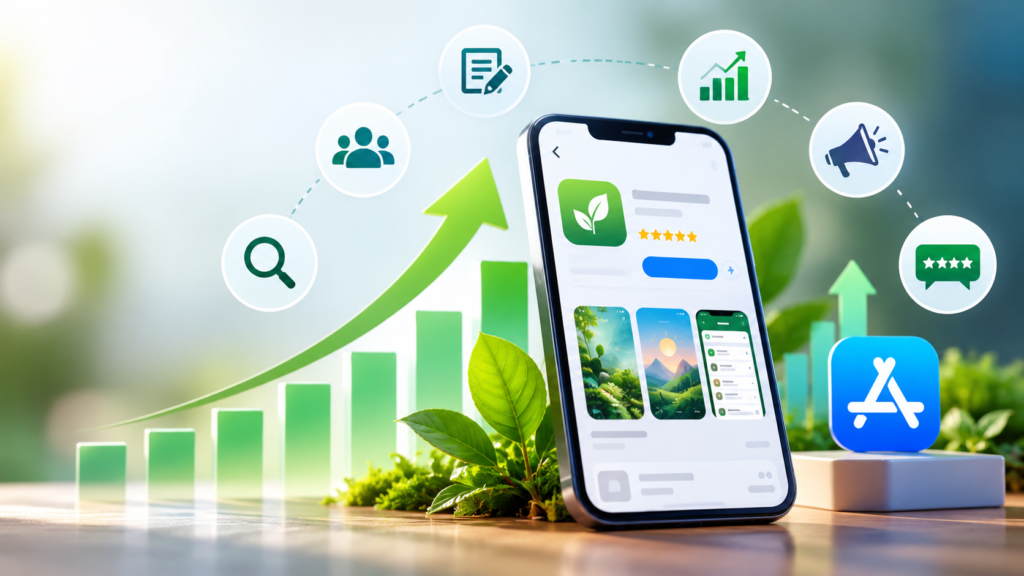
ASO is the foundation of organic app marketing, and it requires more than picking a few relevant keywords. Strong providers continuously test titles, screenshots, descriptions and preview videos, treating the app store listing as a living, optimized asset rather than a one-time setup.
2. A Content and SEO Strategy That Drives Real App Traffic
Many app marketers overlook the website entirely, assuming all discovery happens inside app stores. In reality, a meaningful share of installs begin with a web search – someone researching “best budgeting apps” or “apps like X” long before opening an app store. This is where organic traffic strategies built specifically for software and app products become essential, driving qualified visitors to download pages through genuine search intent rather than paid placement.
3. Transparent, Measurable Reporting
A strong organic app marketing partner should clearly show how specific actions – a keyword change, a new piece of content, an ASO adjustment – connect to actual installs and retained users, not just vague engagement metrics. Reviewing content performance data regularly should be a standard part of how results get communicated, not an afterthought.
4. Understanding of How SEO and ASO Overlap
Organic app visibility increasingly spans both app store search and traditional web search. A capable partner understands that SEO is organic marketing, not paid advertising, and builds strategy accordingly – treating app store presence and website SEO as connected parts of the same discovery funnel, rather than entirely separate workstreams.
5. Genuine Competitive Research
Before building any strategy, a strong organic app marketing company should conduct thorough competitive analysis of keywords specific to the app category, identifying exactly what terms competitors are ranking for and where genuine opportunity exists, rather than applying a generic template across every client.
Red Flags to Watch For
- Vague promises without specifics about which keywords, content or ASO changes will actually move the needle
- Overreliance on AI-generated content without editorial oversight, since understanding whether AI-generated content helps or hurts SEO matters significantly for app marketing content, which needs genuine expertise and originality to rank
- No clear reporting structure, leaving you unable to see what’s actually working
- Pricing that seems too good to be true, since genuinely strategic organic work requires real expertise and time investment, reflected honestly in typical SEO and marketing service costs
- Focus only on vanity metrics like impressions or rankings, without connecting results to actual installs or retained users
How to Evaluate Companies for Organic App Marketing Strategy
Step 1: Define What “Organic” Means for Your Specific App
Before evaluating providers, clarify your priorities. A gaming app relies heavily on ASO and viral mechanics, while a B2B productivity app may depend more on content marketing, SEO and website-driven discovery. Understanding your own priorities helps filter which companies are actually a fit, rather than evaluating everyone against a generic checklist.
Step 2: Ask for Specific Case Examples, Not Just Results
Rather than accepting a headline statistic alone, ask exactly what actions were taken to achieve a result – which keywords were targeted, what content was created, how ASO testing was structured. Specificity reveals genuine expertise far more reliably than an impressive-sounding number on its own.
Step 3: Understand Their Reporting Cadence
Organic growth builds gradually, so ask how often you’ll see reports, and what those reports actually measure. A company that reviews performance monthly, with clear ties between specific actions and install trends, is generally more trustworthy than one offering only a quarterly summary of vanity metrics.
Step 4: Evaluate Their Own Organic Visibility
A company genuinely skilled at organic growth should demonstrate it themselves. Check whether their own website ranks well for relevant industry terms and whether their content reflects real expertise, rather than generic, templated marketing copy.
Step 5: Clarify the Balance Between Organic and Paid Work
Some agencies market “organic app marketing strategy” as a service while quietly relying heavily on paid channels to hit targets. Be explicit about what percentage of effort and budget goes toward genuinely organic growth versus supplementary paid acquisition.
Organic vs Paid App Marketing: A Quick Comparison
| Factor | Organic App Marketing | Paid User Acquisition |
| Cost over time | Decreases relative to results as visibility builds | Remains constant or rises per install |
| Longevity | Continues working after initial investment | Stops immediately when spend stops |
| User quality | Often higher intent and better retention | Varies, can include lower-intent users |
| Speed of results | Builds gradually over months | Immediate |
| Best for | Long-term, sustainable growth | Short-term spikes, launch momentum |
Most successful apps use both strategies together, but understanding this distinction helps set realistic expectations when evaluating any company’s claims.
The Role of AI Search in Organic App Discovery
Discovery is shifting beyond app stores and traditional search alone. More users now ask AI assistants for app recommendations directly, making it increasingly important for companies managing organic app marketing strategy to understand how to rank in AI Overviews and similar AI-driven discovery surfaces, not just traditional app store and web rankings.
Common Mistakes When Choosing an Organic App Marketing Partner
- Choosing based on price alone, without evaluating actual strategy depth
- Ignoring the website and SEO side entirely, assuming all discovery happens within app stores
- Accepting vague reporting, without clear connections between actions and results
- Overlooking how a company’s own content and visibility reflect their actual expertise
- Failing to clarify the organic-to-paid ratio before signing an engagement
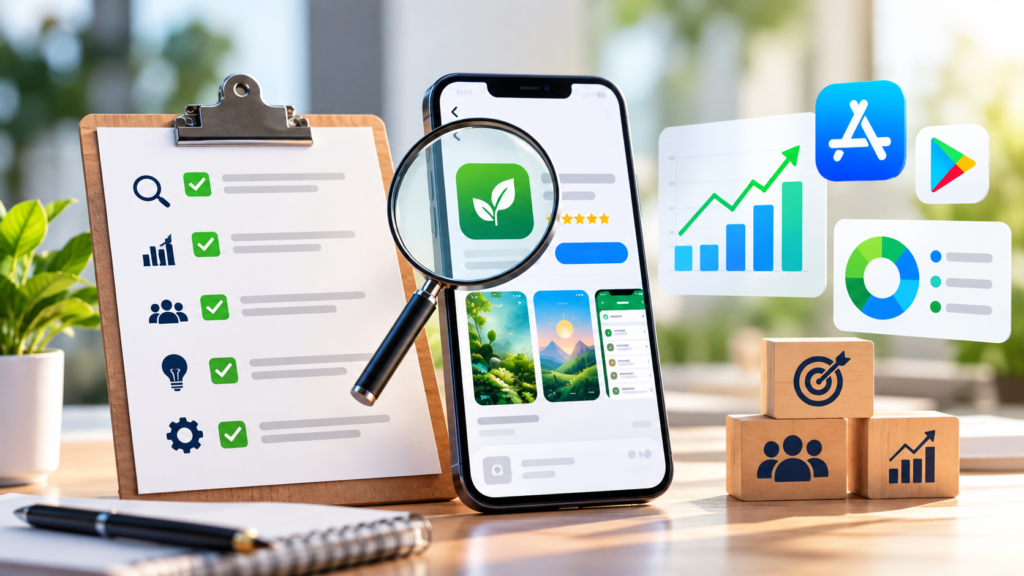
Practical Checklist for Choosing an Organic App Marketing Company
- Define your app’s specific organic growth priorities before evaluating providers
- Request detailed examples of past ASO, content and SEO work, not just results summaries
- Confirm reporting cadence and what metrics will actually be tracked
- Review the company’s own organic visibility and content quality firsthand
- Clarify the balance between organic strategy and supplementary paid work
- Ask how they’re adapting to AI-driven search and discovery trends
How SurgeAIO can help in terms of SEO
Organic app marketing strategy depends heavily on the website and content side of discovery, which is exactly where strong SEO expertise becomes essential. SurgeAIO helps app and software businesses build the organic visibility that complements ASO and in-store optimization.
For businesses evaluating whether to bring in outside expertise, understanding the basics of hiring an SEO company and what differentiates top platforms built for B2B audiences helps clarify what genuine organic expertise actually looks like before committing budget. SurgeAIO builds strategy around real competitive research and measurable content performance, ensuring every recommendation ties back to actual visibility and growth, not vanity metrics.
Final Thoughts
Finding the best companies for organic app marketing strategy isn’t about chasing a fixed ranking list, since the strongest partners prove their expertise through specific, measurable results rather than rankings alone. Look for genuine ASO depth, strong SEO and content capability, transparent reporting, and a clear understanding of how organic and paid channels work together. The right partner builds visibility that compounds over time, rather than disappearing the moment the budget runs out.
Frequently Asked Questions
1. What’s the difference between organic app marketing and App Store Optimization?
ASO is one component of organic app marketing, focused specifically on app store rankings. Organic app marketing more broadly includes SEO, content marketing, community building and referral strategies beyond the app store itself.
2. How long does organic app marketing take to show results?
Organic strategies typically take several months to build meaningful traction, since they rely on compounding visibility rather than immediate paid placement. Patience and consistent execution matter more than quick wins.
3. Can organic app marketing fully replace paid user acquisition?
For most apps, no. Organic and paid strategies work best together, with organic providing long-term, sustainable growth while paid acquisition can drive short-term spikes or launch momentum.
4. What questions should I ask a company claiming organic app marketing expertise?
Ask for specific examples of ASO, content or SEO actions taken, how results are measured and reported, and what percentage of their strategy relies on organic versus paid tactics.
5. Does SEO really matter for mobile app discovery?
Yes. A meaningful share of app discovery starts with a web search before someone ever opens an app store, making website SEO an important, often overlooked, part of a genuinely organic app marketing strategy.
