Couples dealing with infertility do not rely on word-of-mouth the way they once did. Today, they search Google – privately, repeatedly, and often late at night. They compare clinics, read reviews, check success rates, and study doctor credentials before they ever pick up the phone.
If your IVF clinic does not appear at the top of those search results, you are losing patients to competitors who invested in IVF clinic SEO marketing. This guide covers every key strategy – from keyword research to local SEO, content marketing, and reputation management – so your clinic gets found by the patients who need you most.
Why SEO Marketing Matters for IVF Clinics
IVF treatment is one of the most emotionally sensitive and financially significant decisions a couple can make. Patients research deeply before choosing a clinic. They want proof of expertise, trust signals, and clear information – all before booking a single consultation.
Moreover, the IVF market is highly competitive. In any major city, dozens of clinics compete for the same patients. Therefore, your online presence is no longer optional. It is your primary patient acquisition channel.
Understanding what SEO lead generation actually means helps you see SEO not as a technical exercise but as a direct driver of booked consultations and revenue. Every page that ranks is a permanent lead-generation asset working around the clock.
In addition, unlike paid ads that stop the moment your budget runs out, a well-built SEO strategy compounds over time. The authority you build today keeps delivering results months and years into the future.
Keyword Strategy: Target What Couples Actually Search
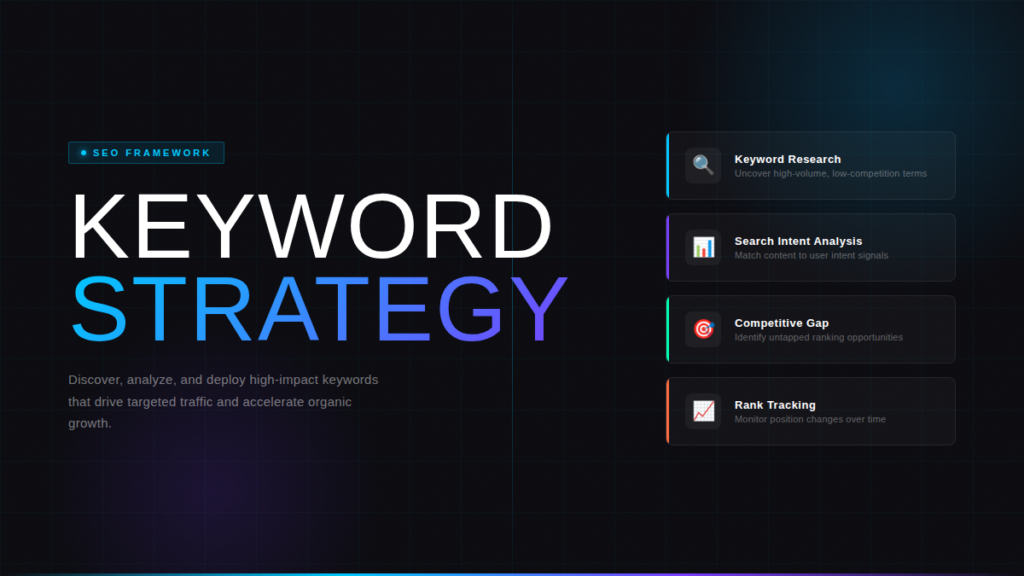
For IVF clinics, high-value keyword categories include:
- Service keywords: “IVF treatment,” “fertility clinic,” “IUI procedure,” “egg freezing”
- Local keywords: “best IVF clinic in [city],” “IVF specialist near me,” “fertility doctor in [area]”
- Informational keywords: “IVF success rate by age,” “how many IVF cycles are needed,” “IVF cost in India”
- Comparison keywords: “IVF vs IUI,” “natural IVF vs conventional IVF”
- Doctor-specific keywords: “best IVF doctor in [city],” “Dr [name] fertility specialist”
Each keyword type serves a different stage of the patient journey. Informational keywords attract couples in the early research phase. Local and service keywords capture those who are ready to consult. Running a thorough competitive keyword analysis reveals which terms your top competitors rank for – and where gaps exist that you can exploit.
However, avoid stuffing all these keywords onto a single page. Instead, create dedicated pages for each service and location. This approach signals topical authority to Google and gives each page a focused chance to rank.
On-Page SEO: Building Pages That Rank and Convert
Once you identify your target keywords, the next step is optimizing your website pages. On-page SEO ensures that Google understands what each page is about – and that visitors find exactly what they came for.
Key on-page elements every IVF clinic website must address:
- Title tags and meta descriptions: Each page needs a unique title tag containing the target keyword. Keep it under 60 characters. Write compelling meta descriptions that encourage clicks.
- H1 and header structure: Your H1 should clearly state the page topic and include the primary keyword. Use H2S and H3S to organize supporting content logically.
- Dedicated service pages: Create individual pages for IVF, IUI, egg freezing, sperm analysis, ICSI, donor programs, and any other treatments you offer. Each page should be comprehensive and unique.
- Doctor profile pages: Patients research doctors extensively. Dedicated, well-optimized doctor pages build trust and rank for doctor-specific searches.
- Schema markup: Adding structured data (MedicalBusiness, FAQPage, Physician schema) helps Google display rich results and increases your click-through rate from search pages.
- Internal linking: Connect related pages using descriptive anchor text. This distributes ranking authority across your site and helps Google crawl all your important content.
Using the right content optimization tools for SEO helps you benchmark your pages against top-ranking competitors and identify exactly what your content needs to outperform them.
Local SEO: Dominating the Google Map Pack
For most IVF clinics, the majority of patients come from within a specific geographic area. Therefore, local SEO is arguably the highest-priority channel in your entire marketing mix.

When someone searches “IVF clinic near me” or “fertility doctor in [city],” Google displays a Map Pack – the three local results that appear before organic listings. Clinics in this Map Pack capture the vast majority of local clicks.
Here is how to consistently rank in the Map Pack:
- Google Business Profile (GBP) optimization: Claim and fully optimize your GBP listing. Add accurate categories (Fertility Clinic, Women’s Health Clinic), list all services, upload high-quality photos of your facility and team, set correct hours, and post regular updates.
- NAP consistency: Your clinic’s Name, Address, and Phone number must be identical across every online directory – Google, Practo, Justdial, Sulekha, Healthgrades, and more. Even small inconsistencies confuse Google’s local algorithm.
- Review generation: Actively request Google reviews from satisfied patients (while respecting privacy). Clinics with more recent, positive reviews consistently outrank those with fewer. Reviews also influence new patients’ trust significantly.
- Local citations: Get listed on authoritative local and medical directories. Each consistent citation strengthens your local authority signals.
- Location-specific landing pages: If your clinic serves multiple neighborhoods or operates multiple branches, create a dedicated landing page for each location.
Learning how to create content for local landing pages is one of the most impactful moves you can make. A well-optimized location page captures patients searching specifically in that area and adds a permanent traffic asset to your site.
Content Marketing: Build Authority and Patient Trust
IVF patients do extensive research before they consult. They want to understand the process, assess risks, compare success rates, and feel confident in their choice of clinic. Content marketing positions your clinic as the trusted authority that answers all those questions.
Moreover, educational content captures informational search traffic – patients at the top of the funnel who are not yet ready to book but will be soon. When your clinic consistently provides helpful answers, those readers remember you when they are ready to consult.
High-performing content topics for IVF clinics include:
- “What is the IVF process step by step?” – captures patients at the start of their research journey
- “IVF success rates by age: what to expect” – one of the most searched topics in fertility
- “IVF vs IUI: which is right for you?” – targets comparison intent and positions your doctors as advisors
- “How to prepare for your first IVF cycle” – attracts patients who have already decided on IVF
- “Cost of IVF treatment in [city]: a complete breakdown” – targets high-intent, price-researching patients
- “Common myths about IVF debunked” – builds trust and reduces patient hesitation
- Patient success stories and video testimonials – powerful social proof that influences decision-making
Publishing consistent, medically accurate content also builds your site’s E-E-A-T (Experience, Expertise, Authoritativeness, Trustworthiness) – the standard Google uses to evaluate health content. Thin or generic content can actively harm your rankings in this space.
These organic traffic strategies for growth reduce your long-term dependence on paid advertising and create compounding returns over time.
Technical SEO: The Infrastructure Behind Your Rankings
Even the most perfectly written content will underperform if your website has technical issues. Google must be able to crawl, index, and understand your site before it ranks any of your pages.
Critical technical SEO priorities for IVF clinic websites:
- Page speed: Patients searching on mobile will leave a slow site instantly. Compress images, leverage browser caching, and use a fast, reliable hosting provider.
- Mobile responsiveness: A large proportion of IVF-related searches happen on smartphones. Your site must be fully functional and visually clean on all screen sizes.
- HTTPS security: An SSL certificate is a basic Google ranking factor. It also signals trustworthiness – essential for a medical website collecting patient enquiries.
- Crawlability and indexing: Submit a clean XML sitemap to Google Search Console. Check for and fix any crawl errors, broken links, or orphaned pages.
- Core Web Vitals: Google measures Largest Contentful Paint (LCP), First Input Delay (FID), and Cumulative Layout Shift (CLS). Optimizing these user experience metrics directly impacts your search rankings.
- Structured data: Implement a schema for your clinic, doctors, FAQs, and medical procedures. This increases your eligibility for rich snippets in search results.
Reputation Management: Online Reviews Are Patient Decisions
For IVF clinics, your online reputation is inseparable from your marketing. Patients dealing with fertility challenges are making one of the most emotionally significant decisions of their lives. They read every review before choosing a clinic.
A strong reputation management strategy includes:
- Responding to every Google review – positive and negative – professionally and promptly
- Encouraging patients to share their experiences (while maintaining strict privacy standards)
- Monitoring mentions across platforms, including Practo, Justdial, and social media
- Addressing negative feedback transparently and constructively
- Featuring verified patient testimonials prominently on your website
Reputation directly reinforces your SEO for home service leads and organic search performance. Google’s local algorithm weighs review velocity, recency, and volume heavily in Map Pack rankings.
Building Backlinks and Domain Authority
Backlinks from credible websites remain one of Google’s most important ranking signals. For IVF clinics, a targeted link-building strategy is essential for competing in high-authority medical niches.
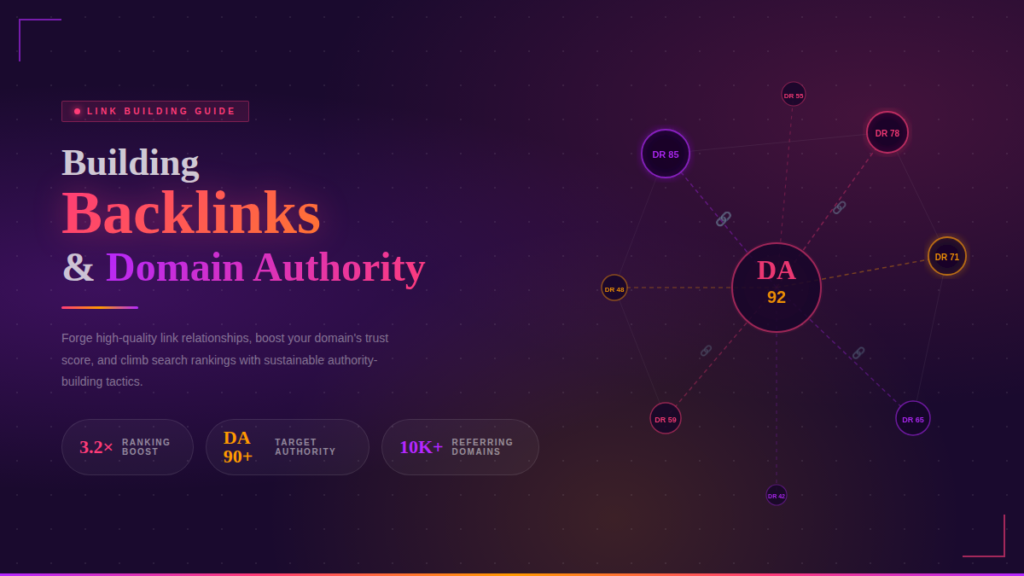
Effective backlink strategies for IVF clinics:
- Getting listed in authoritative medical directories (Practo, Lybrate, Healthgrades, hospital networks)
- Collaborating with gynecologists, endocrinologists, and general practitioners who can refer patients and link to your site
- Publishing guest articles on reputable health and wellness publications
- Earning coverage in local news stories or health awareness campaigns
- Participating in community events, fertility awareness drives, or educational webinars that generate online mentions
Understanding how many backlinks you actually need to rank competitively in your city is important. One authoritative backlink from a recognized medical publication outweighs dozens from low-quality directories. Quality, relevance, and consistency are what matter.
AI Search and the Future of IVF Clinic SEO
Search behavior is evolving rapidly. AI-generated overviews now appear at the top of many Google search results – and patients increasingly use conversational queries like “which IVF clinic in [city] has the best success rates?” These AI responses pull from sources that demonstrate genuine authority, accuracy, and trustworthiness.
Clinics that invest in what elements are foundational for SEO with AI today are building a competitive advantage that will only grow stronger as search continues to evolve. Structured content, clear medical information, verified doctor credentials, and strong local signals are exactly what AI search systems favor.
Additionally, voice search is growing – particularly for local queries. Optimizing your content for natural, conversational language and question-based keywords prepares your clinic for this shift.
How SurgeAIO Can Help in Terms of SEO
SurgeAIO is built for exactly the kind of high-stakes SEO environment that IVF clinics operate in – competitive, locally driven, and trust-dependent.
Here is what SurgeAIO delivers for IVF clinic SEO marketing:
- Precision keyword research: Identify the highest-opportunity, lowest-competition keywords in your city and speciality – from broad treatment terms to long-tail patient questions
- Content optimization: Analyze top-ranking competitor pages and generate data-backed guidance to create content that outranks them
- Local SEO tools: Track your Google Map Pack positions, monitor GBP performance, and identify citation gaps that are holding back your local rankings
- AI visibility monitoring: See how your clinic appears in AI-generated search overviews and ChatGPT-style queries – an increasingly important traffic source
- Competitor intelligence: Track every keyword your competitors rank for and identify the gaps where you can capture market share first
- Backlink analysis: Understand your current authority profile and identify the highest-value link opportunities in the medical and fertility space
- Transparent reporting: Connect SEO performance directly to consultation bookings so the ROI conversation is always clear
Whether you are starting SEO from scratch or trying to break through a ranking plateau, SurgeAIO gives your IVF clinic the tools and data to grow consistently and outperform competitors in your market.
Conclusion
IVF clinic SEO marketing is not a short-term tactic – it is a long-term investment in your practice’s most important growth channel. The couples searching for fertility help right now are making high-stakes decisions. The clinics that show up first, communicate trust most clearly, and provide the most helpful information will earn those consultations.
Furthermore, every page you optimize, every review you earn, and every quality backlink you build adds compounding value that paid advertising simply cannot replicate. Start with the fundamentals – a fast, mobile-friendly website, an optimized Google Business Profile, and content that genuinely helps patients. Then use a platform like SurgeAIO to track your progress, identify new opportunities, and stay ahead of competing clinics in your market.
Your clinical expertise is already world-class. Now make sure the right patients can find it.
Frequently Asked Questions
Q1. How long does SEO take to show results for an IVF clinic?
Most IVF clinics begin seeing meaningful ranking improvements within 3 to 6 months for lower-competition local keywords. Ranking competitively for high-volume terms like “best IVF clinic in [city]” typically takes 6 to 12 months of consistent effort. The earlier you start, the faster you compound results.
Q2. Is paid advertising better than SEO for IVF clinics?
Both serve different purposes. Paid ads (Google Ads) provide immediate visibility and are excellent for generating leads while your SEO is still building. However, SEO delivers lower cost-per-acquisition over time and keeps generating traffic even when ad budgets are paused. The strongest growth strategy combines both channels.
Q3. What makes IVF clinic SEO different from general medical SEO?
IVF content is subject to Google’s strictest E-E-A-T standards because it falls under the YMYL (Your Money or Your Life) category. Content must demonstrate real clinical expertise, cite verifiable data, and display clear author credentials. Generic health content – or AI-generated content that is not reviewed by medical professionals – actively hurts rankings in this space.
Q4. How important are Google reviews for IVF clinic rankings?
Extremely important. Reviews directly influence your Google Map Pack ranking and heavily shape patient decisions. Clinics with a strong, recent, and consistent review profile consistently outrank those with fewer reviews – even when the latter has a longer history or larger facility.
Q5. Should an IVF clinic blog regularly?
Yes. Consistent blogging builds topical authority, captures informational search traffic, and nurtures patients who are still in the research phase. Aim for at least two to four medically accurate, SEO-optimized posts per month. Over time, this content library becomes one of your most valuable patient acquisition assets.
Q6. Does having multiple clinic locations require separate SEO strategies?
Yes. Each location needs its own optimized Google Business Profile, a dedicated location landing page, and locally relevant content. Running a single centralized strategy for multiple locations leaves significant local search traffic on the table.
