The organic food market keeps growing, but so does the competition for the same health-conscious, values-driven shoppers. Standing out now takes more than a green label and an “all-natural” claim. A strong organic food marketing strategy in 2026 combines genuine transparency, smart use of first-party data, and a balanced mix of paid and organic channels that build trust rather than just chase clicks.
This guide breaks down the strategies actually working for organic food brands today, the mistakes quietly undermining otherwise solid campaigns, and how to build a plan that earns long-term loyalty instead of one-time purchases.
Why Organic Food Marketing Needs a Distinct Strategy
Organic food shoppers aren’t buying on price or convenience alone. They’re making a values-based decision tied to health, sustainability and trust. That changes what effective marketing actually requires.
An organic food marketing strategy needs to:
- Prove claims, not just state them. Vague sustainability language no longer builds trust on its own
- Reach a specific, values-driven audience. Generic demographic targeting misses the behavioral signals that actually predict organic buyers
- Build long-term loyalty, since repeat purchases matter more to profitability than one-time acquisition
- Stay consistent across every channel, since shoppers compare in-store pricing, website claims and social messaging closely
1. Lead With Transparent, Verifiable Sustainability Messaging
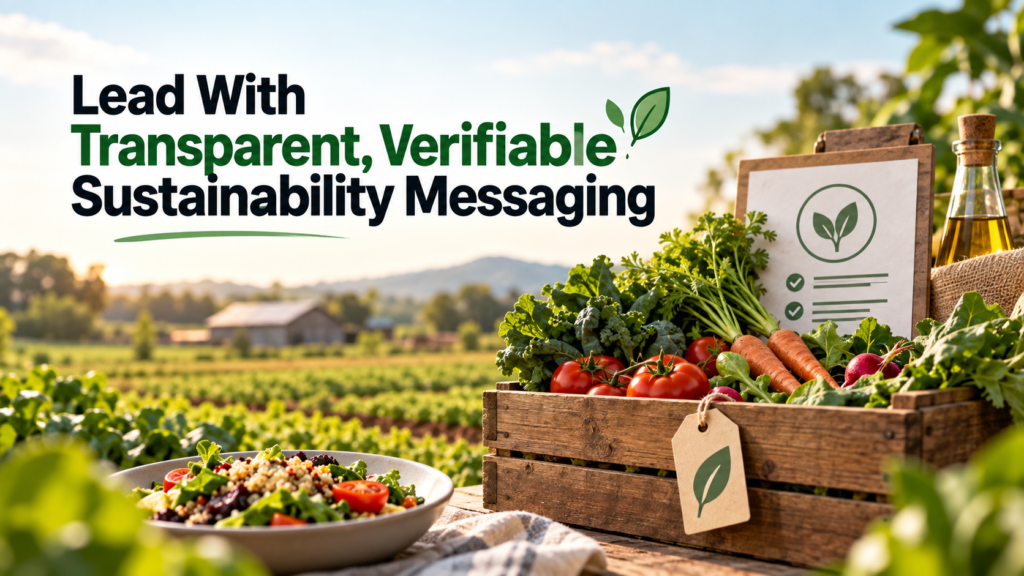
Buzzwords like “eco-friendly” or “natural” no longer carry much weight on their own. Shoppers want specifics: which farms supply your ingredients, what certifications back your claims, and what your actual environmental footprint looks like.
Strong sustainability messaging typically includes:
- Detailed farm-to-table storytelling through video or interactive content
- Verifiable third-party certifications displayed clearly, not buried in fine print
- Honest acknowledgement of limitations, rather than implying perfection
Brands that exaggerate or overstate their environmental impact risk a form of backlash often called greenwashing, which can damage credibility far more than staying quiet about a smaller, honest claim.
2. Use First-Party and Zero-Party Data Instead of Guessing
Many organic food brands still rely heavily on third-party data that’s increasingly restricted and often inaccurate. This leads to generic campaigns that fail to resonate with an audience that specifically values personalization rooted in real preferences.
A more effective approach collects data directly from customers:
- First-party data from purchase history, loyalty programs and website behavior
- Zero-party data that customers intentionally share, such as dietary preferences through an interactive quiz or preference center
This data allows for genuinely relevant recommendations – suggesting a gluten-free organic snack to someone who’s previously purchased similar products, for example – rather than broad, generic promotions that feel disconnected from the shopper’s actual needs.
3. Personalize Based on Behavior, Not Just Demographics
Age and location alone say very little about whether someone is likely to buy organic products. Behavioral signals – searches for plant-based recipes, engagement with sustainability content, past purchase patterns – predict buying intent far more accurately.
Shifting targeting toward behavior rather than static demographics typically improves both relevance and return on ad spend, since campaigns reach people already showing genuine interest rather than those who simply fit a broad age bracket.
4. Build Genuine Community Around Shared Values
Organic food buyers frequently want connection with others who share their values, not just a transactional purchase. Community-driven marketing creates spaces – online or offline – where customers can share recipes, sustainability tips and experiences with the brand.
Practical ways to build this include:
- Hosting virtual cooking classes or recipe-sharing events
- Organizing local farm tours or tastings for engaged customers
- Encouraging user-generated content and actively resharing it with credit
This kind of engagement turns customers into genuine advocates, generating word-of-mouth that no paid campaign can fully replicate.
5. Partner With Micro-Influencers Over Broad Celebrity Endorsements
Smaller, highly engaged influencers – a local nutritionist, a wellness-focused content creator – often carry more credibility with organic food shoppers than larger celebrity partnerships. Their audiences trust their genuine, specific endorsements, especially when the influencer already shares the brand’s values.
Effective partnerships focus on:
- Choosing influencers genuinely aligned with sustainability and health values, not just follower count
- Building long-term relationships rather than one-off sponsored posts
- Allowing creators room for authentic storytelling, rather than scripted promotional copy
6. Make Social Commerce Frictionless
Social platforms increasingly let shoppers discover and purchase products without ever leaving the app. For organic food brands, this removes friction between an appealing photo of seasonal produce or a recipe kit and an actual purchase.
Optimizing for this means keeping product catalogues current on shopping-enabled social profiles and creating genuinely shareable, visually strong content that naturally invites engagement rather than feeling like a straightforward advertisement.
7. Don’t Neglect Mobile Experience
A growing share of organic food research and purchasing happens on smartphones. A slow-loading website, confusing navigation or a clunky checkout process quietly costs sales, even when the marketing itself is working well.
Regular mobile usability reviews, fast page load times and a simplified checkout flow all directly affect conversion rates, regardless of how strong the surrounding campaign is.
8. Prioritize Retention, Not Just Acquisition
Chasing new customers exclusively, without nurturing existing ones, limits long-term growth and keeps acquisition costs high. Organic food brands with strong retention strategies – loyalty programs, personalized recipe suggestions based on past purchases, exclusive offers for repeat buyers – tend to build more sustainable, profitable growth over time.
9. Keep Messaging Consistent Across Every Channel
Inconsistency between in-store promotions, website content and social media messaging confuses shoppers and weakens brand trust. A promotion advertised on social media should be reflected accurately both online and in-store, creating one coherent, dependable journey regardless of where a customer encounters the brand.
10. Balance Paid Media With Organic Growth Channels
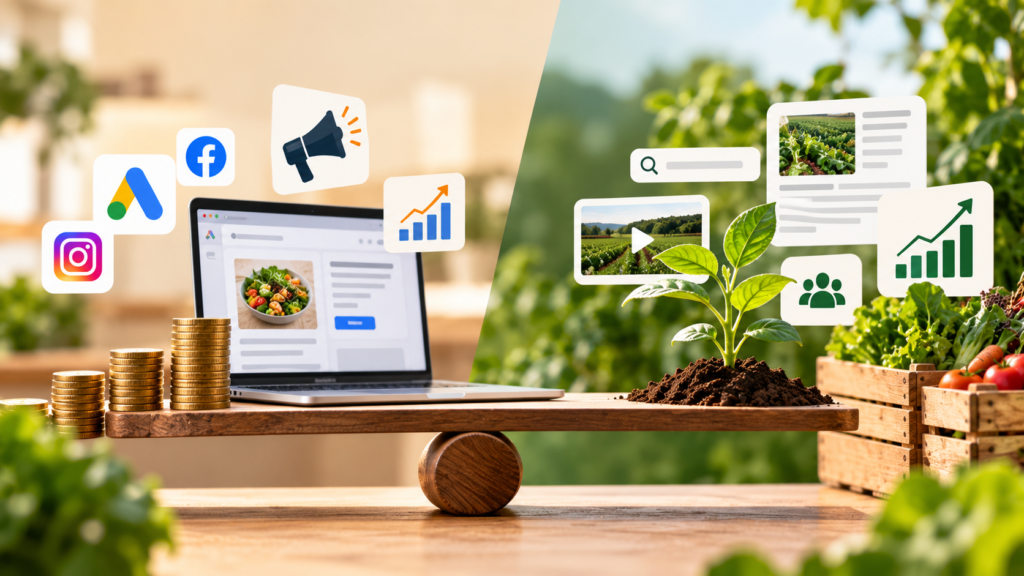
Depending too heavily on paid advertising increases customer acquisition costs over time and leaves a brand vulnerable to platform changes or rising ad prices. A more resilient organic food marketing strategy balances paid campaigns with content marketing, SEO and community building.
Understanding that SEO is largely organic marketing rather than paid advertising helps brands see it as a long-term equity-building channel, not a quick-win tactic. An organic food brand publishing educational content on farming practices or ingredient sourcing, built around genuine keyword research, can attract and engage customers without relying on ad spend for every single visit.
Avoiding the Most Common Organic Food Marketing Mistakes
- Making vague or exaggerated sustainability claims without verifiable evidence behind them
- Relying on outdated demographic targeting instead of actual purchase and browsing behavior
- Neglecting mobile optimization, losing sales to a clunky checkout experience
- Focusing only on new customer acquisition, ignoring the value of nurturing repeat buyers
- Inconsistent messaging across channels, creating confusion and eroding trust
- Poor influencer vetting, partnering with creators who don’t genuinely share the brand’s values
- Over-relying on paid media without investing in organic channels that compound over time
Should AI Content Be Part of Your Organic Food Strategy?
AI tools can speed up content research and drafting, particularly for educational material about farming practices or ingredient benefits. However, understanding whether AI-generated content helps or hurts SEO matters significantly for organic food brands specifically, since authenticity is central to how this audience evaluates trust. Generic, unoriginal content can undermine exactly the credibility a sustainability-focused brand is trying to build.
Measuring Organic Food Marketing Performance
Rather than tracking vanity metrics alone, a strong measurement approach includes:
- Repeat purchase rate, reflecting genuine loyalty rather than one-time curiosity
- Organic website traffic growth, showing how well content and SEO are compounding over time
- Engagement on sustainability and educational content, revealing which stories actually resonate
- Social commerce conversion rates, showing how well shoppable content performs
- Local search visibility, particularly relevant for brands selling through farmers markets or regional retailers, where local SEO helps attract nearby customers searching for organic options near them
Reviewing this data consistently, through structured content performance tracking, helps brands understand which strategies are genuinely working rather than relying on assumptions.
Practical Checklist for Your Organic Food Marketing Strategy
- Back every sustainability claim with specific, verifiable evidence
- Collect first-party and zero-party data through loyalty programs and preference quizzes
- Shift targeting toward behavior and intent, not just demographics
- Build genuine community spaces around shared values and recipes
- Partner with micro-influencers who authentically align with your brand
- Optimize the mobile shopping and checkout experience
- Balance paid advertising with long-term organic and content-driven growth
How SurgeAIO can help in terms of SEO
A strong organic food marketing strategy needs organic search working in the background, consistently bringing in shoppers who are actively researching healthier, more sustainable options. SurgeAIO helps food and beverage brands build that visibility without over-relying on paid media.
For brands unsure where to start, understanding the basics of hiring an SEO company clarifies what a dedicated strategy actually involves before committing budget. Building visibility starts with a thorough competitive analysis of keywords to understand how shoppers are searching for organic products, followed by organic traffic strategies designed to compound steadily rather than depend on constant ad spend. As AI-powered search reshapes discovery, understanding how to rank in AI Overviews is becoming increasingly relevant for brands hoping to be recommended when shoppers ask AI tools for organic product suggestions.
Final Thoughts
An effective organic food marketing strategy in 2026 goes well beyond a green label and a well-designed package. It requires verifiable transparency, genuine community building, smart use of first-party data, and a balanced mix of paid and organic growth channels. Brands that commit to authenticity over exaggeration, and consistency over scattered campaigns, consistently build the kind of lasting trust that keeps values-driven shoppers coming back.
Frequently Asked Questions
1. What makes an organic food marketing strategy different from a regular food brand’s strategy?
It centers on transparency, verifiable sustainability claims and values-driven community building, since organic shoppers are making a decision based on trust and ethics as much as taste or price.
2. How important is first-party data for organic food brands?
Very important. First-party and zero-party data allow for genuinely relevant personalization while respecting growing privacy expectations, unlike generic third-party data that often misses real customer intent.
3. Should organic food brands rely mainly on paid advertising?
No. Over-relying on paid media increases acquisition costs over time. A balanced strategy that includes SEO, content marketing and community building builds more sustainable, long-term brand equity.
4. What is greenwashing, and how can brands avoid it?
Greenwashing refers to exaggerated or unsubstantiated environmental claims. Brands avoid it by backing every sustainability statement with verifiable evidence, such as third-party certifications or transparent sourcing data.
5. Why does mobile optimization matter so much for organic food marketing?
A growing share of research and purchasing happens on smartphones. A slow or confusing mobile experience can quietly undermine conversions, even when the surrounding marketing strategy is strong.
