If you run a local business, you’ve probably heard the term “citation” thrown around in SEO conversations. But what is a citation in SEO, exactly, and why does it matter so much for visibility? In simple terms, a citation is any online mention of your business’s name, address, and phone number (NAP), whether or not it links back to your website. These mentions help search engines verify that your business is real, active, and trustworthy.
This guide breaks down what citations are, why they matter, the different types you should know about, and how to build them correctly.
Understanding Citations in SEO
A citation doesn’t need to include a clickable link to count. It simply needs to reference your business details consistently across the web. Search engines use these mentions as trust signals, cross-checking your NAP information against what’s listed on your website and Google Business Profile.
Consistency is the keyword here. If your business address appears one way on your website and slightly differently on a directory listing, that inconsistency can confuse search engines and weaken your local rankings. This is one reason citations are considered foundational to how local SEO helps attract local customers in the first place.
Why Citations Matter for Local Rankings
Citations act as a verification layer for search engines. The more consistent, high-quality mentions your business has across the web, the more confident search engines become in showing your business for relevant local searches.
However, citations aren’t just about quantity. A handful of citations on reputable, relevant directories often carries more weight than dozens of citations on low-quality or spammy sites. Therefore, quality and consistency matter more than sheer volume.
Types of Citations You Should Know
There are generally three categories of citations, each serving a slightly different purpose.
1. Structured Citations
These appear on business directories, review platforms, and data aggregators where your NAP information is entered into a specific, structured format. Examples include Google Business Profile, Yelp, Bing Places, and industry-specific directories.
2. Unstructured Citations
These occur when your business is mentioned in blog posts, news articles, or social media posts without a formal directory structure. While less consistent in format, they still contribute to your overall citation profile.
3. Implied Citations
Sometimes a mention doesn’t include your full NAP details but still references your business by name in a recognizable context, such as a local news roundup. These carry some value, though structured citations remain the most reliable for search engines.
Citations vs. Backlinks: What’s the Difference?
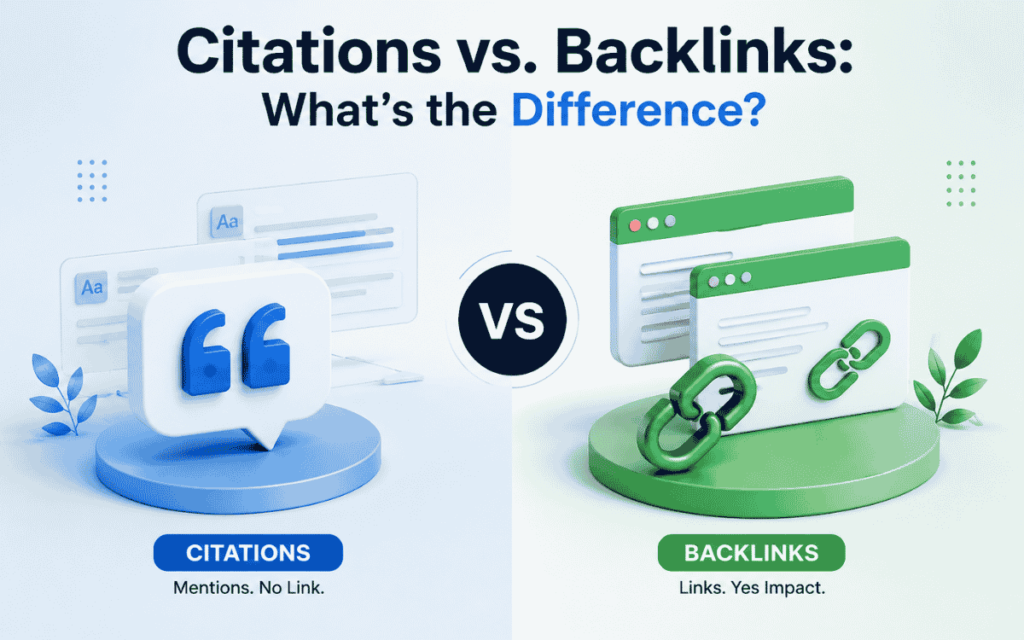
It’s easy to confuse citations with backlinks, but they serve different functions. A backlink is a hyperlink from one site to another, often used as a vote of authority. A citation, on the other hand, may or may not include a link – its value comes from the NAP consistency itself.
That said, many citations do include links, which means they can contribute to your broader link profile as well. If you’re building out a complete off-page strategy, it helps to understand how many backlinks you actually need alongside your citation-building efforts, since the two strategies often overlap.
Why Consistency Is Non-Negotiable
Search engines cross-reference citation data from multiple sources to build confidence in your business’s legitimacy. If your phone number is listed differently across five directories, that inconsistency creates doubt. Over time, this can quietly suppress your visibility in local search results and map packs.
Before building new citations, businesses should audit existing ones for accuracy. In addition, any changes to your business address, name, or phone number should be updated across every existing citation as soon as possible.
Where to Build Citations
Not all citation sources are created equal. Some of the most valuable places to build citations include:
- Google Business Profile – arguably the most important citation source for local visibility
- Industry-specific directories – relevant to your niche, such as healthcare, legal, or home services
- Local chamber of commerce websites – useful for hyper-local trust signals
- General directories – like Yelp, Bing Places, and Apple Maps
- Niche review platforms – specific to your industry’s customer base
For example, a dental practice might benefit from directories tailored to healthcare, while a service-based business might prioritize platforms geared toward home service leads instead. Choosing the right mix depends heavily on your industry and target audience.
Citations for Specific Industries
Citation strategy isn’t one-size-fits-all. Different industries rely on different directory ecosystems.
For instance, professional services often benefit from industry-recognized platforms. A firm offering SEO services for accountants would prioritize financial and business directories, while a clinic might lean toward healthcare-specific listings. Matching your citation sources to your industry increases relevance, which search engines also factor into local ranking decisions.
Similarly, service providers like electricians or landscapers benefit from citations on trade-specific directories rather than generic ones. If you’re in a service trade, reviewing how SEO works for plumbers can offer a useful blueprint, since citation strategy for service-area businesses often overlaps significantly across trades.
How Citations Fit Into a Broader Local SEO Strategy
Citations rarely work in isolation. They’re most effective when paired with other local SEO efforts, including optimized landing pages, reviews, and consistent content. Businesses targeting multiple service areas often combine citation building with efforts to create content for local landing pages, reinforcing location relevance from multiple angles at once.
Moreover, as search continues to evolve with AI-driven results, citation consistency plays a role in how businesses show up in AI-powered local search results as well, not just traditional map packs.
Common Citation Mistakes to Avoid
- Inconsistent NAP details across different platforms
- Duplicate listings for the same business on one platform
- Outdated information after a move or phone number change
- Ignoring niche directories relevant to your specific industry
- Overlooking suite or unit numbers, which can cause address mismatches
Fixing these issues typically requires a manual audit across all existing listings, followed by ongoing monitoring as your business grows.
How Long Does It Take to See Results From Citations?
Citation building is not an overnight fix. Search engines need time to crawl, verify, and factor new citation data into rankings. Generally, businesses start noticing improvements within a few months of consistent citation building, though this varies by market competitiveness. Understanding how long SEO takes to work overall can help set realistic expectations for citation-specific efforts as well.
Should You Handle Citations Yourself or Hire Help?
Building and auditing citations manually is possible but time-consuming, especially for businesses with multiple locations. Many owners eventually ask whether they need to hire an SEO company simply to manage citation consistency across dozens of platforms efficiently.
Agencies often use specialized tools to track citation accuracy across the web, flagging inconsistencies faster than manual checks would allow.
How SurgeAIO can help in terms of SEO
SurgeAIO helps businesses build and maintain accurate, consistent citations across the directories and platforms that matter most for their industry. Rather than blasting your business details across low-quality directories, SurgeAIO focuses on relevant, high-authority sources that strengthen trust signals with search engines. This is paired with broader local SEO strategy, content optimization, and ongoing performance tracking, ensuring citations work alongside every other piece of your visibility strategy rather than sitting in isolation.
Final Thoughts
So, what is a citation in SEO? At its core, it’s a trust signal – a consistent mention of your business details that helps search engines confirm you’re a legitimate, active business worth showing to local searchers. Building accurate, industry-relevant citations takes time and attention to detail, but the payoff is stronger local visibility and more qualified traffic finding their way to your business.
Frequently Asked Questions
What is a citation in SEO, in simple terms?
A citation is any online mention of your business’s name, address, and phone number, whether or not it includes a link. It helps search engines verify your business is legitimate.
Do citations need to include a link to count?
No. While linked citations can offer additional SEO value, unlinked mentions still contribute to your citation profile as long as the NAP details are accurate.
How many citations does a business need?
There’s no fixed number. Quality and consistency across relevant directories matter far more than raw quantity.
Can incorrect citations hurt my rankings?
Yes. Inconsistent or outdated NAP information across directories can confuse search engines and weaken local search visibility.
How often should I audit my citations?
It’s wise to audit citations at least twice a year, and immediately after any change to your business name, address, or phone number.
