Many business owners use the terms SEO and content marketing interchangeably, but they aren’t the same thing. Understanding what SEO and online content marketing are and how the two work together is essential for building sustainable organic growth. When combined correctly, these two disciplines amplify each other’s results far more than either could achieve alone.
This guide breaks down both concepts, explains how they connect, and shows you how to build a strategy that uses them together effectively.
What Is SEO?
SEO, or search engine optimization, is the process of improving your website so it ranks higher in search engine results pages for relevant queries. The goal is straightforward: when people search for topics related to your business, your website should appear prominently in the results.
SEO generally breaks down into three core areas:
- On-page SEO: Optimizing individual pages through content quality, keyword placement, meta descriptions, and header structure
- Off-page SEO: Building authority outside your website, primarily through backlinks and brand mentions
- Technical SEO: Improving your site’s crawlability, speed, mobile-friendliness, and overall structure
Strong SEO increases your visibility in search results, which typically drives more impressions, clicks, and ultimately more visitors to your site. This matters whether you’re running an ecommerce store, a service business, or a content publication looking to grow readership.
What Is Online Content Marketing?
Content marketing is the practice of creating and distributing helpful, relevant content to attract and engage a target audience. Unlike traditional advertising, content marketing focuses on providing value first to build trust and long-term relationships with readers.
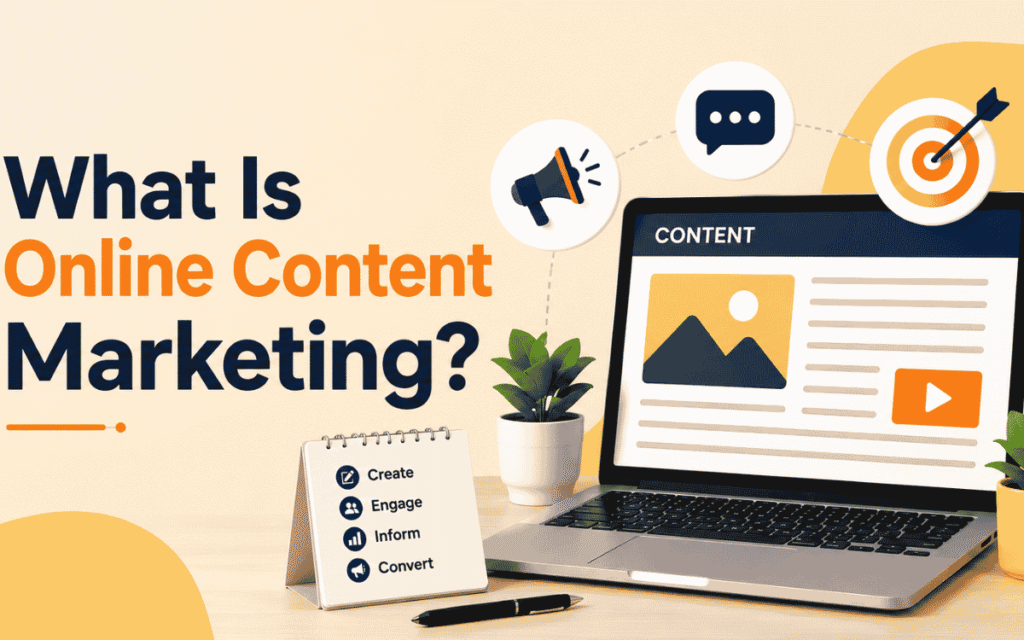
Common content marketing formats include:
- Blog posts and articles
- Email newsletters
- Ebooks, guides, and white papers
- Case studies
- Videos and podcasts
- Infographics and original research
Content marketing works across the entire buyer’s journey, educating prospects early on and supporting decision-making later. Because it’s less promotional than direct advertising, it tends to build stronger, more lasting audience relationships.
How SEO and Content Marketing Work Together
SEO and content marketing aren’t separate disciplines competing for budget. In fact, content marketing is a core component of off-page and on-page SEO. Here’s how the two connect.
Content Fuels SEO Visibility
Without content, there’s nothing for search engines to rank. Every blog post, guide, or landing page you publish creates a new opportunity to rank for relevant keywords. This is why consistent, well-researched content remains one of the most reliable organic traffic strategies available to growing businesses.
SEO Guides Content Strategy
SEO research, particularly keyword research, tells you exactly what your audience is searching for. This insight shapes which topics you cover, which questions you answer, and which formats resonate best. Understanding which keywords matter most for your niche ensures your content efforts target real demand instead of guesswork.
Quality Content Earns Backlinks
When your content offers unique data, expert insight, or genuinely useful information, other websites are more likely to link to it. These backlinks signal trust and authority to search engines, reinforcing your SEO performance over time. This connection between content quality and link-worthiness is why measuring content performance matters just as much as measuring rankings.
Understanding Search Intent
Search intent is the reason behind a user’s search query, and it should shape every piece of content you create. There are four main types:
- Informational intent: The user wants to learn something, such as “what is content marketing”
- Navigational intent: The user wants to find a specific website or brand
- Commercial intent: The user is comparing options before making a decision
- Transactional intent: The user is ready to complete an action, such as making a purchase
Matching your content to the correct intent increases the likelihood of ranking well and satisfying the searcher’s actual needs. Misjudging intent, such as writing a sales page for an informational query, often leads to poor rankings regardless of content quality.
Best Practices for Combining SEO and Content Marketing
1. Research Before You Write
Start every content piece with proper research. Understand what your audience is searching for, how competitors are addressing the topic, and where content gaps exist. This foundational step prevents wasted effort on topics with little search demand.
2. Prioritize Quality Over Quantity
Google’s ranking systems favour genuinely helpful, well-researched content. Rather than publishing frequently for its own sake, focus on comprehensive coverage that fully answers the reader’s question. That said, there’s ongoing debate about ideal content length, and reviewing guidance on how long a blog post should be for SEO can help you calibrate depth without unnecessary padding.
3. Build E-E-A-T Into Your Content
Google evaluates content based on Experience, Expertise, Authoritativeness, and Trustworthiness. You can strengthen these signals by:
- Featuring insights from subject matter experts
- Including original research or proprietary data
- Writing comprehensively so readers don’t need to consult other sources
- Citing credible sources and being transparent about your expertise
4. Distribute Content Across Multiple Channels
Publishing content is only half the equation. Distributing it through email, social media, and other channels increases its reach and improves the odds of earning backlinks and brand mentions. This is especially important for SEO lead generation efforts, where visibility across multiple touchpoints often drives more conversions than a single channel alone.
5. Monitor and Adjust Performance
Track how your content performs using analytics tools, watching for changes in rankings, traffic, and engagement. This ongoing feedback loop tells you what’s working and where adjustments are needed.
SEO and Content Marketing: Organic vs. Paid Considerations
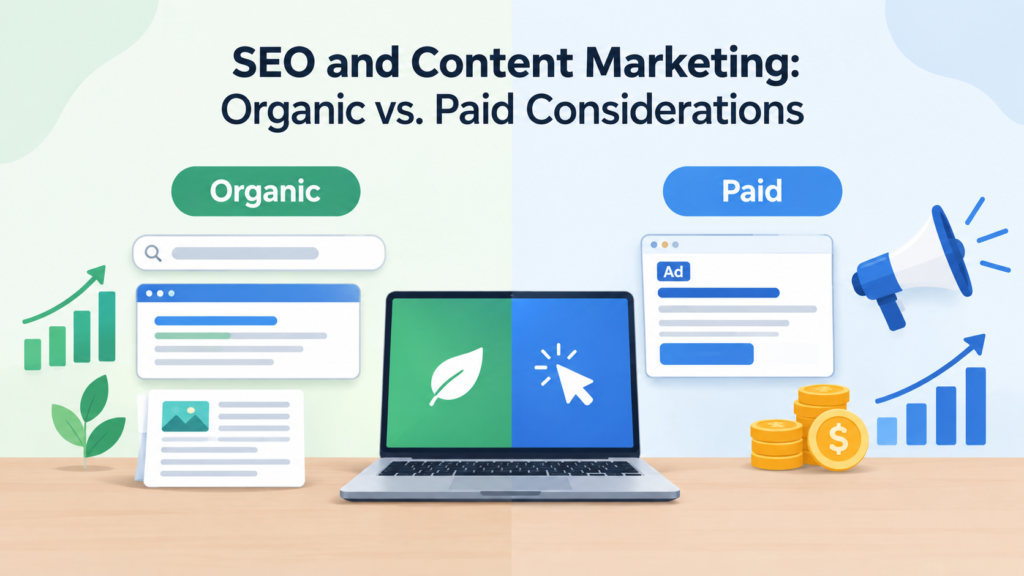
It’s worth noting that content marketing and SEO both focus on organic growth rather than paid promotion. Understanding whether SEO counts as organic or paid marketing helps clarify budget planning, since organic strategies typically require more upfront time investment but deliver more durable, long-term results compared to paid campaigns that stop generating traffic once spending ends.
The Role of AI in Content and SEO Today
As AI tools become more common in content creation, many marketers wonder about their impact on SEO performance. Quality and originality remain the deciding factors, regardless of how content is produced. If you’re weighing AI assistance in your workflow, it’s worth reviewing whether AI-generated content is bad for SEO before scaling production, since search engines evaluate helpfulness rather than authorship method alone.
Looking ahead, search behavior continues shifting toward AI-driven answers and conversational search experiences. Staying informed about the future of SEO helps ensure your content marketing strategy remains adaptable as these changes unfold.
Common Mistakes to Avoid
Even experienced marketers run into pitfalls when combining these disciplines. Watch for:
- Creating content without keyword or intent research
- Focusing purely on search engines while ignoring reader experience
- Publishing inconsistently, then expecting immediate ranking gains
- Neglecting content distribution after publishing
- Treating SEO and content marketing as separate, disconnected teams
Avoiding these mistakes keeps your strategy cohesive and improves the odds of measurable, compounding results over time.
How SurgeAIO can help in terms of SEO
Building an effective strategy around SEO and online content marketing requires coordinated research, writing, and distribution, which can be difficult to manage without dedicated support. SurgeAIO helps businesses align keyword research with content creation, ensuring every piece serves both readers and search engines. Whether you’re deciding if it’s time to hire an SEO company or looking to refine an existing content strategy, SurgeAIO provides the expertise needed to turn organic content into consistent, measurable growth.
Final Thoughts
Understanding what SEO and online content marketing are and how closely they’re connected is essential for any business aiming for sustainable organic growth. SEO provides the technical foundation and research direction, while content marketing supplies the substance that earns rankings, backlinks, and audience trust. When both disciplines work in tandem, businesses see stronger, more durable results than either approach could deliver alone.
Frequently Asked Questions
What is SEO and online content marketing?
SEO is the practice of optimizing a website to rank higher in search results, while content marketing is the creation and distribution of valuable content to engage an audience. Together, they drive organic visibility and traffic.
Is content marketing part of SEO?
Yes. Content marketing is considered a core component of off-page and on-page SEO, since quality content drives rankings, backlinks, and audience engagement.
Can I do SEO without content marketing?
Technically yes, but it’s far less effective. Without fresh, relevant content, there are fewer opportunities to target keywords or earn backlinks.
How long does it take to see results from SEO and content marketing?
Results typically build gradually over several months, depending on competition, content quality, and consistency of publishing.
Does content length affect SEO rankings?
Content length itself isn’t a direct ranking factor, but comprehensive coverage of a topic tends to perform better than thin, surface-level content.
Should small businesses invest in both SEO and content marketing?
Yes. Combining both disciplines typically produces stronger, more sustainable organic growth than pursuing either strategy in isolation.
