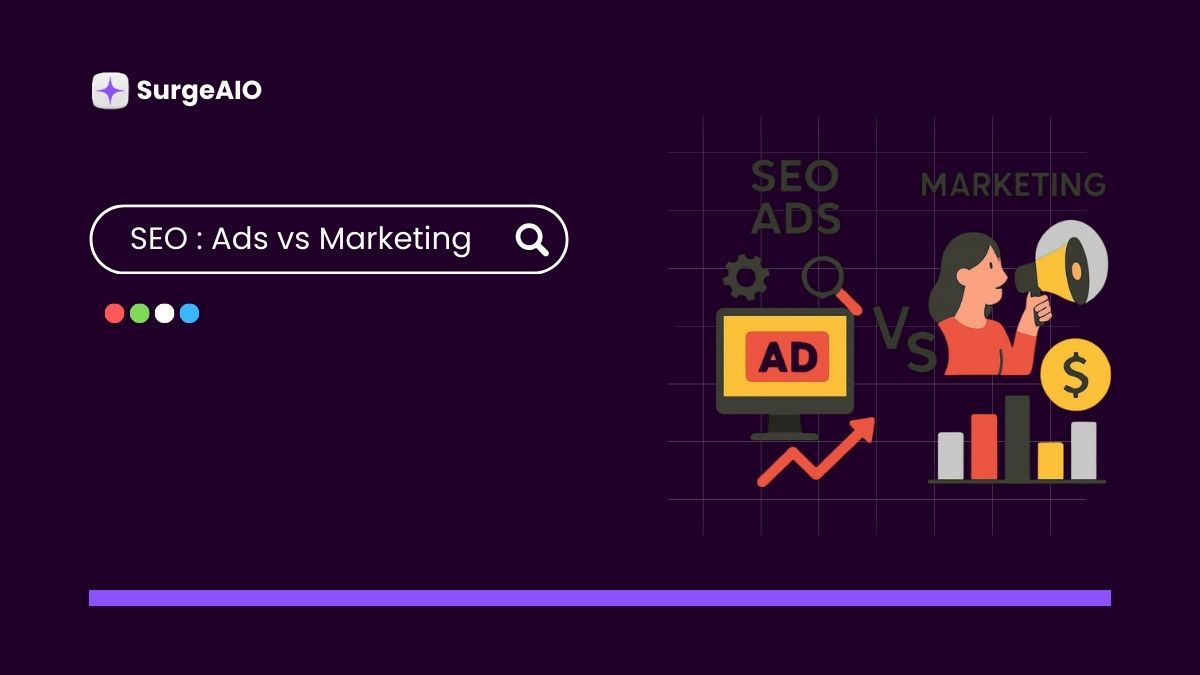
Businesses new to digital growth often ask the same question: Is SEO advertising or marketing
It is a fair question. The lines between advertising, marketing, and SEO blur quickly – especially when every agency seems to bundle them together.
However, confusing these three disciplines can lead to poor budget decisions and misaligned expectations. Understanding where SEO sits – and how it differs from paid advertising – helps you build a smarter, more sustainable growth strategy. Understanding what SEO and GEO mean for your website gives you the full strategic context from the very beginning.
In this guide, you will get a clear, jargon-free answer. We will also break down how SEO works, why it matters more than ever, and how to use it alongside other marketing and advertising tools.
First, Let’s Define the Terms
Before answering the core question, it helps to define each term clearly.
What Is Marketing?
Marketing is the broad umbrella. It covers every activity a business uses to attract, engage, and retain customers. This includes content, email, social media, SEO, public relations, and paid campaigns.
Marketing focuses on building relationships and communicating value over time. It is strategic and long-term by nature.
What Is Advertising?
Advertising is a subset of marketing. It involves paid placements – display ads, social media ads, Google Ads, TV spots, and billboards. You pay for visibility, and visibility stops the moment you stop paying.
Advertising is tactical and immediate. It delivers fast results but requires continuous spending.
What Is SEO?
SEO – Search Engine Optimisation – is the practice of optimising your website so it ranks higher in organic search results. It uses content, technical improvements, and link building to earn visibility without paying per click.
SEO is a form of digital marketing, not advertising. It generates organic (unpaid) traffic, which means it builds compounding value over time rather than stopping when your budget runs dry.
So, Is SEO Advertising or Marketing?
SEO is marketing – specifically, organic digital marketing.
It does not involve paid placements. You do not pay Google to rank your page. Instead, you earn that position by creating high-quality, relevant content and building a technically sound website.
Think of it this way:
- Advertising = paying for a billboard on a busy highway
- SEO = becoming so well-known and trusted that people naturally recommend you
Both put your brand in front of people. However, the mechanism – and the long-term cost structure – are completely different.
Understanding this distinction matters even more today as AI SEO transforms how search engines surface and rank content across platforms.
How SEO Fits Into the Marketing Ecosystem
SEO does not operate in isolation. It connects with and strengthens every other marketing channel you use.
Here is how SEO fits into the broader marketing picture:
- Content Marketing – SEO needs content. Blog posts, guides, and landing pages are the vehicles that carry your keywords and attract search traffic.
- Social Media Marketing – Social signals and brand mentions can indirectly support SEO authority.
- Email Marketing – Driving traffic back to SEO-optimised pages increases engagement signals that help rankings.
- PR and Link Building – Press coverage and authoritative backlinks directly boost your domain authority.
- Local Marketing – Local SEO helps businesses appear in map packs and “near me” searches.
SEO acts as the connective tissue that amplifies every other marketing investment you make. When your other channels drive branded searches, your SEO performance improves too. Understanding why LLM SEO matters helps you extend that connective tissue into AI-driven discovery channels – where a growing share of branded search is now beginning.
The Three Pillars of SEO as a Marketing Strategy
If SEO is a form of marketing, it needs to be treated with the same strategic rigor. It is built on three core pillars.
1. On-Page SEO
On-page SEO covers everything you control directly on your website:
- Keyword optimisation – using the right terms in titles, headers, and body content
- Content quality – answering user questions clearly and thoroughly
- Meta titles and descriptions – crafting compelling previews for search results
- Internal linking – connecting related pages to distribute authority across your site
- User experience – ensuring pages load fast and are easy to navigate
Choosing keywords that are important for SEO is the starting point for every on-page optimisation effort. Without targeting the right terms, even exceptional content fails to reach the right audience.
2. Off-Page SEO
Off-page SEO builds your site’s authority and credibility through external signals:
- Backlinks – links from other reputable websites that vouch for your content
- Brand mentions – references to your business across the web
- Reviews and ratings – signals that support local and trust-based rankings
- Social proof – engagement signals from social platforms
High-quality backlinks remain one of the strongest ranking signals search engines use. Off-page SEO is earned, not owned – and it requires consistent relationship building, outreach, and content worth referencing.
3. Technical SEO
Technical SEO ensures search engines can properly find, crawl, and index your website:
- Site speed – slow pages lose both rankings and users
- Mobile optimisation – over 60% of searches happen on mobile devices
- Structured data (schema markup) – helps search engines understand your content
- Crawlability – ensuring no broken links or blocked pages exist
- HTTPS security – a confirmed ranking signal from Google
Understanding what elements are foundational for SEO with AI helps you future-proof your technical approach as search algorithms become increasingly AI-driven. All three pillars must work together – strong content without technical health loses ground, and a fast site with poor content earns no authority.
Why SEO Has Become More Important – Not Less
Some businesses question whether SEO still matters in a world of social media, influencers, and AI tools. The answer is a definitive yes – and the reasoning is stronger than ever.
Google processes over 8.5 billion searches every day. Organic results capture approximately 69% of all clicks on a results page. Paid ads, despite their prominence, receive a smaller share.
Furthermore, user trust favours organic results. People have become increasingly skilled at identifying and skipping paid ads. Earning a top organic position signals credibility that ads simply cannot replicate.
The rise of AI-generated search results has added a new dimension. Understanding how AI Overviews will change SEO is now a critical part of any forward-looking marketing strategy. Businesses that adapt early will hold significant advantages as AI reshapes search.
Common Misconceptions About SEO
Several myths keep businesses from fully committing to SEO as a core marketing channel.
Myth 1: “SEO is free.” SEO requires real investment in content creation, technical audits, link building, and specialist expertise. It is not paid per click, but it is far from free.
Myth 2: “SEO results are too slow.” SEO results build over three to six months for competitive terms. However, many pages start ranking within weeks for long-tail keywords. The compounding return justifies the timeline.
Myth 3: “Paid ads are better than SEO.” Neither is universally better. They serve different goals. Paid ads deliver speed. SEO delivers sustainable, cost-efficient traffic at scale.
Myth 4: “SEO is just about keywords.” Modern SEO covers technical health, user experience, structured data, backlinks, and increasingly, AI visibility. Keywords are just the starting point.
Myth 5: “SEO is a one-time task.” SEO requires continuous maintenance. Algorithms update, competitors publish new content, and search behaviour evolves. Treat it as an ongoing marketing commitment.
SEO, SEM, and GEO – Understanding the Full Landscape
As search evolves, three terms now define the modern visibility landscape:
- SEO (Search Engine Optimisation) – earning organic rankings through content and technical excellence
- SEM (Search Engine Marketing) – paid search advertising, such as Google Ads and PPC campaigns
- GEO (Generative Engine Optimisation) – optimising content to appear in AI-generated answers from tools like ChatGPT, Gemini, and Perplexity
Understanding what SEO and GEO mean for your website helps you prepare for a search environment where both traditional rankings and AI-generated responses drive traffic.
Businesses that align all three channels build the most resilient, future-proof visibility strategies. Ultimately, the question is no longer just “how do I rank on Google” – it is “how do I appear wherever my audience searches?”
How to Start Using SEO as a Marketing Channel
Whether you are brand new to SEO or looking to improve an existing strategy, here is where to begin.
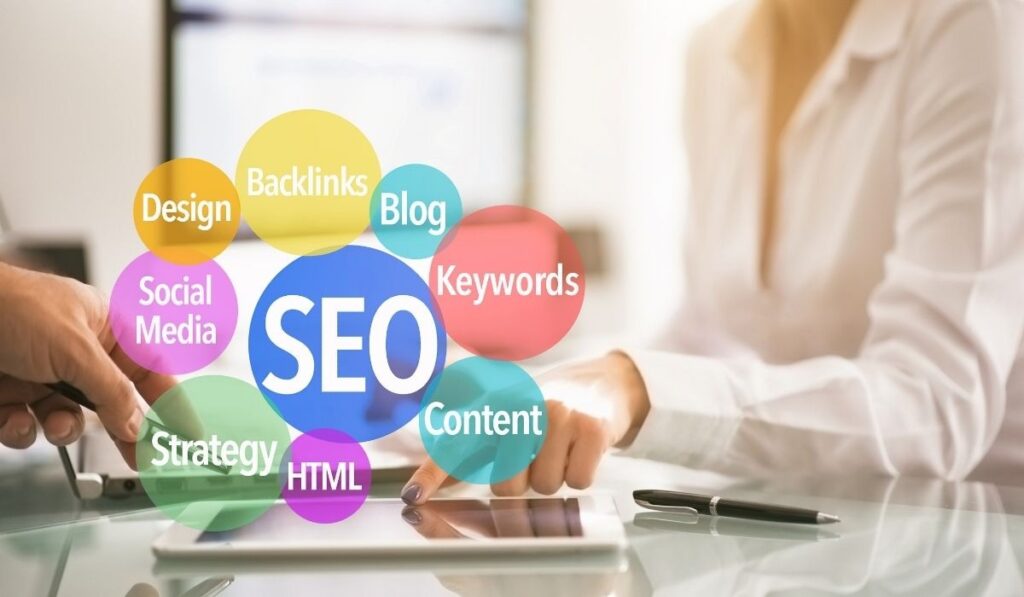
Step 1: Conduct keyword research. Identify the search terms your target customers actually use. Focus on keywords with clear intent – informational, commercial, or transactional.
Step 2: Audit your existing website. Check for technical issues: broken links, slow load times, missing meta tags, and poor mobile performance. Fix these before building new content.
Step 3: Create high-quality, intent-matched content. Write content that directly answers what your target keyword searcher needs. Go deeper than competitors. Be specific and genuinely useful.
Step 4: Optimise on-page elements. Include your primary keyword in the title tag, H1, meta description, and naturally throughout the body. Use internal links to connect related content.
Step 5: Build authority through backlinks. Reach out to relevant publications, write guest posts, earn press mentions, and create link-worthy resources.
Step 6: Track and refine. Use Google Search Console and analytics tools to monitor rankings, clicks, and conversions. Adjust your strategy based on what the data shows.
Following best practices for AI visibility SEO ensures your organic strategy stays aligned with where search is heading – capturing visibility not just in traditional rankings but across the full landscape of AI-powered discovery.
SEO for Specific Industries and Business Types
SEO strategies are not one-size-fits-all. Different industries require different approaches based on audience behaviour, competition, and search patterns.
Service businesses benefit most from local SEO – appearing in map packs and “near me” searches drives direct bookings and inquiries.
E-commerce businesses need strong product page optimisation, category page SEO, and structured data for rich results.
B2B companies should invest in long-form educational content that targets informational and commercial keywords earlier in the buyer’s journey.
Professional service providers – such as medical practices, legal firms, and consultants – build trust through authoritative content, reviews, and strong local signals.
Regardless of industry, the fundamentals remain the same: relevance, authority, and technical health. Understanding AI local SEO strategies helps local and service businesses extend their visibility into AI-driven local discovery – where an increasing share of high-intent local searches now begin.
How SurgeAIO Can Help in Terms of SEO
Whether you are just starting your SEO journey or looking to extend your organic visibility into the AI-driven search landscape, one challenge remains constant – knowing exactly where your brand stands and what it takes to grow.
That is precisely what SurgeAIO is built to deliver.
SurgeAIO is an enterprise-grade AI SEO and Generative Engine Optimisation (GEO) platform. It gives businesses a clear, real-time view of their organic search performance and their brand presence across the AI-powered platforms – ChatGPT, Gemini, Claude, and Perplexity – that are increasingly shaping how customers discover products and services online. For businesses looking for software built specifically for AI visibility and GEO, SurgeAIO is purpose-built for exactly this challenge.
1. AI Visibility Tracking
SurgeAIO helps you understand where your brand appears in AI-generated answers across platforms like ChatGPT, Gemini, and Perplexity – the same tools your prospects increasingly use to find and evaluate suppliers.
This ensures you are not just ranking on search engines but also visible in AI responses – which is rapidly becoming the first touchpoint in many buyer journeys. Using AI tools to compare brand visibility across platforms gives you the competitive intelligence needed to outperform competitors in both traditional and AI-driven search simultaneously.
2. Generative Engine Optimisation (GEO)
SurgeAIO goes beyond traditional SEO by helping you optimize content for AI-driven search results – ensuring your brand is recommended in conversational queries, not just ranked in blue-link results.
As AI Overviews continue reshaping how SEO works, businesses that optimize for GEO alongside traditional SEO will consistently outperform those who treat them as separate disciplines.
3. Competitor Insights
SurgeAIO gives you a clear picture of the competitive landscape across both traditional and AI-driven search:
- Which queries trigger competitor mentions in AI-generated responses
- What type of content AI tools prefer to cite and recommend
- Where your brand is winning – and where gaps need to be closed
This intelligence helps you refine your SEO and content marketing strategy more effectively than any traditional ranking tool alone can provide.
4. Content Optimisation Suggestions
SurgeAIO provides actionable recommendations to:
- Improve content relevance for both search engines and AI tools
- Match search intent more precisely across buyer journey stages
- Increase your chances of ranking higher organically and appearing in AI-generated answers
5. Real-Time Performance Monitoring
Track your full SEO performance with real-time updates, including alerts when your rankings change, when competitors outperform you, and when new AI visibility opportunities emerge. Tracking AI visibility metrics alongside traditional SEO KPIs gives you the complete picture of how your marketing investment is performing across every channel where your audience searches.
Proven Results
SurgeAIO’s clients have achieved outcomes that directly demonstrate the power of combining SEO with AI visibility strategy:
- 50,000 organic visits in 4 months through targeted SEO and content optimisation
- Number one rankings across 50+ keywords in 2 weeks for a competitive niche
- 8.1% GPT visibility in 2 months – appearing in nearly 1 in 10 relevant AI-generated responses
- Organic leads directly attributed to ChatGPT – tracked and reported as a real revenue acquisition channel
If you are ready to make SEO a systematic, measurable marketing growth engine – and extend that visibility into the AI-powered channels where organic discovery is rapidly expanding – SurgeAIO offers a free discovery call to map your current visibility gaps and build your roadmap.
Conclusion
So, is SEO advertising or marketing?
SEO is firmly a form of digital marketing. It earns organic visibility through strategy, content, and technical excellence – not paid placements.
Advertising buys visibility. SEO builds it.
Both have their place in a smart growth strategy. However, businesses that invest consistently in SEO build compounding authority that paid campaigns alone can never replicate.
The landscape is also evolving rapidly. Why LLM SEO matters is a question every marketer needs to answer now – because search is no longer limited to the ten blue links on a Google results page.
Start with the fundamentals. Research your keywords, fix your technical foundations, and create content your audience genuinely needs. Then build from there.
SEO rewards consistency, patience, and quality. Give it those three things – and it will deliver results that outlast any advertising campaign.
Frequently Asked Questions
Is SEO considered paid advertising?
No. SEO generates organic, unpaid traffic. You invest time and resources into optimisation, but you do not pay search engines for placement. Paid advertising – like Google Ads – is a separate channel where you pay per click or impression.
What is the difference between SEO and SEM?
SEO focuses on earning organic rankings through content and technical optimisation. SEM (Search Engine Marketing) involves paid strategies like PPC campaigns. SEO builds long-term visibility; SEM delivers immediate, budget-dependent results.
Can a small business benefit from SEO?
Absolutely. Small businesses often compete very effectively through local SEO and long-tail keyword targeting. These strategies have lower competition and attract highly specific, ready-to-buy searchers.
How long does SEO take to show results?
Most SEO campaigns show measurable progress within three to six months. Competitive keywords take longer. Local and long-tail keywords can produce results within weeks.
Is SEO better than running ads?
It depends on your goals. SEO delivers better long-term ROI and sustained traffic. Paid ads deliver immediate results. Most businesses benefit from running both simultaneously.
What is GEO, and how does it relate to SEO?
GEO (Generative Engine Optimisation) is the practice of optimising content to appear in AI-generated search answers. As tools like ChatGPT and Google’s AI Overviews gain prominence, GEO is becoming an important complement to traditional SEO.
Does social media affect SEO?
Social media does not directly influence Google rankings. However, it drives traffic, increases brand mentions, and supports content distribution – all of which can indirectly strengthen your SEO performance over time.
