If you’ve ever typed “how do I become an SEO specialist” into a search bar, you’re already thinking like one. SEO is one of the most in-demand digital skills today – and for good reason. Organic search drives more than half of all website traffic. Businesses need skilled professionals who can harness that power.
The good news? You don’t need a specific degree. You need the right knowledge, consistent practice, and a clear roadmap. This guide gives you exactly that.
What Does an SEO Specialist Actually Do?
Before diving into the how, let’s clarify the what.
An SEO specialist optimises a company’s website to rank higher on search engine results pages (SERPs). The ultimate goal is to attract more organic – meaning unpaid – traffic from Google, Bing, and other search engines.
Day-to-day responsibilities typically include:
- Researching and targeting relevant keywords
- Auditing websites for technical issues
- Optimising on-page content and metadata
- Building and earning quality backlinks
- Tracking performance using analytics tools
- Staying updated on algorithm changes and industry trends
Moreover, the role is evolving. Today’s SEO specialists also need to understand what LLM in SEO means and how AI-driven search is reshaping the landscape. The job has never been more dynamic.
Step 1: Build a Strong Foundation in SEO Fundamentals
Every SEO specialist starts with the basics. You need to understand how search engines work – how they crawl, index, and rank content.
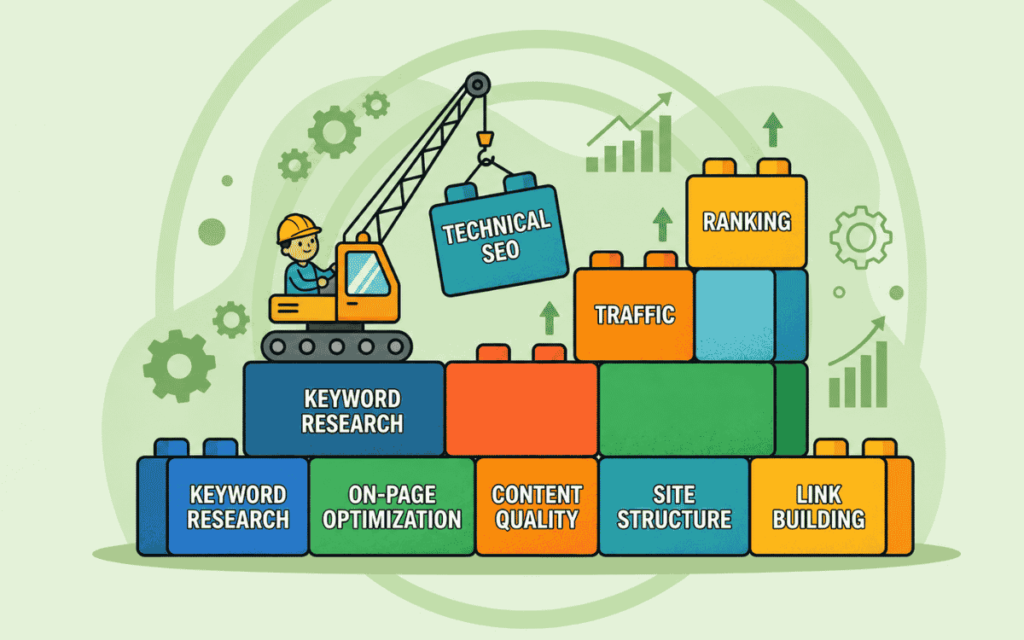
Start by learning these core concepts:
- How search engines crawl and index pages
- What organic vs paid search means
- How keywords drive search intent
- The role of on-page, off-page, and technical SEO
Free resources from Google, Moz, Ahrefs, and SEMrush offer beginner-friendly guides. Spend time reading industry blogs. Follow SEO news regularly.
Understanding whether SEO is organic or paid is one of the first concepts new practitioners need to get right. It shapes how you think about strategy, budgets, and goals from day one.
Step 2: Master Keyword Research
Keyword research is the backbone of SEO. Without it, you’re guessing what your audience wants. With it, you’re meeting them exactly where they are.
Learn to:
- Identify primary and secondary keywords for any topic
- Understand search intent – informational, navigational, commercial, transactional
- Evaluate keyword difficulty and search volume
- Find long-tail keyword opportunities your competitors are missing
Tools like Google Keyword Planner, Ahrefs, and SEMrush are industry standards. However, understanding why keywords are important for SEO goes beyond just finding high-volume terms. It requires aligning keywords with real user needs and business goals.
Practice by building keyword lists for hypothetical businesses. Then learn how to map those keywords to specific pages on a website.
Step 3: Learn On-Page Optimisation
Once you understand keywords, you need to know how to use them effectively on a page.
On-page SEO covers everything that lives within your website’s content and code. Key elements include:
- Title tags – the clickable headline that appears in search results
- Meta descriptions – the summary shown below the title
- Header tags (H1, H2, H3) – structure that signals content hierarchy
- URL structure – clean, keyword-rich URLs perform better
- Internal linking – connecting relevant pages across your site
- Image alt text – descriptions that help search engines understand visuals
- Content quality – original, well-structured writing that satisfies user intent
Strong on-page SEO is also foundational if you work in niche sectors. For example, the best SEO for a physiotherapy clinic require the same on-page principles but applied to a highly specific audience and set of search queries.
Step 4: Understand Technical SEO
Technical SEO ensures that search engines can efficiently crawl and index your website. Without this, even great content can remain invisible.
Key technical SEO areas to learn:
- Site speed optimisation – faster pages rank better and convert more
- Mobile-friendliness – Google uses mobile-first indexing
- XML sitemaps – help search engines discover your pages
- Robots.txt – controls which pages get crawled
- Structured data/schema markup – helps search engines understand your content
- Canonical tags – prevent duplicate content issues
- HTTPS security – a confirmed Google ranking signal
Learning schema markup is particularly valuable. Understanding schema markup for marketing consultants shows how structured data can elevate a site’s performance in competitive niches.
Technical SEO may feel intimidating at first. However, practising on a test website makes it manageable quickly.
Step 5: Learn Link Building and Off-Page SEO
Backlinks – links from other websites pointing to yours – remain one of Google’s strongest ranking signals. Building a healthy backlink profile is a critical skill for any SEO specialist.
Effective link-building strategies include:
- Guest posting on authoritative industry sites
- Creating shareable assets like research, infographics, and guides
- Digital PR – earning coverage that links back to your site
- Broken link building – finding dead links and suggesting your content as a replacement
- Building local citations for geographically targeted businesses
Understanding how many backlinks you need for competitive rankings helps you set realistic expectations and plan campaigns effectively. Quality always outweighs quantity in modern link building.
Step 6: Get Comfortable with SEO Tools
SEO specialists rely on a suite of tools daily. Familiarity with these platforms is essential for the role.
Must-know tools include:
- Google Search Console – monitors site performance and indexing issues
- Google Analytics – tracks traffic, user behaviour, and conversions
- Ahrefs / SEMrush / Moz – for keyword research, backlink analysis, and competitor tracking
- Screaming Frog – crawls websites to identify technical issues
- PageSpeed Insights – tests and improves site speed
Beyond these, learning inexpensive SEO tools that deliver strong results is a smart move – especially when working with smaller clients or limited budgets. You don’t always need the most expensive platform to get the job done.
Therefore, build your toolkit progressively. Start with free tools and expand as your skills and budget grow.
Step 7: Develop Content Strategy Skills
SEO and content are inseparable. As an SEO specialist, you need to understand how to plan, create, and optimise content that ranks and converts.
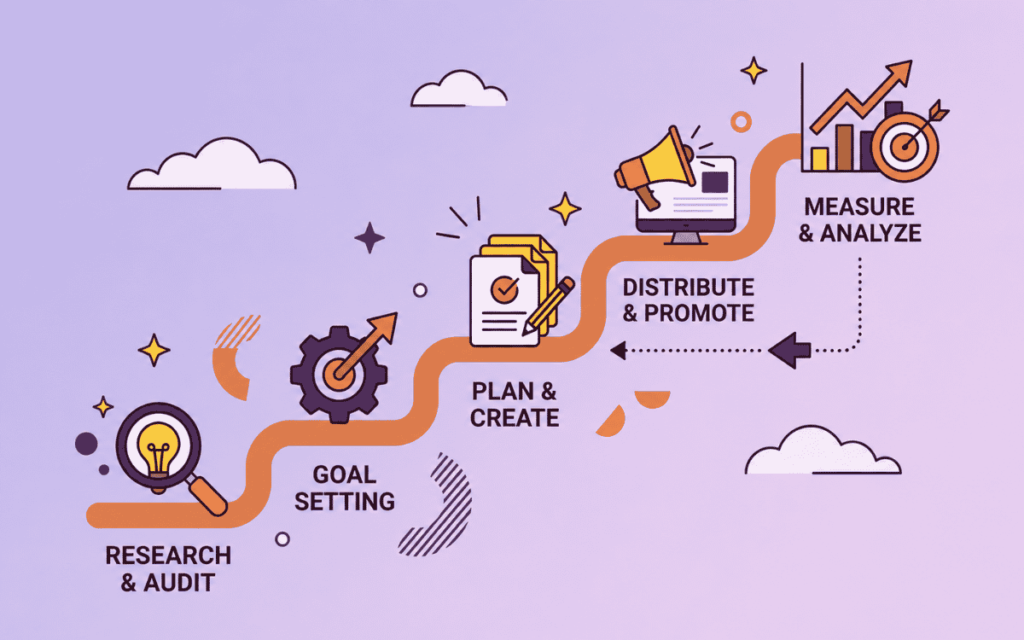
Strong content strategy skills include:
- Building topic clusters around pillar pages
- Writing content that satisfies search intent fully
- Optimising existing content to improve rankings
- Identifying content gaps through competitive analysis
- Using content performance data to refine and improve your strategy over time
Great SEO specialists don’t just optimise pages – they guide the entire content creation process. They know which topics to target, how to structure articles, and when to update or consolidate existing content.
Step 8: Build Real-World Experience
Reading about SEO is valuable. However, doing SEO is what builds real expertise.
Here’s how to gain hands-on experience:
- Start your own blog or website – your personal SEO laboratory
- Take on freelance clients – even small local businesses need SEO help
- Contribute to open-source projects – build credibility and real portfolio work
- Offer pro bono SEO audits – a great way to build case studies early on
- Join SEO communities – Reddit’s r/SEO, Twitter/X SEO chats, and LinkedIn groups are full of practitioners sharing real-world insights
Additionally, understand how SEO applies across different industries. For instance, SEO for home service leads requires a local-first approach, while B2B tech companies demand entirely different keyword and content strategies. The broader your experience, the more versatile you become.
Step 9: Stay Current with Algorithm Updates
Google updates its algorithm thousands of times per year. Major updates – like Core Updates, Helpful Content Updates, and spam-related changes – can dramatically shift rankings overnight.
To stay current:
- Follow Google’s official Search Central blog
- Monitor industry sites like Search Engine Journal, Search Engine Land, and Moz
- Track your clients’ ranking changes and correlate them with known updates
- Test and adapt your strategies based on what’s working now, not what worked two years ago
Furthermore, the rise of AI in search is creating an entirely new dimension to the role. Understanding the future of SEO – including AI Overviews, generative search, and LLM-powered results – is now part of staying competitive as a specialist.
Step 10: Consider Certifications and Specialisations
While no certification will replace hands-on experience, formal credentials demonstrate commitment and baseline knowledge to employers and clients.
Valuable SEO certifications include:
- Google Analytics Certification (free via Skillshop)
- Google Search Ads Certification (free via Skillshop)
- SEMrush SEO Toolkit Course
- HubSpot SEO Certification
- Moz SEO Essentials Certificate
You may also choose to specialise in a specific area – local SEO, technical SEO, e-commerce SEO, or content strategy. Specialists who develop deep expertise in one vertical often command higher rates and attract more focused client opportunities.
How SurgeAIO Can Help in Terms of SEO
Whether you’re learning SEO or already practicing it professionally, having the right platform makes a significant difference. SurgeAIO is built to support SEO specialists at every stage – from research and strategy through to execution and reporting.
Here’s how SurgeAIO adds value:
Keyword Research and Gap Analysis – SurgeAIO helps you identify high-opportunity keywords your competitors are missing. It surfaces low-competition terms with strong intent signals, giving you a strategic edge.
Content Optimisation Guidance – The platform analyses your content against top-ranking pages and provides actionable recommendations to improve relevance, structure, and keyword usage.
Technical SEO Auditing – SurgeAIO scans websites for the technical issues that hold rankings back – from crawl errors to page speed problems – and prioritises fixes by impact.
AI Visibility Tools – As search evolves, SurgeAIO helps specialists track brand visibility in AI-generated answers and AI Overviews – not just traditional rankings.
Performance Reporting – Clear, client-ready dashboards make it easy to demonstrate the value of your SEO work. Track organic traffic, ranking improvements, and lead generation in one place.
For anyone serious about becoming an SEO specialist, SurgeAIO removes the guesswork and gives you a data-driven environment to develop your skills and deliver results.
Final Thoughts
Becoming an SEO specialist is one of the most rewarding paths in digital marketing. It combines analytical thinking, creative writing, technical problem-solving, and strategic planning into a single role.
The path is clear: learn the fundamentals, develop hands-on experience, build your toolkit, and stay current with how search is evolving. There is no single shortcut – but consistent, curious effort gets you there faster than most expect.
Start today. Build a website. Pick a keyword. Optimise a page. Then do it again tomorrow.
Frequently Asked Questions
Q1. Do I need a degree to become an SEO specialist?
No. SEO is a skills-based profession. Most hiring managers prioritise demonstrated results over formal qualifications. A strong portfolio, certifications, and hands-on experience matter far more than a specific degree.
Q2. How long does it take to become an SEO specialist?
With consistent effort, you can develop foundational SEO skills in 3 to 6 months. However, becoming truly proficient – with a portfolio of real results – typically takes 12 to 24 months of active practice.
Q3. What is the average salary for an SEO specialist?
Salaries vary significantly by location, experience, and specialisation. In the US, entry-level SEO specialists typically earn between $40,000 and $55,000 annually. Experienced specialists and managers can earn $70,000 to $100,000 or more.
Q4. Can I become an SEO specialist without a marketing background?
Absolutely. Many successful SEO specialists come from writing, web development, data analytics, or journalism backgrounds. The key skills – analytical thinking, content creation, and technical problem-solving – transfer well from many fields.
Q5. Is SEO a good career in 2026?
Yes. Demand for SEO specialists continues to grow as businesses compete for organic visibility. The evolution of AI search has added new dimensions to the role, making it more complex and valuable – not less relevant.
Q6. What is the difference between an SEO specialist and an SEO manager?
An SEO specialist typically executes a strategy – optimising pages, building links, and running audits. An SEO manager oversees strategy, manages teams or agencies, and aligns SEO with broader marketing goals. The specialist role is usually the entry point into SEO management.
