Not all website traffic comes from the same place. Some of it comes from ads. The rest comes from search engines rewarding relevance-this is organic search.
If you’ve ever wondered what is organic search in SEO, the short answer is this: it’s unpaid visibility earned through optimization, not purchased through advertising. But there’s much more to understand behind that definition.
This guide walks through how organic search actually works, why it drives most website traffic, and how to build a strategy around it.
Defining Organic Search
Organic search describes the process of earning website traffic through unpaid listings on a search engine results page. It relies entirely on relevance, content quality, and technical optimization-not advertising budgets.
When search engines like Google evaluate a webpage, they consider dozens of signals before deciding where it belongs on the results page. No business can pay to skip this evaluation process for organic listings.
This is what separates organic search from paid search. Paid results appear because someone bought placement. Organic results appear because search engines judged them the most relevant answer.
How Does Organic Search Actually Work?
Search engines rely on automated programs, often called crawlers or bots, to explore the web. These bots follow links from page to page, cataloguing content along the way.
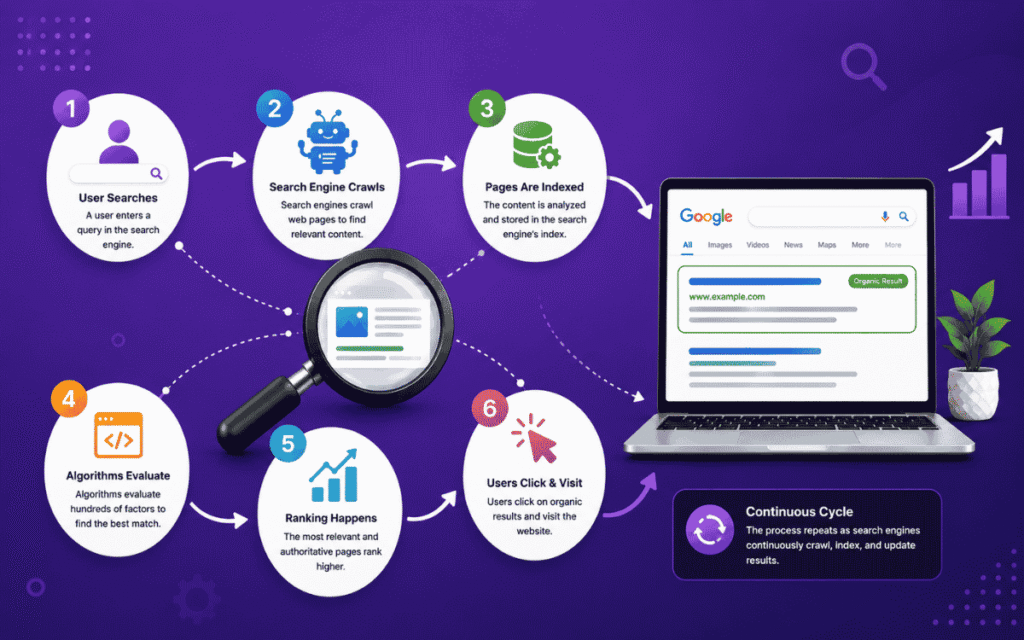
The process generally happens in three stages:
- Crawling: Bots discover new and updated pages across the internet by following internal and external links.
- Indexing: Discovered pages get stored in a massive database, organized by content and relevance.
- Ranking: When a user searches a query, the algorithm sorts indexed pages by relevance, quality, and authority.
Only pages that are properly crawled and indexed can appear in organic results. This is why technical accessibility matters just as much as content quality.
A clean site structure makes this process smoother. Reviewing how important a sitemap is for SEO can help ensure search engines find and index every relevant page on your site.
Why Organic Search Matters So Much
Organic search isn’t just one traffic channel among many-it’s typically the largest one. Industry research from BrightEdge has found that organic search drives roughly half of all website traffic, more than any other single source.
Beyond volume, organic traffic tends to convert better too. HubSpot’s research shows organic search leads close at a noticeably higher rate than outbound leads like cold calls, reflecting the intent behind a search query.
Here’s why that matters for your business:
- Higher trust: Users tend to skip paid ads and click organic listings instead, based on research from Moz.
- Stronger visibility: Websites ranking on page one capture the overwhelming majority of total organic clicks.
- Sustainable growth: Traffic doesn’t stop the moment you pause spending, unlike paid campaigns.
- Better ROI over time: Initial optimization work continues paying off long after it’s completed.
This is why so many marketing teams prioritize organic visibility over short-term paid pushes. Debates over whether SEO belongs under advertising or organic marketing budgets are common, but most agree it delivers results organic or paid strategies simply can’t match in the long run.
Key Factors That Influence Organic Rankings
Search engines weigh many variables before ranking a page. While exact algorithms remain private, certain factors are consistently important across nearly every industry.
Content Relevance and Quality
Pages that thoroughly answer a user’s query tend to outperform thin or generic content. Search engines increasingly reward depth, accuracy, and originality over keyword repetition.
Keyword Strategy
Keywords still signal what a page is about, but placement matters more than frequency. Search engines can detect unnatural stuffing, which can hurt rankings instead of helping them.
Finding the right balance is a common challenge. Learning how many SEO keywords per page works best can help you avoid over-optimizing while still signaling topical relevance clearly.
Backlink Authority
Links from credible, relevant websites act as trust signals. The more authoritative sites that reference your content, the more weight search engines tend to assign your pages.
Technical Health
Site speed, mobile usability, and secure connections all influence how search engines evaluate user experience. Poor technical performance can undermine even the best content.
User Engagement Signals
Metrics like bounce rate and time on page offer indirect signals about content quality. When users engage deeply with a page, it suggests the content genuinely met their needs.
Building an Organic Search Strategy That Works
A results-driven organic search strategy blends several disciplines. Here’s a practical framework to follow:
- Start with keyword and intent research. Understand exactly what your audience is searching for.
- Create in-depth, original content. Address the topic more thoroughly than competing pages.
- Optimize technical foundations. Fix crawl errors, improve speed, and ensure mobile compatibility.
- Earn backlinks naturally. Build relationships and produce content worth referencing.
- Track performance consistently. Adjust based on what the data reveals.
This process rarely delivers instant results, but it compounds. Reviewing content performance data regularly helps identify which pages are gaining traction and which need revisiting.
Businesses with recurring service models often need a more tailored plan. Exploring organic traffic strategies for SaaS can offer useful direction for companies competing in crowded digital markets.
Organic Search and the Rise of AI-Driven Results
Search behavior is shifting. AI-generated summaries and overviews now appear directly on results pages, changing how users interact with organic listings.
This doesn’t eliminate organic search-it adds a new layer to it. Websites still need strong fundamentals to be cited or referenced within these AI-generated answers.
Staying visible in this evolving landscape means adapting your strategy. Understanding how to rank in AI overviews has become an increasingly important part of modern organic search planning.
Tracking this new visibility layer also matters. Reviewing AI visibility metrics alongside traditional rankings gives a fuller picture of your organic presence across both classic and AI-powered search results.
Common Organic Search Mistakes to Avoid
Many websites underperform simply because of avoidable errors. Watch out for these common pitfalls:
- Keyword stuffing: Overloading content with keywords hurts readability and can trigger penalties.
- Thin or duplicate content: Pages lacking substance rarely rank well or hold their position.
- Ignoring mobile experience: A majority of searches now happen on mobile devices.
- Skipping technical audits: Crawl errors and broken links quietly damage visibility over time.
- Neglecting local optimization: Businesses serving specific regions miss opportunities without it.
Local relevance deserves particular attention for service-based businesses. Understanding how local SEO helps attract local customers shows how organic strategies can be tailored to geography-specific searches.
Measuring Organic Search Success
Without proper tracking, it’s difficult to know whether your organic strategy is actually working. Focus on metrics that reflect real business impact, not just vanity numbers.
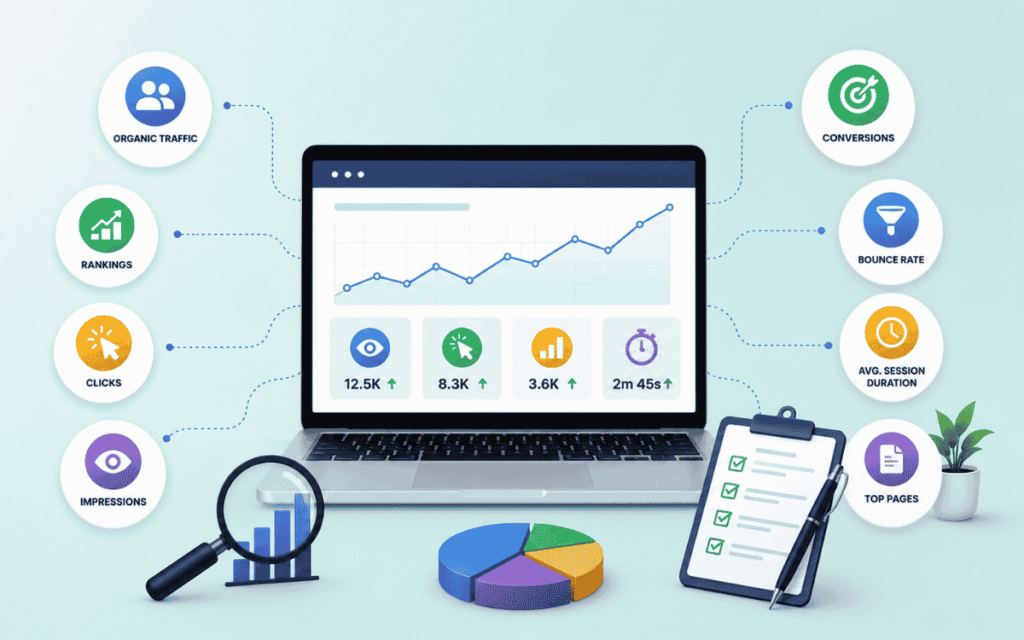
Important metrics to monitor include:
- Keyword rankings: Position changes for your target search terms over time.
- Organic sessions: Total traffic arriving through unpaid search results.
- Click-through rate: The percentage of searchers who click your listing.
- Bounce rate and dwell time: Signals of content relevance and engagement.
- Conversion rate: How effectively organic visitors turn into leads or customers.
Following established best practices helps ensure your tracking stays accurate and actionable. Reviewing best practices for AI visibility and SEO can help you align measurement with how search is evolving today.
How SurgeAIO can help in terms of SEO
SurgeAIO builds organic search strategies grounded in data, not guesswork. We start by auditing your current visibility, identifying technical gaps, and mapping content opportunities aligned with real search intent.
From there, our team develops content, strengthens technical foundations, and builds the kind of authority that search engines reward over time. We also monitor how your brand performs across both traditional rankings and emerging AI-driven search results.
Whether you’re starting fresh or refining an existing approach, SurgeAIO tailors every strategy to your industry and goals-helping you build organic visibility that lasts well beyond any single campaign.
Final Thoughts
Organic search remains one of the most valuable, sustainable channels for driving qualified website traffic. Unlike paid campaigns, its benefits compound rather than disappear once spending stops.
By focusing on content quality, technical health, and evolving search behaviors, businesses can build organic visibility that continues delivering value for years to come.
Frequently Asked Questions
1. What does organic search mean in SEO?
Organic search refers to unpaid website traffic earned through search engine rankings, based on relevance and quality rather than advertising spend.
2. How is organic search different from organic traffic?
Organic search refers to the unpaid results themselves, while organic traffic refers to the visitors who arrive at your site through those results.
3. How long does it take to rank in organic search?
Most websites see measurable improvements within a few months, though competitive industries may require six months or longer for significant results.
4. Do social media signals affect organic search rankings?
Not directly, but social sharing can indirectly boost visibility by generating traffic, brand awareness, and opportunities for backlinks.
5. What tools help track organic search performance?
Google Search Console and Google Analytics are commonly used to monitor rankings, traffic, and user engagement metrics.
6. Is organic search still relevant with AI search growing?
Yes. AI-driven results still pull from well-optimized, authoritative content, making strong organic fundamentals more important than ever.
