Search engine optimization isn’t a single tactic. It’s a mix of strategies working together. Two of the most important pillars are on-page SEO and off-page SEO.
Understanding what on-page and off-page SEO are helps you build a website that ranks well and earns trust. Both approaches work toward the same goal: better visibility on search engines. However, they achieve it in very different ways.
In this guide, we’ll break down both concepts, their key elements, and how they work together to boost your rankings.
What Is On-Page SEO?
On-page SEO refers to the optimization work you do directly on your website. It covers everything from content quality to technical structure. The goal is to make each page easy for search engines and users to understand.
This type of optimization gives you direct control. You can edit your titles, restructure your content, or fix broken links whenever needed. Therefore, on-page SEO is often considered the foundation of any solid strategy.
Search engines like Google use on-page signals to determine what a page is about. If these signals are unclear or missing, your page may struggle to rank-even with great content behind it.
Key Elements of On-Page SEO
- Content quality: Original, well-researched content that answers user intent.
- Keyword optimization: Natural placement of keywords in headings, body text, and meta tags. Learn more about how keywords are important for SEO and how they shape rankings.
- Title tags and meta descriptions: Clear, compelling summaries that boost click-through rates.
- URL structure: Clean, descriptive URLs that reflect page content.
- Internal linking: Connections between related pages that guide users and distribute link equity.
- Technical SEO: Site speed, mobile-friendliness, crawlability, and schema markup.
Getting the right keyword count matters too. Many site owners wonder how many SEO keywords per page they should target for the best results without overstuffing content.
What Is Off-Page SEO?
Off-page SEO includes all the actions taken outside your website to improve its authority. Unlike on-page work, you don’t have full control here. Instead, you build trust through external relationships and reputation.
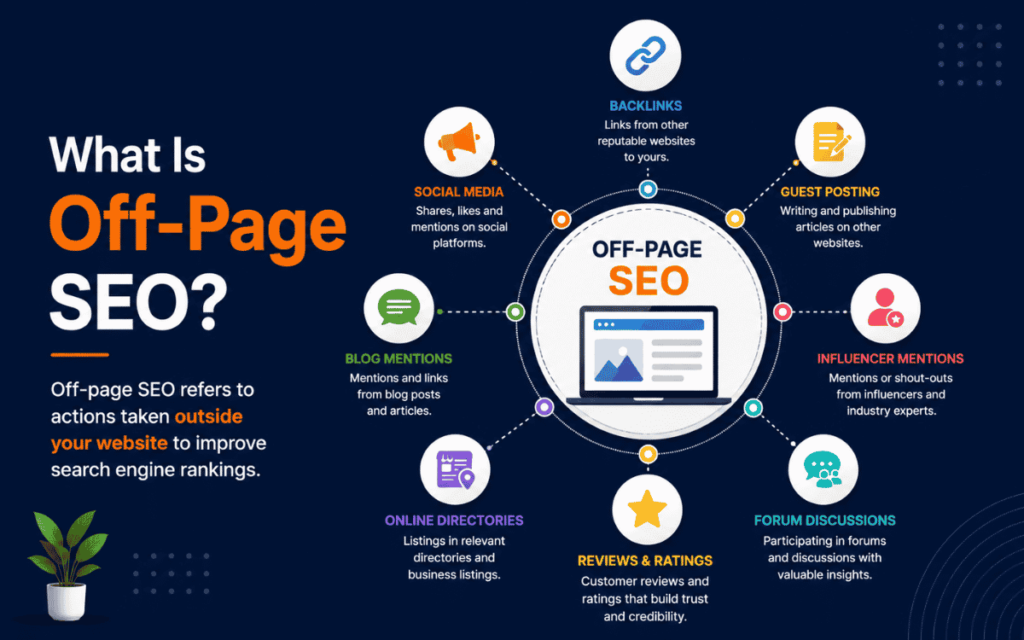
Search engines treat off-page signals as endorsements. When other credible websites link to yours, it tells Google your content is valuable. Consequently, off-page SEO plays a major role in long-term ranking success.
Off-page SEO is often equated with link building, but it’s broader than that. It also includes brand mentions, social proof, and reputation management across the web.
Key Elements of Off-Page SEO
- Backlinks: Links from trusted, relevant websites that boost domain authority.
- Social media engagement: Sharing content and building brand visibility across platforms.
- Guest blogging: Writing for other sites to earn exposure and quality links.
- Influencer collaborations: Partnering with industry voices to expand reach.
- Online reviews: Positive reviews that strengthen local search visibility.
- Brand mentions: Unlinked citations that still add credibility signals.
Building backlinks takes time and strategy. If you’re unsure how many backlinks you need, the right number usually depends on your niche, competition, and current authority score.
On-Page vs Off-Page SEO: The Core Differences
The easiest way to understand the difference is location. On-page SEO happens on your website. Off-page SEO happens away from it.
On-page SEO focuses on content, structure, and user experience. Off-page SEO focuses on authority, trust, and external validation. Both, however, contribute to the same ranking equation.
| Aspect | On-Page SEO | Off-Page SEO |
| Location | Within your website | Outside your website |
| Control | Full control | Limited/indirect control |
| Focus | Content, structure, UX | Authority, reputation, links |
| Examples | Title tags, headings, internal links | Backlinks, social shares, reviews |
| Timeframe | Faster to implement | Takes longer to build |
Google’s algorithm evaluates both sets of signals together. A page with strong on-page optimization but zero backlinks may still struggle against competitors with balanced strategies.
Why Both Matter for Rankings
Some marketers focus heavily on one side and neglect the other. This is a mistake. On-page and off-page SEO work best as a combined effort.
Strong on-page SEO ensures search engines can understand and index your content correctly. Meanwhile, off-page SEO builds the trust needed to outrank competitors in crowded niches.
Think of it this way: on-page SEO gets you noticed. Off-page SEO earns you respect. Ultimately, you need both to compete for top rankings.
This is especially true for businesses targeting specific regions. In fact, understanding how local SEO helps attract local customers shows how on-page fixes (like location pages) and off-page efforts (like reviews) combine for local visibility.
How to Build a Balanced SEO Strategy
A balanced approach starts with auditing your current site. Identify weak on-page elements first, since they’re easier to fix. Then, shift focus toward earning quality backlinks and building your brand presence.
Here’s a simple roadmap:
- Audit your content for keyword relevance and search intent alignment.
- Fix technical issues like slow load times or broken links.
- Optimize meta tags and internal linking structure.
- Build a sitemap to help search engines crawl your pages efficiently.
- Pursue backlinks from authoritative, relevant sources.
- Monitor brand mentions and manage your online reputation.
A sitemap might sound minor, but it plays a bigger role than most people assume. Learning how important a sitemap is for SEO can help you avoid indexing issues that quietly hurt rankings.
Similarly, structured data adds context search engines rely on. Adding schema markup helps your pages qualify for rich results, which improves visibility even before someone clicks.
Common Mistakes to Avoid
Many websites underperform because of avoidable errors. Here are a few worth watching for:
- Keyword stuffing: Overusing keywords hurts readability and rankings.
- Ignoring mobile experience: Most searches happen on mobile devices today.
- Buying low-quality backlinks: These can trigger penalties instead of boosting authority.
- Neglecting page speed: Slow pages increase bounce rates and hurt UX signals.
- Skipping internal links: Missed opportunities to guide users deeper into your site.
Results also take time. If you’re wondering how long SEO takes to work, most strategies need three to six months before showing measurable traction.
On-Page and Off-Page SEO: Working Together
Neither strategy works in isolation. On-page SEO makes your content worth linking to. Off-page SEO ensures people actually find and trust it.
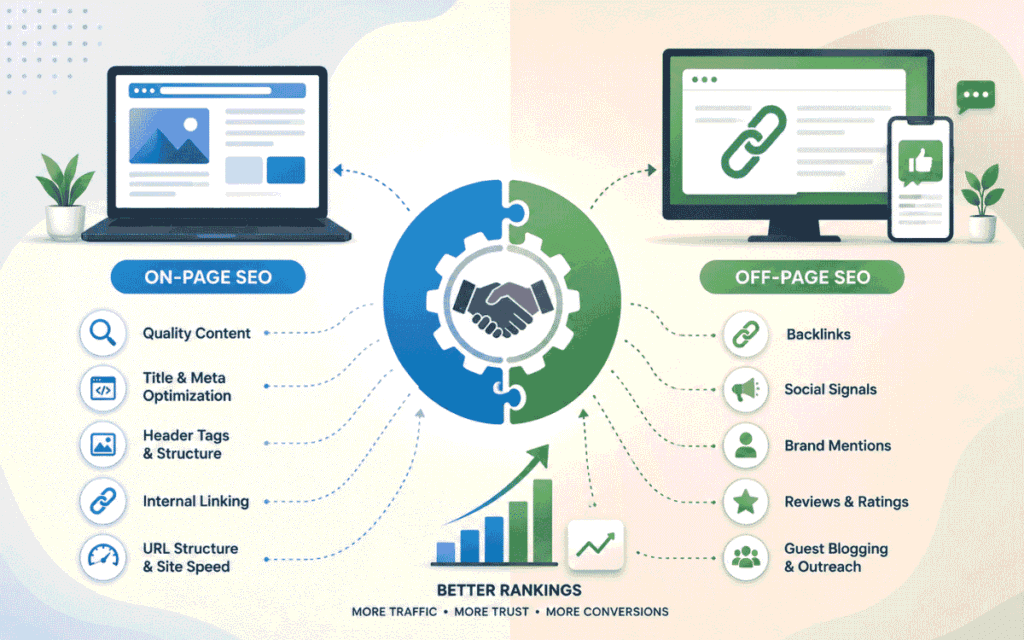
For example, a well-optimized blog post (on-page) is more likely to earn backlinks (off-page) if it’s genuinely useful. In turn, those backlinks boost the page’s ranking, driving more organic traffic back to your optimized content.
This cycle is why experienced marketers treat SEO holistically rather than picking one tactic over another. Additionally, some businesses debate whether SEO counts as advertising or marketing-understanding this distinction helps clarify how both on-page and off-page efforts fit into a broader growth strategy.
If backlink building feels overwhelming, partnering with a specialist can help. Reviewing backlink companies for SEO is a good starting point if you want expert support building your off-page authority.
How SurgeAIO can help in terms of SEO
SurgeAIO combines on-page optimization with authority-building strategies to deliver measurable results. Our team audits your website, fixes technical gaps, and crafts content that aligns with real search intent.
On the off-page side, we focus on earning quality backlinks, managing brand reputation, and strengthening your domain authority. This balanced approach ensures your rankings improve steadily, without shortcuts that risk penalties.
Whether you’re starting from scratch or refining an existing strategy, SurgeAIO tailors its approach to your industry and goals. The result is sustainable organic growth that compounds over time.
Final Thoughts
Mastering on-page and off-page SEO isn’t about choosing one over the other. It’s about building both in tandem for sustainable growth.
Start with strong on-page fundamentals, then layer in off-page strategies like link building and reputation management. Over time, this combined approach delivers better rankings, more traffic, and long-term visibility in search results.
Frequently Asked Questions
1. What is the main difference between on-page and off-page SEO?
On-page SEO involves optimizations made directly on your website, like content and meta tags. Off-page SEO involves external actions, like backlinks and social signals, that build authority.
2. Which is more important, on-page or off-page SEO?
Both are equally important. On-page SEO lays the foundation, while off-page SEO builds the trust needed to rank competitively.
3. Can I do SEO without off-page optimization?
You can rank for low-competition keywords with strong on-page SEO alone. However, competitive niches usually require backlinks and external authority too.
4. How often should I update my on-page SEO?
Review your content every three to six months. Search intent, competition, and algorithms change, so regular updates keep pages relevant.
5. Does social media count as off-page SEO?
Yes. While social signals aren’t a direct ranking factor, they boost visibility, drive traffic, and increase the chances of earning backlinks.
6. How many keywords should I target per page?
Focus on one primary keyword and a few related secondary terms. Overloading a page with keywords can hurt readability and rankings.
