surgeaio.com

SurgeAIO — Navbar Mobile CTA

Which Is the Best SEO Software? A Complete 2026 Comparison Guide

Best SEO Software

Choosing the best SEO software can feel overwhelming. With hundreds of tools promising to boost rankings, track keywords, and analyze competitors, picking the right one matters more than ever. This guide breaks down the top contenders so you can make an informed decision.

SEO software has evolved significantly. Today’s platforms don’t just track Google rankings – they also monitor visibility in AI search engines like ChatGPT and Perplexity. Consequently, choosing the best SEO software now means evaluating both traditional SEO capabilities and newer AI-visibility features. Businesses that rely on outdated tools risk missing insights that competitors are already using to their advantage.

What Makes SEO Software “The Best”?

Before comparing specific platforms, it helps to understand what separates great SEO software from mediocre tools. The best SEO software typically combines several core capabilities into one platform.

Key features to look for:

  • Accurate keyword research with search volume and difficulty scores
  • Reliable rank tracking across desktop and mobile
  • Competitor and backlink analysis
  • Technical site audits (broken links, crawl errors, page speed)
  • Content optimization recommendations
  • AI visibility or “prompt tracking” for platforms like ChatGPT

Moreover, ease of use matters just as much as raw features. A tool packed with data is only valuable if your team can actually interpret and act on it. For businesses evaluating organic traffic strategies for SaaS, this balance between depth and usability often determines long-term ROI.


Turn AI Visibility Into Real Revenue.

Automate Leads With SurgeAIO. Don’t Let AI Ignore Your Brand.

Book A Demo →

Top SEO Software Options Compared

There isn’t a single “best” SEO software for everyone. Instead, the right choice depends on your budget, team size, and specific goals. Below is an honest breakdown of the leading platforms.
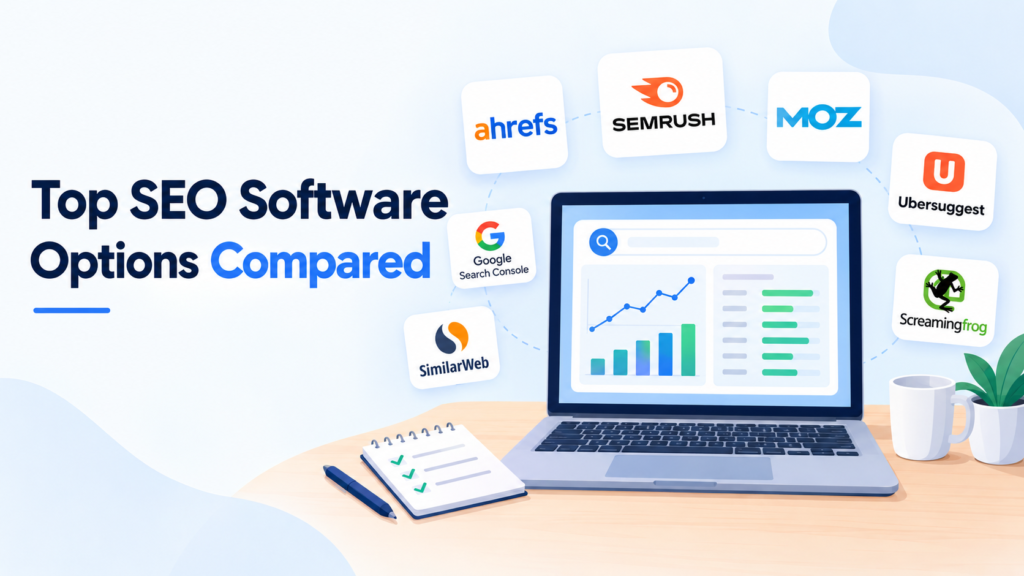
Top SEO Software Options Compared

1. Ahrefs – Best for Competitor and Backlink Research

Ahrefs remains one of the most trusted names in SEO, largely because of its enormous backlink index and accurate keyword data. Its Site Explorer feature lets you analyze competitor traffic, backlink profiles, and content performance in detail.

Pricing starts around $108–$129 per month, which places it firmly in the premium tier. However, many agencies consider it worth the investment because of its data accuracy. If you’re building a competitive analysis of keywords, Ahrefs is frequently the starting point professionals reach for first.

Pros:

  • Industry-leading backlink database
  • Strong keyword research and content gap tools
  • Growing AI visibility features (Brand Radar)

Cons:

  • Expensive for small businesses
  • Steep learning curve for beginners

2. Semrush – Best All-in-One SEO Suite

Semrush is arguably the most widely used SEO platform on the market, offering everything from keyword tracking to site audits to PPC research under one roof. Its recent “Semrush One” bundle now folds in AI-visibility tracking as well, starting around $139–$199 per month.

Because it does so much, Semrush suits agencies and enterprise teams managing multiple client websites. That said, the sheer number of sub-tools can feel overwhelming for beginners.

Pros:

  • Extremely comprehensive feature set
  • Large library of tutorials and training
  • Strong for PPC and content marketing combined

Cons:

  • Premium pricing
  • Interface can feel cluttered

3. Surfer SEO – Best for Content Optimization

If your priority is writing content that actually ranks, Surfer SEO is one of the best SEO software choices available. It analyzes top-ranking pages for a target keyword and generates a content brief showing what topics, headings, and word counts competitors are using.

Plans start at $99 per month for the essentials tier, scaling up to $219 for full SEO and AI-visibility features. This makes it a natural companion for teams focused on content performance data rather than pure technical SEO.

Pros:

  • Excellent content briefs and scoring
  • Google Docs and WordPress integrations
  • Growing AI-search optimization tools

Cons:

  • No backlink analysis included
  • Requires baseline SEO knowledge to use effectively

4. Google Search Console – Best Free SEO Tool

No discussion of the best SEO software is complete without mentioning Google Search Console. It’s completely free and gives you first-party data directly from Google – the exact keywords you rank for, click-through rates, and indexing issues.

Unfortunately, GSC only shows data for your own website, so it can’t help with competitor research. Still, every website owner should have it set up. It pairs well with foundational practices like confirming how important a sitemap is for SEO.

5. Morningscore – Best for Simplicity and Gamified SEO

Morningscore has gained traction as a more approachable all-in-one platform, priced around $69 per month. It combines rank tracking, keyword research, backlink monitoring, and AI-visibility scoring, wrapped in a gamified interface that rewards completed SEO tasks.

This makes it especially appealing for small business owners who find tools like Ahrefs or Semrush intimidating.

6. SE Ranking – Best Budget-Friendly Option for Agencies

SE Ranking starts at roughly $65 per month and offers a solid mix of rank tracking, audits, and keyword research. It’s particularly well-suited to agencies managing several client sites at once, since its pricing structure rewards multi-project use.

7. Screaming Frog – Best for Technical SEO Audits

Screaming Frog is a downloadable crawler that mimics how Google’s bots read your site. It’s a favorite among technical SEOs for uncovering broken links, duplicate content, and indexing errors. A free version covers up to 500 URLs, while the paid license runs about $279 per year.

This tool pairs naturally with a broader technical strategy – for example, when planning SEO for a site migration, catching crawl errors early prevents major ranking losses.


Turn AI Visibility Into Real Revenue.

Automate Leads With SurgeAIO. Don’t Let AI Ignore Your Brand.

Book A Demo →

8. AI-Focused Tools (Claude, ProductRank.ai, AlsoAsked)

As search behavior shifts toward AI assistants, a new category of software has emerged. Tools like ProductRank.ai track how often your brand appears in ChatGPT or Perplexity responses. Meanwhile, AI writing assistants such as Claude are increasingly used for proofreading and refining content – though not for wholesale content generation, since AI-generated content and SEO remain a nuanced topic worth understanding before relying on it heavily.

Free vs. Paid SEO Software: Which Should You Choose?

This is a common question for businesses just starting. Here’s a quick breakdown:

Choose free tools if:

  • You’re a solo entrepreneur or small business testing SEO for the first time
  • Your budget is limited, and you can invest time instead of money
  • You only need to track your own site’s performance (Search Console, Bing Webmaster Tools, Google Trends)

Choose paid tools if:

  • You manage multiple websites or client accounts
  • You need competitor and backlink data
  • You want automated reporting and AI-visibility tracking

Ultimately, most serious SEO strategies eventually require at least one paid tool, since competitor insights simply aren’t available through free platforms.

How to Choose the Right SEO Software for Your Business

Rather than chasing the “most popular” option, match the software to your actual needs. A few questions can guide the decision:
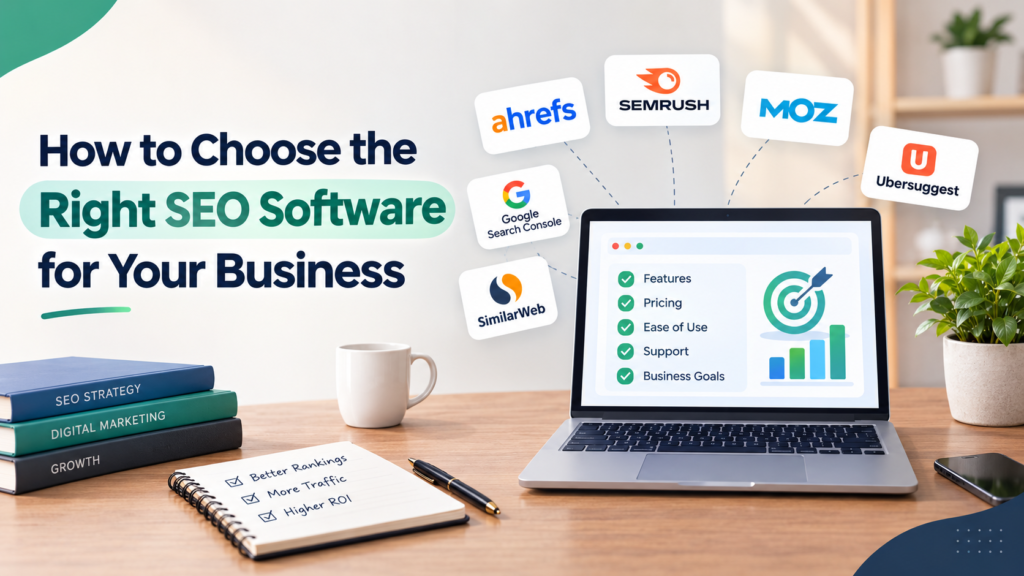
How to Choose the Right SEO Software for Your Business

  • How many websites are you managing? Agencies benefit from tools like SE Ranking or Semrush, while single-site owners may only need Ahrefs or Morningscore.
  • What’s your monthly budget? Prices range from free to $500+ per month, so define your ceiling first.
  • Do you need content help, technical audits, or both? Few tools excel at everything, so prioritize your biggest gap.
  • Is AI visibility a priority? If ChatGPT and AI search traffic matter to your business, look for platforms with dedicated prompt-tracking features.

This decision-making process mirrors what’s involved in the most popular AI visibility products for SEO, where matching the tool to your specific visibility goals matters more than picking the flashiest option.

Common Mistakes When Choosing SEO Software

Many businesses waste money by making avoidable errors during tool selection:

  • Buying the most expensive tool assuming it’s automatically the best. Price doesn’t always correlate with fit for your specific use case.
  • Ignoring the learning curve. A powerful tool nobody on your team knows how to use provides little value.
  • Overlooking free Google tools. Search Console and Keyword Planner remain some of the most accurate data sources available, and they’re free.
  • Choosing based on price alone. Instead, weigh what SEO service costs against the traffic and revenue it can realistically generate.
  • Neglecting AI search visibility. As more consumers use AI assistants for research, ignoring this dimension can leave real opportunity on the table.

Turn AI Visibility Into Real Revenue.

Automate Leads With SurgeAIO. Don’t Let AI Ignore Your Brand.

Book A Demo →

How SurgeAIO can help in terms of SEO

Choosing the right software is only half the battle – knowing how to use it strategically is what actually drives results. SurgeAIO combines proven SEO tactics with AI-visibility expertise to help businesses rank higher in both traditional search and AI-powered platforms like ChatGPT and Perplexity. Whether you need help with keyword strategy, technical audits, or content built to perform, SurgeAIO’s team brings hands-on experience translating software insights into real organic growth. Instead of guessing which metrics matter, businesses working with SurgeAIO get a tailored roadmap that connects tool data to measurable outcomes.

Final Thoughts

There’s no universal answer to which is the best SEO software – it depends entirely on your goals, budget, and team’s technical comfort level. Ahrefs and Semrush lead for comprehensive research, Surfer excels at content optimization, and free Google tools remain indispensable regardless of what else you’re using.

Therefore, the smartest approach is often combining a few complementary tools rather than searching for one perfect platform. As AI search continues reshaping how people find information, prioritizing software with both traditional SEO and AI-visibility features will likely pay off longer term.

Frequently Asked Questions

What is the best SEO software for beginners?

Google Search Console and Google Keyword Planner are ideal starting points since they’re free and directly sourced from Google. Once you’re comfortable with the basics, budget tools like Morningscore or SE Ranking offer a gentler learning curve than Ahrefs or Semrush.

Is Ahrefs or Semrush better?

Both are excellent, but they serve slightly different needs. Ahrefs is generally considered stronger for backlink analysis, while Semrush offers a broader all-in-one suite that includes PPC and social media tools. If you’re only doing SEO, Ahrefs often edges ahead; if you need marketing-wide coverage, Semrush may fit better.

How much does SEO software typically cost?

Pricing varies widely, from free (Google Search Console, Google Trends) to over $500 per month for enterprise plans. Mid-tier tools like Semrush, Surfer, and Ahrefs typically range from $99 to $220 per month. For a deeper breakdown, see how much SEO services generally cost.

Do I need multiple SEO tools, or is one enough?

Most professionals use at least two tools – one for keyword/backlink research (like Ahrefs or Semrush) and one for content optimization (like Surfer). Free Google tools should supplement whichever paid platform you choose.

Can SEO software help with AI search visibility?

Yes. Newer platforms like ProductRank.ai and add-ons within Ahrefs and Semrush now track how often your brand appears in AI-generated answers, which is becoming an increasingly important part of overall visibility.

Is free SEO software good enough for small businesses?

It can be, especially in the early stages. Google Search Console, Google Trends, and Google Keyword Planner provide accurate, first-party data at no cost. However, competitor analysis typically requires a paid tool.

Wealth Preservation: A Complete Guide to Protecting What You’ve Built

Wealth Preservation

Building wealth takes decades of discipline. Protecting it takes an entirely different skill set. Wealth preservation is the deliberate practice of safeguarding accumulated assets from market volatility, inflation, taxes and unforeseen life events, so that what has been built continues to last.

Many investors focus almost exclusively on growth, chasing higher returns without asking the equally important question: how long will this money actually last? Wealth preservation shifts that focus. It’s not about avoiding risk altogether, but about managing it deliberately so gains aren’t wiped out by a single downturn, a lawsuit or an unplanned tax event.

This guide breaks down what wealth preservation really means, how it differs from wealth creation, and the practical strategies that protect capital over the long run.

Wealth Preservation vs Wealth Creation: Understanding the Difference

Wealth creation and wealth preservation are two distinct phases of the same financial journey, not competing philosophies. Wealth creation is about accumulation – growth-oriented investing in equities, real estate or business ventures with a long time horizon. Wealth preservation, by contrast, focuses on protecting what has already been built and extending how long it lasts.

AspectWealth CreationWealth Preservation
Primary goalGrow net worthProtect and extend net worth
Time horizonLong-termMedium to short-term
Investment styleGrowth-oriented (equities, real estate)Defensive (bonds, insurance, trusts)
Risk appetiteModerate to highLow to moderate
Key toolsBrokerage accounts, equities, business equityTrusts, insurance, fixed income

Understanding this distinction matters because the shift from growth to preservation should be planned deliberately, not triggered by panic after a market downturn.


Turn AI Visibility Into Real Revenue.

Automate Leads With SurgeAIO. Don’t Let AI Ignore Your Brand.

Book A Demo →

Why Wealth Preservation Matters More As Wealth Grows

Early in a career, aggressive growth makes sense. Time is on your side, and short-term volatility has years to recover. However, as wealth accumulates and life goals approach – retirement, a child’s education, a business transition, or estate planning – the priority naturally shifts toward protection.

Why Wealth Preservation Matters More As Wealth Grows

Several risks make wealth preservation essential at this stage:

  • Sequence-of-returns risk – Withdrawing from a portfolio during a market downturn can permanently damage long-term capital
  • Inflation erosion – Money sitting in low-yield instruments quietly loses purchasing power over time
  • Longevity risk – Living longer than expected means capital needs to stretch further
  • Tax exposure – Poor structuring can erode returns significantly over a lifetime
  • Legal and liability risk – Lawsuits, business disputes or creditor claims can threaten unprotected assets

A wealth preservation strategy addresses each of these risks directly, rather than hoping growth alone will outpace them.

Core Strategies for Wealth Preservation

1. Diversification Across Asset Classes

Even in preservation mode, spreading risk remains essential. A portfolio holding a mix of equities, bonds, gold and alternative assets is far less likely to suffer catastrophic losses than one concentrated in a single asset class. Diversification doesn’t eliminate risk, but it prevents any single market shock from derailing the entire portfolio.

2. Maintaining a Liquidity Buffer

An emergency fund covering three to six months of expenses, held in a liquid, low-risk instrument, is often the first line of defense. Without this buffer, an unexpected expense can force the sale of long-term investments at the worst possible time – locking in losses that a patient investor would otherwise have avoided.

3. Insurance and Risk Management

Adequate insurance protects wealth from catastrophic, unplanned expenses. Health coverage prevents medical bills from draining savings, while life insurance protects dependents from an unexpected loss of income. For larger estates, speciality policies such as umbrella liability coverage add another layer of protection against lawsuits or claims that could otherwise erode decades of accumulated wealth.

4. Legal and Estate Structuring

Trusts, wills and other legal structures play a central role in wealth preservation. Irrevocable trusts and asset-protection structures can shield wealth from creditors and legal disputes, while clear estate planning ensures assets pass to heirs efficiently and with minimal tax drag. Families who work with estate planning law firms early tend to avoid the costly disputes and delays that arise when succession is left unplanned.

5. Tax-Efficient Structuring

Taxes quietly erode wealth over time if left unmanaged. Long-term capital gains planning, tax-loss harvesting, and working with accounting and tax advisory practices can meaningfully improve after-tax returns. Because tax rules shift periodically, this side of a wealth preservation strategy needs regular review rather than a one-time setup.

6. Rebalancing Toward Stability

As market values shift, a portfolio’s original allocation drifts from its target. Regular rebalancing – trimming positions that have grown too large and adding to those that have fallen – keeps risk levels aligned with your actual comfort zone, rather than the level the market has drifted toward.

Short-Term vs Long-Term Instruments in a Preservation Strategy

A well-structured wealth preservation plan blends instruments across different time horizons:

  • Short-term (under 1 year): High-yield savings, fixed deposits, short-duration debt funds, sovereign gold bonds
  • Medium-term (1–5 years): Government bonds, debt mutual funds, structured deposits
  • Long-term (5+ years): A moderate equity allocation to help capital keep pace with inflation, balanced with defensive assets for stability

The goal isn’t to abandon growth entirely. It’s to ensure near-term needs are never dependent on selling long-term assets at the wrong moment.

How to Balance Growth and Preservation

Balancing both isn’t an either-or decision – it’s a matter of proportion, adjusted as goals and life stages change. A conservative investor nearing retirement typically holds a larger share in bonds and cash, while someone with a longer horizon may still tilt toward equities while gradually layering in defensive assets.

How to Balance Growth and Preservation

A simple framework to guide this balance:

  • Assess your time horizon, goals and risk tolerance honestly
  • Set target allocations between growth and defensive assets
  • Rebalance on a set schedule rather than reacting emotionally to market swings
  • Increase defensive holdings gradually as major goals approach, rather than shifting abruptly

Common Mistakes That Undermine Wealth Preservation


Turn AI Visibility Into Real Revenue.

Automate Leads With SurgeAIO. Don’t Let AI Ignore Your Brand.

Book A Demo →
  • Treating wealth preservation as a one-time task instead of an ongoing process
  • Holding too much cash, allowing inflation to quietly erode purchasing power
  • Ignoring insurance gaps until an unexpected event exposes them
  • Delaying estate planning until a health scare or major life event forces the issue
  • Underestimating tax exposure on withdrawals, interest income or capital gains

Avoiding these mistakes requires consistent review, not a “set it and forget it” mindset. Wealth preservation works best as an ongoing discipline, reassessed at least annually.

Practical Wealth Preservation Checklist

  • Build and maintain a liquidity buffer covering essential expenses
  • Diversify across equities, bonds, gold and alternative assets
  • Review insurance coverage for gaps in health, life and liability protection
  • Put a will and, where appropriate, a trust structure in place
  • Review tax structuring annually with a qualified advisor
  • Rebalance the portfolio on a consistent schedule
  • Reassess your growth-to-preservation ratio as major life goals approach

How SurgeAIO can help in terms of SEO

Just as wealth preservation depends on protecting gains through deliberate, ongoing structure, a financial services firm’s digital visibility needs the same disciplined, long-term approach rather than one-off campaigns.

SurgeAIO works with fintech and wealth management firms to build organic visibility strategies designed to hold up over time, not just spike temporarily. Firms offering related services, such as insurance or mortgage and lending advisors working alongside wealth managers, often see stronger results from a coordinated, cross-topical SEO approach.

For firms weighing whether professional SEO support is worth the investment, understanding the basics of hiring an SEO company is a useful starting point. Search behavior is also evolving quickly, making it important for advisory firms to understand how to rank in AI Overviews alongside traditional search rankings. Once a strategy is live, consistent tracking of content performance and monitoring of AI visibility metrics ensures the strategy keeps working – much like a wealth preservation plan needs regular review rather than a single setup.

Final Thoughts

Wealth preservation is not the opposite of growth – it’s the discipline that makes growth durable. By diversifying deliberately, maintaining adequate insurance, structuring taxes efficiently and putting estate plans in place early, investors can protect decades of accumulated wealth from the risks that most commonly erode it. Like any sound financial strategy, wealth preservation works best as an ongoing practice, reviewed regularly rather than addressed once and forgotten.

Frequently Asked Questions

1. What is the difference between wealth preservation and wealth creation?

Wealth creation focuses on growing assets through long-term, growth-oriented investing, while wealth preservation focuses on protecting and extending what has already been accumulated. Most investors move through both phases over their lifetime.

2. What are the best wealth preservation investments?

Common options include government bonds, fixed deposits, sovereign gold bonds, and short-duration debt funds. These offer relatively stable, lower-risk returns suited to capital protection rather than aggressive growth.

3. When should I shift my focus from wealth creation to wealth preservation?

There’s no fixed age, but the shift typically becomes more important as retirement, major financial goals or estate planning needs approach. The transition should be gradual and planned, not sudden.

4. Does wealth preservation mean avoiding all risk?

No. Wealth preservation still involves some exposure to growth assets to help capital keep pace with inflation. The goal is managing risk deliberately, not eliminating it.

5. How does taxation affect a wealth preservation strategy?

Taxes can quietly erode both preserved and growing wealth if not planned for. Long-term capital gains treatment, tax-loss harvesting and efficient structuring all play a role in protecting after-tax returns.

Portfolio Diversification for HNI Investors: A Complete Guide

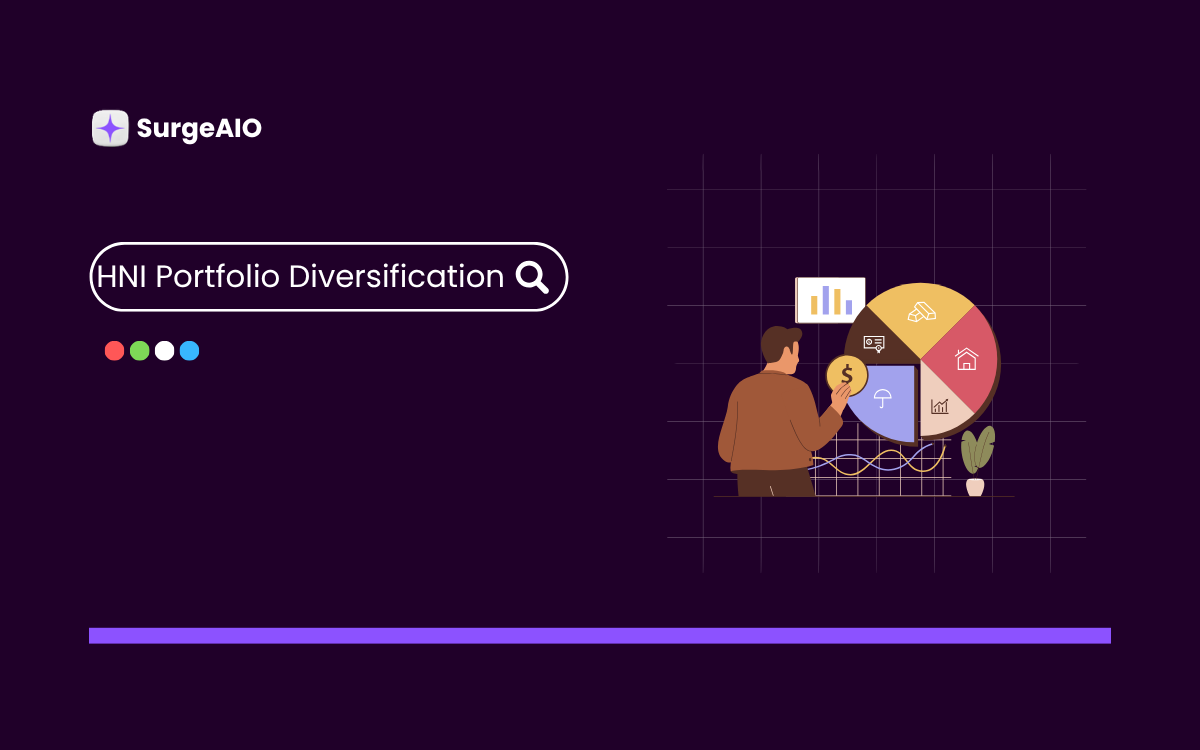
HNI Portfolio Diversification

Wealth doesn’t grow by accident. It grows through deliberate structure, and nowhere is that more true than in portfolio diversification for HNI investors. For India’s high-net-worth individuals, spreading money across a few mutual funds is no longer enough. True diversification today spans asset classes, sectors, geographies and even strategies that were once reserved for institutions.

In India, an HNI is generally defined as someone holding significant investable assets – excluding a primary residence – that qualify them for specialized wealth management services. As this wealth grows, portfolio diversification for HNI investors becomes less about avoiding a single bad stock and more about engineering a resilient, multi-layered structure that can absorb shocks from any direction.

This guide explains why diversification looks different at the HNI level, which asset classes matter most, and how to build a portfolio that protects wealth while still capturing growth.

Why Diversification Looks Different for HNIs

Why Diversification Looks Different for HNIs

Most retail investors understand diversification as simple risk-spreading: a few equity funds, some gold, a fixed deposit. That logic works reasonably well at smaller wealth levels.

However, for HNIs managing significant capital, diversification becomes more deliberate and layered. It goes well beyond spreading money across a handful of standard products. Instead, portfolio diversification for HNI investors is purpose-driven – each allocation is chosen to play a specific role rather than simply adding another line item to the portfolio.

India’s wealthy population is also expanding quickly, which means competition for skilled portfolio managers and quality alternative investments is intensifying. This makes disciplined, purpose-built diversification more important than ever.

The Five-Part Framework Behind Modern HNI Portfolios

A typical affluent Indian portfolio today spreads capital across five broad components, each serving a distinct function:

  • Equities – Long-term capital growth through direct stocks or professionally managed PMS strategies
  • Debt instruments – Stability and predictable income
  • Real estate – Inflation-linked growth, increasingly accessed through structured vehicles like REITs rather than direct ownership alone
  • Gold – A stabiliser against currency volatility and macro uncertainty
  • Alternative investments – Private equity, venture capital, AIFs and private credit for return profiles unavailable in public markets

This five-part structure has replaced the older two-pillar approach of equities and real estate alone. Each sleeve compounds capital, generates income, preserves purchasing power or captures private-market opportunity – rarely all four at once.


Turn AI Visibility Into Real Revenue.

Automate Leads With SurgeAIO. Don’t Let AI Ignore Your Brand.

Book A Demo →

Why Alternative Investments Are Reshaping HNI Diversification

The most significant shift in portfolio diversification for HNI investors over the past decade has been the sharp rise in alternative investments. Alternative Investment Funds (AIFs) registered with SEBI have grown dramatically in number, and domestic HNIs and family offices now contribute the majority of capital flowing into these structures – a clear move away from historically offshore-dominated funding.

Within this space, private credit has emerged as a favoured addition to the income sleeve of HNI portfolios, offering floating-rate structures and regular cash flows that traditional fixed income cannot always match. Meanwhile, private equity and venture capital allocations give investors access to growth stories years before they reach public markets.

That said, alternatives come with trade-offs: longer lock-ins, limited liquidity and more complex valuation. Therefore, they should complement – not replace – a portfolio’s core holdings.

How Portfolio Management Services (PMS) Support Diversification

Unlike mutual funds, where portfolios are standardized and resources pooled across investors, PMS offers a highly personalized structure curated around an individual’s specific goals, risk appetite and time horizon. This flexibility allows PMS providers to build portfolios spanning niche markets, alternative assets and even global instruments.

PMS supports portfolio diversification for HNI clients across three dimensions:

  • Multi-asset diversification – Spreading capital across equities, bonds, commodities and alternatives so no single asset class dominates
  • Sectoral and geographic diversification – Allocating across industries like technology, pharmaceuticals and FMCG, and increasingly into global or emerging markets
  • Niche and alternative diversification – Adding assets with low correlation to traditional stock market performance

Active portfolio managers also apply tactical asset allocation, shifting exposure toward stable instruments like bonds during volatile periods and rebalancing continuously rather than waiting for scheduled reviews. This is very different from the static nature of many standardized products.

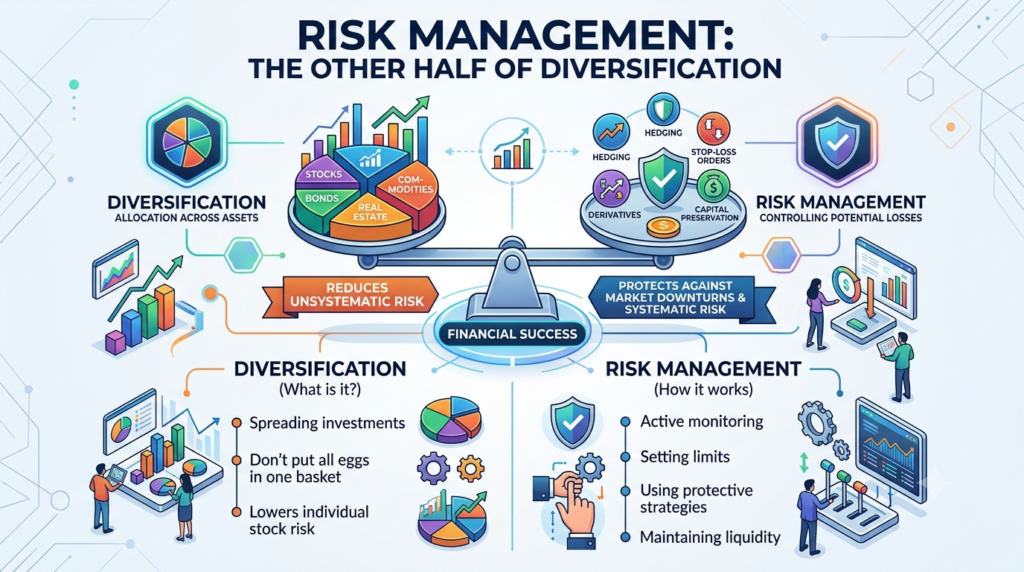
Risk Management: The Other Half of Diversification

Diversification and risk management go hand in hand. For HNIs, protecting large amounts of capital matters just as much as growing it. A few techniques that support this:

Risk Management: The Other Half of Diversification

  • Active rebalancing – Adjusting allocations as market conditions or economic indicators shift
  • Downside hedging – Using derivatives, futures or options to insulate portfolios during market corrections
  • Customized risk profiling – Building a portfolio around the investor’s specific comfort with volatility, rather than a generic model
  • Tactical shifts – Increasing exposure to defensive assets temporarily during periods of heightened uncertainty

Ultimately, the goal isn’t to eliminate risk. It’s to avoid dependence on any single source of returns, so that one weak asset class doesn’t derail the entire portfolio.

Common Mistakes HNIs Make With Diversification

Even sophisticated investors misstep when building diversified portfolios. Common errors include:

  • Treating alternative investments as a status symbol rather than a genuine portfolio need
  • Over-concentrating in real estate or a single family business
  • Assuming diversification alone eliminates risk without checking correlation between assets
  • Ignoring liquidity needs when locking capital into long-tenure AIFs or private credit
  • Reviewing the portfolio only during downturns instead of on a consistent schedule

Avoiding these mistakes requires consolidated visibility across every holding. As portfolios grow more complex – spanning listed securities, PMS strategies, mutual funds, AIFs, private credit, and real estate – a single, real-time view of the full picture becomes essential to knowing whether the mix still matches long-term goals.

Building a Diversified HNI Portfolio: A Practical Checklist

  • Define what each portfolio sleeve is meant to achieve – growth, income, stability or private-market access
  • Set target allocations across equity, debt, real estate, gold and alternatives
  • Evaluate liquidity needs before committing to long lock-in alternative investments
  • Choose PMS or fund managers with a track record across full market cycles, not just recent gains
  • Rebalance periodically rather than only during market stress
  • Maintain a consolidated view of all holdings to track overall risk exposure

Turn AI Visibility Into Real Revenue.

Automate Leads With SurgeAIO. Don’t Let AI Ignore Your Brand.

Book A Demo →

How SurgeAIO can help in terms of SEO

Just as portfolio diversification for HNI investors depends on spreading exposure across the right asset classes, a wealth management or PMS firm’s digital presence depends on spreading visibility across the right search terms and channels.

SurgeAIO helps fintech and wealth management firms build a diversified, sustainable organic growth strategy rather than relying on a single traffic source. Firms offering allied services, such as accounting and tax advisory practices alongside investment planning, can strengthen their combined visibility across related search intent.

Building this kind of strategy starts with a thorough competitive analysis of keywords to identify where prospective HNI clients are actually searching. From there, organic traffic strategies built for complex, considered-purchase industries help sustain long-term growth rather than short-lived spikes. As AI-driven search reshapes discovery, understanding how to rank in AI Overviews is becoming just as important as traditional rankings.

Once a strategy is live, ongoing success depends on tracking content performance, monitoring AI visibility metrics, and understanding how many backlinks are actually needed to build authority – the same disciplined, data-driven approach that underpins a well-diversified investment portfolio. Firms working closely with mortgage and lending advisors as part of a client’s broader financial ecosystem often find cross-topical SEO strategy particularly effective too.

Final Thoughts

Portfolio diversification for HNI investors has evolved far beyond the traditional equity-debt-gold mix. Today’s most resilient portfolios combine public markets, private markets, real assets and active risk management into one coherent, purpose-built structure. By understanding each asset class’s role and reviewing allocations consistently, high-net-worth investors can build portfolios strong enough to weather volatility while still capturing long-term growth.

Frequently Asked Questions

1. What makes portfolio diversification for HNI investors different from regular diversification?

HNI diversification is more layered, spanning private markets, structured credit and global instruments, not just standard equity and debt mixes. It is purpose-driven, with each allocation serving a specific role rather than simply spreading risk.

2. How much should an HNI allocate to alternative investments?

There is no fixed percentage. It depends on liquidity needs, existing exposures, risk tolerance and time horizon. Some investors treat alternatives as a smaller satellite allocation; others with longer horizons allocate more meaningfully.

3. Is real estate still important for HNI portfolio diversification?

Yes, but the format is evolving. Many HNIs are shifting toward structured vehicles like REITs and real estate AIFs alongside, or instead of, direct property ownership for better liquidity and transparency.

4. How often should a diversified HNI portfolio be reviewed?

At least annually, with more frequent reviews during periods of significant market movement, tax law changes or major life events.

5. Does diversification guarantee protection from losses?

No. Diversification reduces dependence on any single asset or market, but it does not eliminate risk. Proper risk management techniques, such as hedging and tactical rebalancing, work alongside diversification for full protection.

Portfolio Management for HNI: A Complete Guide to Choosing the Right Approach

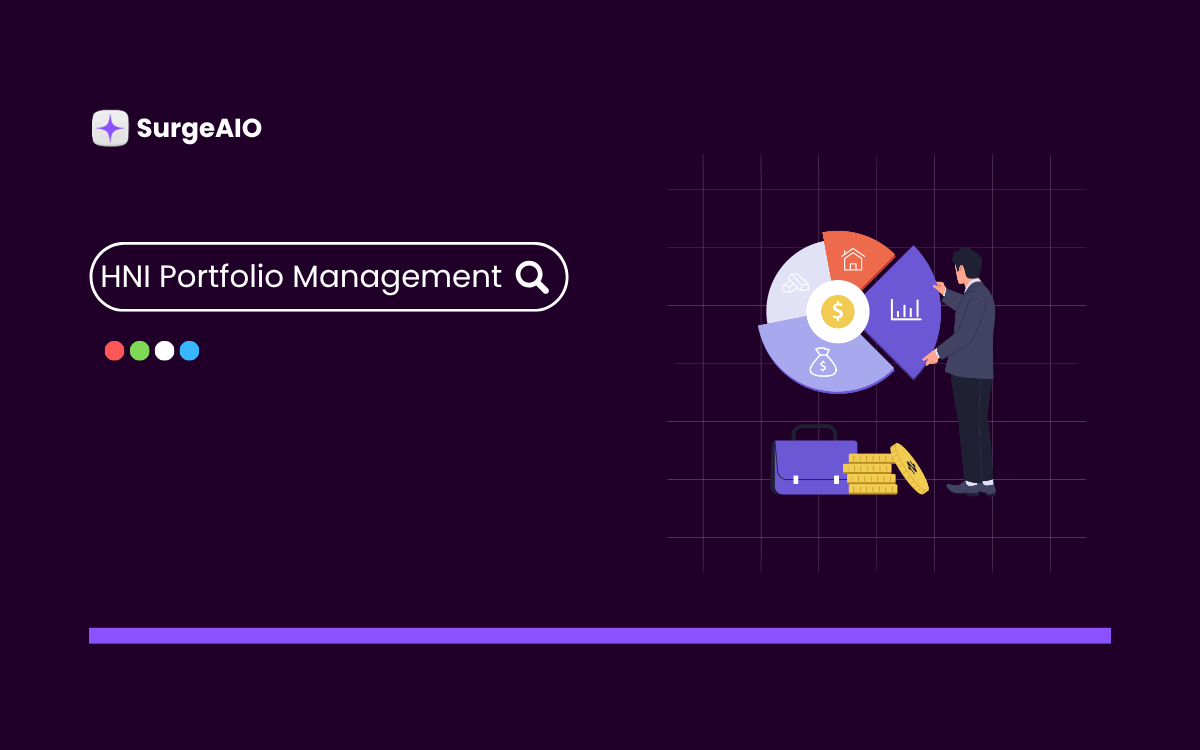
HNI Portfolio Management

Managing wealth becomes significantly more complex once assets cross a certain threshold. For India’s high-net-worth individuals, a simple mix of mutual funds and fixed deposits is rarely enough. Portfolio management for HNI investors requires a dedicated, professional approach that accounts for customization, tax efficiency, active monitoring and access to opportunities unavailable to retail investors.

This guide explains how professional portfolio management works, what it costs, who should consider it, and how to evaluate a provider before committing your capital.

What Is Portfolio Management for HNI Investors?

Portfolio Management Services (PMS) involve a dedicated portfolio manager who builds and actively manages a customized investment portfolio on your behalf. Unlike mutual funds, where your money is pooled with thousands of other investors, PMS treats each portfolio as a distinct, individually owned set of securities.

This distinction matters. With direct ownership of stocks and bonds, HNIs gain greater transparency, more control over specific holdings, and portfolios tailored to their exact risk tolerance, timeline and goals. Therefore, portfolio management for HNI clients is fundamentally different from the standardized products most retail investors use.

Why HNIs Choose Professional Portfolio Management

Why HNIs Choose Professional Portfolio Management

1. Personalized Strategy Construction

A portfolio manager begins with an in-depth discovery process, examining your income sources, risk appetite, liquidity needs and long-term objectives. This isn’t a generic questionnaire. It shapes every allocation decision that follows, similar to how firms offering accounting and tax advisory practices build client-specific plans rather than one-size-fits-all templates.

2. Active, Ongoing Management

Once your portfolio is built, the real value emerges through continuous monitoring. Portfolio managers rebalance holdings, adjust to changing market conditions and respond to emerging opportunities. This active approach differs sharply from static, buy-and-hold products.


Turn AI Visibility Into Real Revenue.

Automate Leads With SurgeAIO. Don’t Let AI Ignore Your Brand.

Book A Demo →

3. Access to Exclusive Opportunities

HNIs working with PMS providers often gain access to pre-IPO placements, structured products and institutional-grade instruments that are simply unavailable through retail mutual funds.

4. Tax-Efficient Structuring

Professional managers time transactions and select instruments with capital gains implications in mind. For investors in higher tax brackets, this alone can offset a meaningful share of management costs.

Understanding the Cost of Portfolio Management for HNI Clients

Fee structures vary between providers, but most follow a broadly similar model. Understanding these components before signing up prevents unpleasant surprises later.

  • Management fee: Typically 1.5% to 2.5% of assets under management annually, covering research, construction and monitoring
  • Performance fee: Often 10% to 20% of returns above a pre-agreed hurdle rate, aligning the manager’s incentives with your outcomes
  • Total effective cost: Usually ranges between 1.5% and 3% annually, depending on the fee model and performance

SEBI mandates transparent fee disclosure from all registered PMS providers, so investors should always request a clear fee breakdown in writing before committing capital.

A Practical Cost Example

Consider an investor with ₹1 crore under a PMS charging a 2% management fee plus a 10% performance fee above a 12% hurdle. If the manager delivers 18% returns, the base fee is ₹2 lakh, plus roughly ₹60,000 on the 6% excess return – a total cost near ₹2.6 lakh. Compounded over a decade, even a modest annual outperformance versus a self-managed portfolio can translate into several lakhs of additional wealth.

Who Should Consider Portfolio Management for HNI-Level Wealth?

Professional portfolio management isn’t necessary for every investor. It typically makes sense once investable assets, excluding your primary residence and business holdings, cross roughly ₹50 lakh. Below that threshold, percentage-based fees can eat disproportionately into returns.

Strong candidates generally include:

  • Business owners with wealth concentrated in their operating business, needing diversification into liquid assets
  • High-earning professionals – doctors, lawyers, senior executives – with limited time to manage investments personally
  • Families managing intergenerational wealth transfer, estate planning and multiple beneficiaries
  • Investors who have historically underperformed benchmarks through emotional, self-directed decisions

PMS vs Mutual Funds: Key Differences for HNIs

FactorPMSMutual Funds
CustomizationFully personalized to individual goalsStandardized strategy for all investors
OwnershipDirect ownership of securitiesPooled units, indirect ownership
Minimum investmentHigher (regulatory minimum applies)Low, accessible to all investors
Fee structureManagement fee + performance feeFixed expense ratio
TransparencyDetailed, holding-level reportingPortfolio disclosed periodically

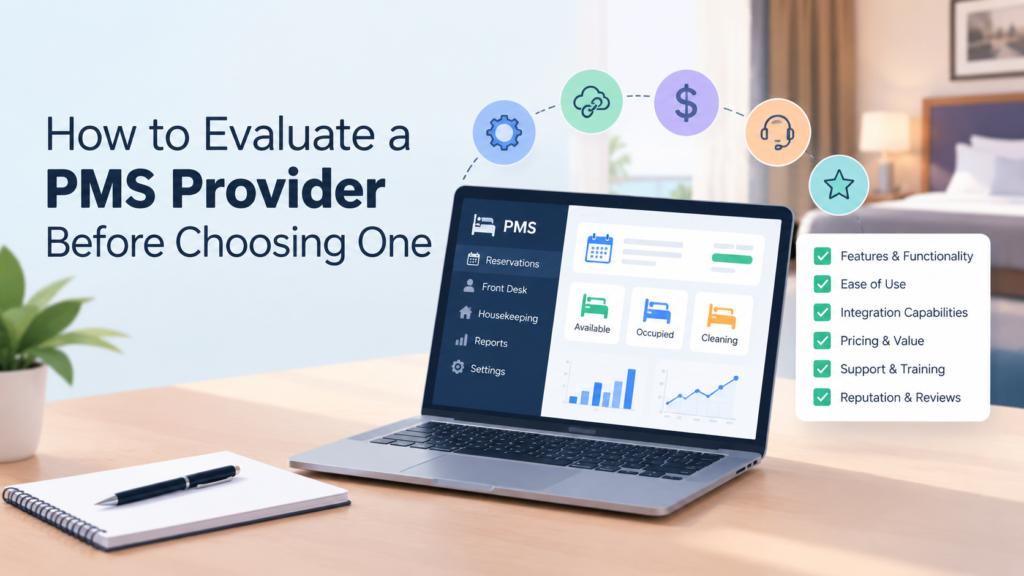
How to Evaluate a PMS Provider Before Choosing One

Selecting the right provider matters as much as deciding to use a PMS in the first place. Just as a business evaluating hiring an SEO company needs to check track record and transparency before committing budget, HNIs should apply the same scrutiny to portfolio managers.

How to Evaluate a PMS Provider Before Choosing One

Key evaluation points include:

  • Performance across full market cycles, not just recent bull-market returns
  • Downside protection during corrections such as 2008, 2015–16 and 2020
  • Fee transparency and clarity on how performance fees are calculated
  • Communication cadence – quality reporting and accessible portfolio managers
  • Investment philosophy alignment with your own risk tolerance and goals
  • Additional services such as estate planning coordination or tax advisory support

Common Mistakes HNIs Make When Choosing Portfolio Management

  • Comparing providers purely on fee percentage rather than after-fee, risk-adjusted returns
  • Ignoring how a manager performed during past market downturns
  • Failing to align portfolio strategy with personal liquidity needs
  • Treating PMS as a status symbol instead of a genuine fit for their financial situation
  • Not reviewing performance and fee reports regularly after onboarding

Turn AI Visibility Into Real Revenue.

Automate Leads With SurgeAIO. Don’t Let AI Ignore Your Brand.

Book A Demo →

Building a Long-Term Relationship With Your Portfolio Manager

Portfolio management for HNI investors works best as an ongoing partnership rather than a one-time transaction. Regular reviews, clear communication and periodic rebalancing ensure the strategy continues to reflect your evolving goals, tax situation and risk appetite as your wealth grows.

Families coordinating wealth across generations often benefit from managers who work alongside estate planning law firms to align investment strategy with succession planning, ensuring both growth and continuity are addressed together.

Practical Checklist Before Signing Up

  • Confirm your investable assets exceed the recommended ₹50 lakh threshold
  • Request a full fee breakdown in writing, including performance-fee triggers
  • Ask for performance data across at least one full market cycle
  • Verify SEBI registration and regulatory compliance
  • Clarify reporting frequency and communication expectations
  • Assess whether the provider’s investment philosophy matches your risk profile

How SurgeAIO can help in terms of SEO

Just as HNIs demand a highly personalized, actively managed approach to their wealth, PMS providers and wealth management firms need an equally deliberate strategy to be found online by the right clients. A generic digital presence rarely attracts high-intent, high-net-worth prospects.

SurgeAIO works with firms across the financial services space, including fintech and wealth management firms, to build visibility strategies suited to sophisticated B2B and B2C audiences. For PMS providers competing against larger, well-established players, understanding top SEO platforms built for B2B audiences can help prioritize the right tools and channels.

Search behavior is also shifting toward AI-driven discovery, which makes it essential for wealth management firms to understand how to rank in AI Overviews alongside traditional search results. Once a strategy is live, ongoing success depends on tracking content performance and monitoring AI visibility metrics, the same way a portfolio manager tracks risk-adjusted returns rather than headline numbers alone. Firms serving HNI clients who also need financing guidance often see strong overlap with mortgage and lending advisors, making cross-topical SEO strategy especially valuable.

Final Thoughts

Portfolio management for HNI investors is not simply about outsourcing investment decisions. It is about gaining a personalized, actively managed strategy backed by professional research, tax planning and disciplined risk management. By understanding fee structures, evaluating providers carefully and reviewing performance regularly, high-net-worth individuals can ensure their wealth is managed with the same rigor and intention that built it in the first place.

Frequently Asked Questions

1. What is the minimum investment required for portfolio management for HNI clients in India?

SEBI mandates a minimum investment threshold for PMS, and most providers recommend investable assets exceeding ₹50 lakh for the fee structure to make economic sense.

2. How are PMS fees typically structured?

Most providers charge a management fee (1.5%–2.5% of assets) plus a performance fee (often 10%–20%) on returns above an agreed hurdle rate.

3. Is portfolio management for HNI investors better than mutual funds?

It depends on the investor’s goals. PMS offers greater customization and direct ownership, while mutual funds offer lower costs and simpler access. HNIs with complex needs and larger capital often benefit more from PMS.

4. How risky is PMS compared to mutual funds?

PMS can carry higher concentration risk due to fewer, more targeted holdings and active management strategies, so risk tolerance should be assessed carefully before investing.

5. How often should I review my PMS provider’s performance?

At minimum, quarterly, alongside an annual deep review that compares risk-adjusted returns against relevant benchmarks and your original goals.

HNI Investment Strategy: A Complete Guide to Protecting High Net Worth Portfolios

HNI Investment Strategy

High-net-worth individuals face a different set of investment challenges than the average investor. Larger corpus, complex tax exposure, multiple income sources and long-term legacy goals all demand a more deliberate approach. A well-structured HNI investment strategy is not about chasing the highest returns. It is about building a framework that balances growth, risk, liquidity and tax efficiency over decades, not quarters.

In India, an HNI is typically defined as someone with investable assets above ₹5 crore, while an Ultra HNI (UHNI) usually holds assets exceeding ₹25 crore. As this wealth grows, so does the complexity of managing it. Therefore, HNIs need more than a mutual fund SIP or a fixed deposit. They need a structured, risk-adjusted plan that accounts for every asset class, every tax bracket and every life goal.

This guide breaks down the core pillars of a sound HNI investment strategy, the questions every wealthy investor should ask before deploying capital, and the tax-efficient structures that protect long-term wealth.

Why HNIs Need a Different Investment Approach

Most retail investors focus on a handful of mutual funds and fixed deposits. However, HNIs typically manage wealth across multiple asset classes, business interests and geographies. This complexity changes the entire decision-making process, much the way organic traffic strategies for a growing SaaS business differ sharply from those of a small local shop.

A few reasons why a standard investment plan does not work for HNIs:

  • Larger capital means concentration risk becomes a real threat
  • Tax slabs and surcharge rates are significantly higher
  • Liquidity needs often coexist with long-term illiquid holdings like real estate or business equity
  • Legacy and succession planning become unavoidable considerations
  • Access to alternative investments opens opportunities unavailable to smaller investors

Consequently, an effective HNI investment strategy must be built around structure and discipline, not around chasing the latest market trend.


Turn AI Visibility Into Real Revenue.

Automate Leads With SurgeAIO. Don’t Let AI Ignore Your Brand.

Book A Demo →

The Five Questions Every HNI Should Ask Before a Large Investment

Before committing significant capital, disciplined investors pause and ask a structured set of questions. These questions prevent emotional decision-making and keep every large investment aligned with the broader portfolio.

1. What risk am I actually taking?
Every investment carries risk beyond the return figure on the brochure. Look at volatility, drawdown history and downside deviation. Understanding these metrics helps you gauge how an asset behaves when markets turn volatile, not just when they are rising.

2. How has it performed across full market cycles?
One-year returns can be misleading. Instead, evaluate rolling returns across bull markets, bear markets and sideways phases. This reveals consistency, which matters far more than a single strong year.

3. How does it fit into my overall asset allocation?
No investment should be evaluated in isolation. Ask whether it adds genuine diversification or simply duplicates an exposure you already hold elsewhere in the portfolio.

4. What is the acceptable downside scenario?
Every investment has a worst-case outcome. Knowing that number in advance, and confirming it fits within your risk capacity, prevents panic-driven exits during a downturn.

5. How does this affect liquidity, tax and long-term goals?
A high-performing asset can still be the wrong choice if it locks up capital you need soon, or creates an unplanned tax event.

These five questions form the foundation of a disciplined HNI investment strategy, shifting decisions away from impulse and toward structured evaluation.

Core Pillars of an Effective HNI Investment Strategy

1. Diversified Asset Allocation

Diversification for HNIs goes well beyond splitting money between equity and debt. A mature portfolio typically spans listed equities, fixed income, real estate, private equity, structured credit and cash equivalents. Each asset class plays a distinct role, and no single class should dominate unless deliberately chosen.

2. Strategic Use of Alternative Investments

Alternative Investment Funds (AIFs), private equity, venture capital and structured credit have become central to modern wealth planning. Rather than replacing traditional holdings, alternatives complement equities and fixed income by offering exposure to different return drivers.

In India, AIFs are regulated by SEBI across separate categories, each covering a distinct investment approach. The objective of adding alternatives is not to chase higher returns alone. Instead, it is to reduce dependence on a single market or asset class.

Before adding any alternative investment, HNIs should evaluate:

  • Liquidity and lock-in periods
  • Fee structure and expense ratios
  • Fund manager track record
  • Concentration and leverage risk
  • Tax treatment of gains

There is no fixed percentage that every HNI should allocate to alternatives. The right allocation depends on liquidity needs, existing exposures, and overall risk appetite.

3. Tax-Efficient Structuring

High tax outgo is one of the biggest threats to long-term wealth accumulation. Consequently, tax planning is not optional for HNIs; it is a core component of the investment strategy itself, and most investors rely on accounting and tax advisory practices to navigate it correctly.

Some commonly used tax-efficient approaches include:

  • Long-term capital gains planning – Holding equity and debt instruments long enough to benefit from favourable LTCG tax treatment
  • HUF (Hindu Undivided Family) structuring – Splitting income across a separate tax entity where applicable
  • Family trusts – Consolidating assets for smoother succession and potential tax efficiency
  • NPS and other retirement-linked instruments – Using available deductions strategically
  • GIFT City and offshore structures – For HNIs with international income or investment needs
  • Systematic tax-loss harvesting – Offsetting gains with realised losses within the same financial year

Because tax laws change frequently, HNIs should review their structuring at least once a year with a qualified advisor.

4. Liquidity Planning

Wealthy investors often assume liquidity is not a concern because of the size of their portfolio. However, illiquid assets like real estate, unlisted shares or long-lock-in AIFs can create real cash-flow stress during emergencies or planned expenditures. This is similar to how borrowers rely on mortgage and lending advisors to structure financing around cash-flow timing rather than convenience alone.

A sound HNI investment strategy always maintains a liquidity buffer, separate from long-term illiquid allocations, so that near-term goals are never dependent on selling assets at the wrong time.


Turn AI Visibility Into Real Revenue.

Automate Leads With SurgeAIO. Don’t Let AI Ignore Your Brand.

Book A Demo →

5. Succession and Estate Planning

Wealth transfer is often the most neglected part of an HNI investment strategy. Without a clear will, trust structure or nomination framework, even a well-built portfolio can face disputes and delays. Many families work alongside estate planning law firms to formalise this process early, rather than leaving it until a crisis forces the issue.

Building succession planning into the strategy from the start protects both the capital and the family relationships around it.

Common Mistakes HNIs Make With Their Portfolios

Even sophisticated investors fall into avoidable traps. Some of the most frequent mistakes include:

  • Chasing recent top-performing funds without checking long-term consistency
  • Over-concentrating in real estate or a single business
  • Ignoring the tax impact of an otherwise attractive investment
  • Treating alternative investments as a status symbol rather than a portfolio tool
  • Delaying estate and succession planning until it becomes urgent
  • Reviewing the portfolio only during market downturns, instead of on a regular schedule

Avoiding these mistakes requires ongoing discipline rather than a one-time plan. An HNI investment strategy is a living framework that needs periodic rebalancing as goals, tax laws and market conditions evolve.

Building Your HNI Investment Strategy: A Practical Checklist

  • Define clear short-term, medium-term and long-term goals
  • Set a target asset allocation across equity, debt, real estate and alternatives
  • Build a liquidity reserve before locking capital into illiquid assets
  • Review tax structuring annually with a qualified advisor
  • Evaluate every large investment against the five questions covered earlier
  • Rebalance the portfolio periodically, not just during volatility
  • Put a succession and estate plan in writing

How SurgeAIO can help in terms of SEO

Wealth management firms, family offices and financial advisory practices that serve HNIs face the same challenge as their clients: staying visible in a competitive, fast-changing landscape. Just as an HNI investment strategy needs structure and consistency, so does a firm’s digital presence.

For advisory businesses working with high-net-worth clients, ranking for the right search terms is essential to earning trust before a prospect ever picks up the phone. SurgeAIO helps fintech and wealth management firms strengthen their organic visibility so that high-intent prospects find them first. Beyond traditional search, SurgeAIO also helps firms understand how to rank in AI Overviews, a growing channel where prospective HNI clients now search for advisory guidance.

For firms unsure whether it’s the right time to invest in organic growth, understanding the fundamentals of hiring an SEO company is a useful first step. And once a strategy is live, tracking content performance and monitoring AI visibility metrics ensures that every piece of content – much like every investment – is evaluated on real, measurable outcomes rather than assumptions.


Turn AI Visibility Into Real Revenue.

Automate Leads With SurgeAIO. Don’t Let AI Ignore Your Brand.

Book A Demo →

Final Thoughts

A strong HNI investment strategy is built on structure, not speculation. It combines diversified asset allocation, disciplined risk evaluation, tax-efficient structuring and clear succession planning into one coherent framework. By asking the right questions before every large investment and reviewing the portfolio regularly, high-net-worth investors can protect what they have built while continuing to grow it with confidence.


Frequently Asked Questions

1. What is the minimum net worth to be considered an HNI in India?

In India, an individual is generally classified as an HNI with investable assets above ₹5 crore. Those exceeding ₹25 crore are typically referred to as Ultra HNIs (UHNIs).

2. How much of an HNI portfolio should go into alternative investments?

There is no universal percentage. The right allocation depends on liquidity needs, investment horizon, risk tolerance and existing exposure to similar assets, such as private business holdings.

3. Is real estate still a good part of an HNI investment strategy?

Real estate can offer diversification and stability, but it is illiquid. It works best as one component of a broader strategy rather than the dominant asset class.

4. How often should an HNI review their investment strategy?

At minimum, once a year. However, significant life events, tax law changes or major market shifts should trigger an earlier review of the overall HNI investment strategy.

5. Should HNIs manage their own portfolio or use a wealth manager?

Given the complexity of tax planning, alternative investments and succession structuring, most HNIs benefit from working with a qualified wealth manager or advisory team rather than managing everything independently.

What is a Title Tag in SEO?

Title Tag in SEO

If you’ve ever wondered what a title tag in SEO is, the short answer is that it’s one of the most important HTML elements on any webpage. A title tag is the clickable headline that appears in search engine results, browser tabs, and even AI-generated answers when a page is cited as a source. Despite being just a few words of code, it has an outsized influence on whether people click your page at all.

This guide breaks down what a title tag is in SEO, why it matters, how long it should be, and practical steps for writing titles that actually earn clicks.

What is a Title Tag?

A title tag is an HTML element placed inside the <head> section of a webpage that defines the page’s title. It typically looks like this in code:

<head>

  <title>Your Page Title Here</title>

</head>

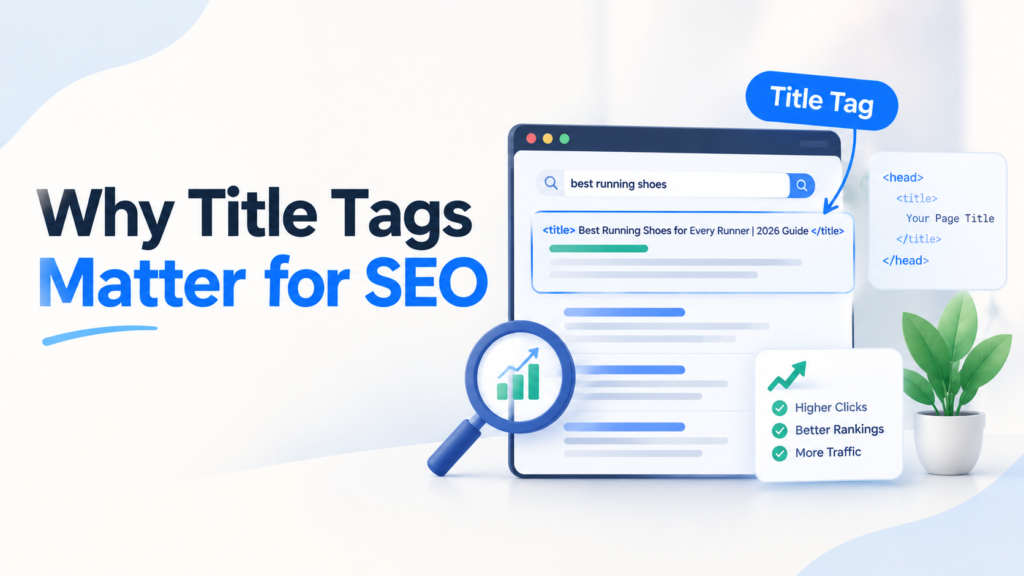
This single line of code shows up in several places: as the blue clickable headline on a search engine results page, as the text in a browser tab, as the preview title when a link is shared on social media, and increasingly, as the source title AI tools display when citing a page in their answers. Because it appears across so many touchpoints, a well-written title tag directly affects both visibility and click-through rate.

It’s worth noting that title tags are sometimes mistakenly called “meta titles.” Technically, the title tag isn’t a meta tag at all – it’s a distinct HTML element, even though the two terms often get used interchangeably in casual conversation.

Why Title Tags Matter for SEO

Title tags matter because they give both users and search engines an immediate signal about what a page covers. Search engines use title tags to judge whether a page is relevant to a given query, which directly influences whether it shows up in results at all.

A well-optimized title tag can:

  • Improve your click-through rate by clearly communicating what the page offers
  • Help search engines match your page to the right search queries
  • Increase your chances of being cited as a source in AI-generated answers
  • Reinforce topical relevance alongside your on-page content and keyword usage

On the flip side, a vague or poorly written title tag can make a page look untrustworthy or irrelevant, even if the content itself is excellent. Users tend to scroll past listings that don’t clearly promise an answer to their query, which means a weak title can quietly undercut months of content work.


Turn AI Visibility Into Real Revenue.

Automate Leads With SurgeAIO. Don’t Let AI Ignore Your Brand.

Book A Demo →

How Long Should a Title Tag Be?

Title tags should generally stay around 50–60 characters, which roughly translates to under 550 pixels of display width. There’s no hard technical limit enforced by search engines, but titles that run too long risk being truncated with an ellipsis in search results.

A few practical ways to keep titles concise:

  • Only capitalize words when necessary, since uppercase letters take up more horizontal space
  • Include your brand name only if there’s room, and it adds value
  • Use symbols like “&” instead of spelling out “and”
  • Choose narrower separators, such as colons or pipes, over long dashes

Truncated titles can cut off important context or your call to action, which is why checking how a title actually renders matters just as much as writing it. This is closely tied to broader technical hygiene, similar to how many words a blog post should be for SEO depends on matching format to intent rather than hitting an arbitrary number.

How to Write an Effective Title Tag

Writing a strong title tag isn’t about cramming in keywords – it’s about clearly communicating value while staying aligned with what the searcher actually wants. Here’s a practical approach.

1. Include your primary keyword once. Your title should clearly reflect the main topic of the page by including your primary keyword naturally. Avoid repeating variations of the same keyword multiple times, since that pattern reads as keyword stuffing and can make a page look spammy to both users and search engines.

2. Match the title to search intent. A title should reflect exactly what the searcher is looking for. If someone searches a definitional query, the title should answer that question directly rather than trying to cover unrelated angles. This principle overlaps closely with confirming search intent before writing any page content, not just the title.

3. Keep it concise but descriptive. A title that’s too long or vague fails to communicate value quickly. Aim for a title that gives an accurate preview of the page’s content in as few words as possible.

4. Align your title tag with your H1. Your title tag and your page’s H1 heading should be similar, if not identical. When these two elements differ significantly, users can feel like they landed on the wrong page after clicking, which increases the chance they’ll bounce.

5. Write a unique title for every page. Duplicate title tags confuse search engines about which page should rank for a given query. Every page on your site – including product pages, service pages, and blog posts – should have its own distinct title.

Title Tag Templates by Page Type

Different page types tend to perform better with slightly different title structures. Here are a few reliable formats:

  • Definitional articles: “What Is [Keyword]? [Benefit or Outcome]”
  • How-to guides: “How to [Task]: [Number] Steps”
  • Service pages: “[Service] in [City] – [Value Proposition] | [Brand]”
  • Comparison posts: “[Option A] vs. [Option B]: Which is Better?”
  • Product pages: “[Product Name] – [Key Benefit] | [Brand]”

These templates aren’t rigid rules, but they give you a strong starting point that aligns with proven search intent patterns. This kind of structured thinking is especially useful when working across many pages at once, such as when building out local landing pages for SEO that each need a unique, geo-specific title.

Common Title Tag Mistakes

Even experienced marketers fall into a few recurring traps when writing title tags:

  • Keyword stuffing: Repeating the same or similar keywords multiple times, which can make a title look spammy
  • Leaving titles too generic: Using vague titles like “Home” or “Services” that give search engines no useful context
  • Duplicating titles across pages: Using the same title tag on multiple pages, which confuses both users and search engines
  • Ignoring truncation: Writing titles so long that the key message gets cut off in search results
  • Mismatching title and content: Writing a clickable but misleading title that doesn’t match what the page actually delivers

Avoiding these mistakes matters even more in competitive industries. For example, SEO for wedding planners or other highly visual, locally competitive niches often depends on distinct, benefit-driven titles to stand out from dozens of similar-sounding competitors on the same results page.

Title Tags and AI Search

Title Tags and AI Search

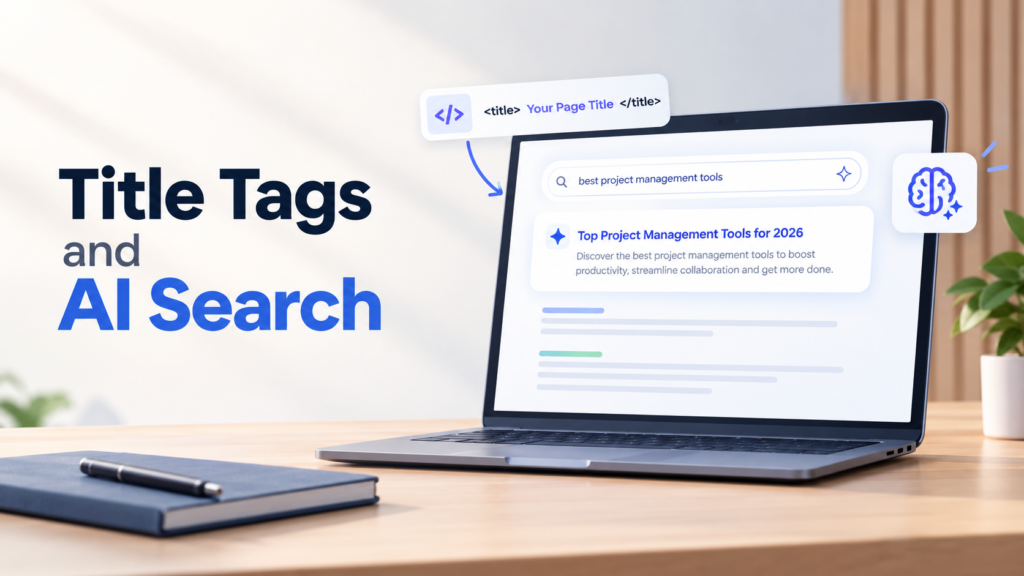
As AI-powered search tools become more common, title tags are taking on an additional role: helping AI systems decide which pages to cite. When AI tools generate an answer and link back to sources, they often display the page’s title tag as part of the citation preview. A clear, descriptive title increases the odds that AI systems accurately represent your content when referencing it.

This is part of why understanding what an LLM is in seo has become just as important as traditional ranking factors. The same title tag principles – clarity, relevance, and alignment with intent – apply whether you’re optimizing for a search engine results page or an AI-generated summary.

How to Measure Title Tag Performance

Once you’ve updated a title tag, it’s worth tracking whether the change actually improved performance. A few practical ways to measure impact:

  • Monitor click-through rate in tools like Google Search Console before and after a title change
  • Check for impression changes, which can indicate your title now surfaces for more relevant queries
  • Compare ranking position alongside CTR to see whether a compelling title is driving more clicks even without a ranking change
  • Give it time, since search engines typically need a couple of weeks to recrawl a page and reflect updated titles in results

This kind of ongoing measurement fits naturally into a broader habit of reviewing content performance data, rather than treating title tags as a set-it-and-forget-it task.


Turn AI Visibility Into Real Revenue.

Automate Leads With SurgeAIO. Don’t Let AI Ignore Your Brand.

Book A Demo →

How SurgeAIO can help in terms of SEO

Getting title tags right across an entire website takes more than writing a few catchy headlines – it requires consistency, keyword strategy, and ongoing testing to see what actually drives clicks. SurgeAIO helps businesses audit every page’s title tags, identify duplicates or missing titles, and rewrite them to align with both search intent and current AI search behaviour.

Our approach combines technical SEO fundamentals with real performance data, ensuring every title tag update is backed by evidence rather than guesswork. Whether you’re managing a handful of service pages or hundreds of blog posts, SurgeAIO builds a scalable process for keeping your titles sharp, relevant, and click-worthy over time.

Frequently Asked Questions

What happens if I don’t add a title tag to my page? 

Search engines will automatically generate one, often pulling from your H1 heading or page content. Auto-generated titles rarely represent your page as accurately as a manually written one.

Can I use the same title tag on multiple pages? 

No, each page should have a unique title tag. Duplicate titles confuse search engines about which page should rank for a given query.

Does the title tag need to match the H1 exactly? 

Not exactly, but they should be similar. A large mismatch can confuse users who click through expecting one thing and see another.

How often should I update my title tags? 

Review them whenever a page’s content changes significantly, or periodically as part of a broader content audit, especially for underperforming pages.

Does keyword stuffing in a title tag help rankings? 

No, it typically hurts. Search engines may treat keyword-stuffed titles as spammy signals and rank the page lower as a result.

Are title tags still important with AI search on the rise? 

Yes. AI systems often display title tags in citation previews, so a clear, accurate title remains valuable for both traditional and AI-driven search visibility.

What Should SEO Services Include from a Marketing Company?

What SEO Services Include

If you’re evaluating agencies, you’ve probably asked yourself what SEO services include from a marketing company before signing a contract. It’s a fair question – SEO retainers can range from a few hundred to several thousand dollars a month, and not every agency delivers the same scope of work for that investment. Knowing exactly what belongs in a comprehensive SEO package helps you avoid overpaying for a thin service or underpaying for something that won’t move the needle.

This guide walks through what should SEO services include from a marketing company, from the initial audit through ongoing reporting, so you know what to expect and what to ask for.

Start With an Audit and Discovery Process

Any credible engagement should begin with a thorough audit of your current website and a discovery conversation about your business goals. This step identifies technical issues, content gaps, and competitive opportunities before any work begins.

A proper audit typically covers:

  • Current keyword rankings and organic traffic trends
  • Technical health, including page speed and mobile usability
  • Content gaps compared to top-ranking competitors
  • Backlink profile strength and quality

Skipping this step is a red flag. Without a clear picture of where your site currently stands, an agency can’t build a strategy that actually addresses your specific weaknesses. This is closely related to understanding how long SEO takes to work, since a proper baseline audit is what makes realistic timeline expectations possible in the first place.

Competitor Analysis

A strong SEO service should include a detailed look at what your competitors are doing well – and where they’re falling short. This isn’t just about copying their approach; it’s about identifying gaps you can exploit.

Competitor Analysis

Competitor analysis typically involves:

  • Identifying which keywords competitors rank for that you don’t
  • Reviewing their content structure and depth
  • Assessing their backlink sources and domain authority
  • Spotting weaknesses in their on-page or technical setup

This kind of research forms the backbone of a competitive analysis of keywords, which should directly inform the keyword targets and content priorities in your custom strategy.

A Custom Strategy, Not a Template

One of the clearest signs of a quality SEO provider is whether your strategy is genuinely built around your business, or whether it’s a generic checklist applied to every client. Your industry, target audience, competitive landscape, and goals should all shape the roadmap.

A custom strategy should outline:

  • Specific keyword targets tied to search intent
  • A content calendar or publishing cadence
  • Technical fixes prioritized by impact
  • Link-building targets relevant to your niche
  • Clear milestones for measuring progress

Industries with unique compliance or audience considerations, such as SEO for wedding planners or other visually driven, locally competitive niches, need strategies tailored to how their specific customers actually search – not a one-size-fits-all playbook.


Turn AI Visibility Into Real Revenue.

Automate Leads With SurgeAIO. Don’t Let AI Ignore Your Brand.

Book A Demo →

Technical SEO Optimization

Technical SEO is the foundation everything else is built on. Even the best content won’t rank if search engines can’t crawl and index your site efficiently. A comprehensive service should include ongoing technical maintenance, not just a one-time fix.

Core technical elements include:

  • Site speed and Core Web Vitals optimization
  • Mobile responsiveness across devices
  • Clean URL structure and proper redirects
  • A well-organized sitemap that helps search engines discover new pages
  • Fixing crawl errors, broken links, and duplicate content issues

Technical problems often go unnoticed by business owners because they don’t show up visually on the site, which makes this one of the areas where professional expertise adds the most value.

On-Page Optimization

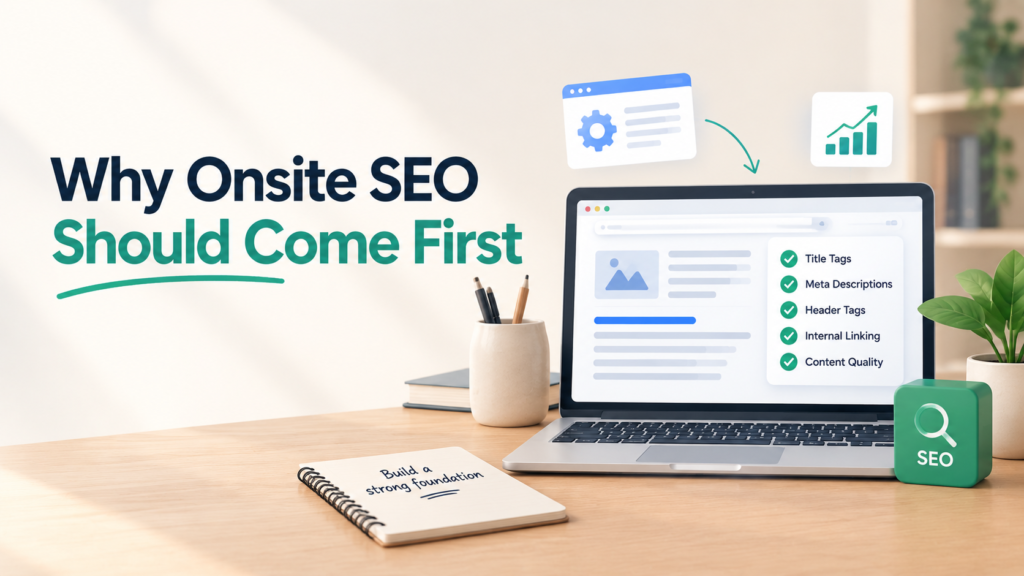
On-page SEO covers everything within your control on individual web pages – titles, headers, meta descriptions, and content itself. A good agency should optimize these elements consistently across your entire site, not just a handful of priority pages.

On-page work typically includes:

  • Writing optimized title tags and meta descriptions for every page
  • Structuring content with clear, keyword-relevant headers
  • Ensuring appropriate keyword density without over-optimization
  • Adding internal links between related pages to strengthen site structure

Deciding how many SEO keywords per page to target is part of this process, and a knowledgeable agency will avoid stuffing pages with too many competing terms.

Content Creation

Content is the engine that drives most SEO results, since it’s how you actually rank for the keywords your audience is searching. A comprehensive service should include consistent, high-quality content production, not sporadic blog posts.

Good content services generally cover:

  • Blog posts and articles targeting relevant search queries
  • Service or product page copy optimized for conversion and search
  • Location-specific landing pages for multi-market businesses
  • Content updates and refreshes for pages that have started slipping in rankings

Businesses often ask how many words a blog post should be for SEO, and the honest answer is that length should match search intent and topic depth, not an arbitrary word count target set by the agency.

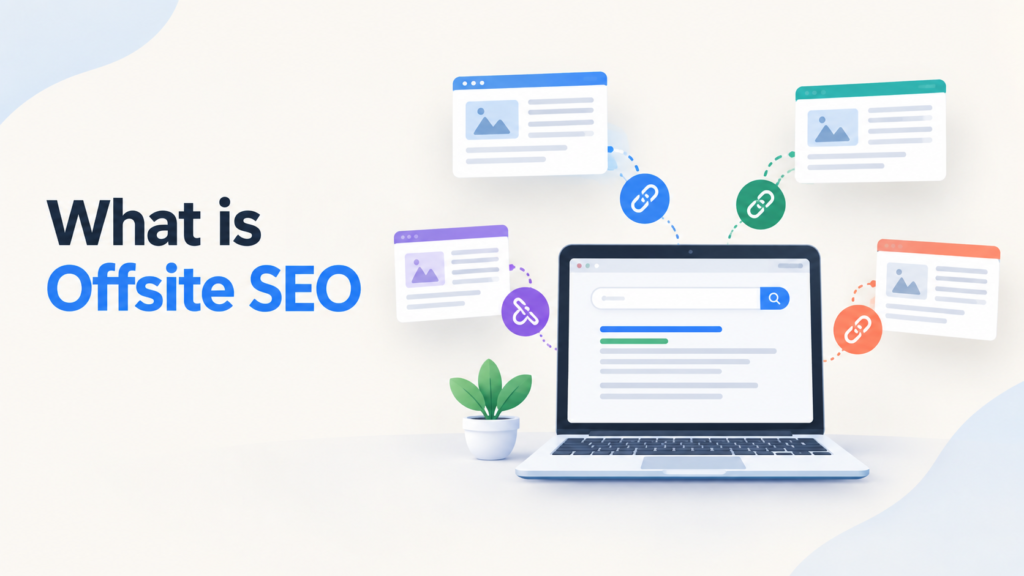
Off-Page SEO and Link Building

Backlinks remain one of the strongest trust signals search engines use to evaluate a website’s authority. A quality SEO service should include a legitimate, white-hat link-building strategy rather than relying on cheap, spammy tactics that risk penalties.

Off-page work should include:

  • Outreach to relevant, authoritative websites for backlink opportunities
  • Guest posting or contributed content in your industry
  • Digital PR to build brand mentions and citations
  • Ongoing monitoring of backlink quality and toxicity

Businesses frequently ask how many backlinks do I need before seeing ranking improvement, and the reality is that a handful of high-authority, relevant links typically outperform hundreds of low-quality ones.


Turn AI Visibility Into Real Revenue.

Automate Leads With SurgeAIO. Don’t Let AI Ignore Your Brand.

Book A Demo →

Local SEO (If Applicable)

If your business serves a specific geographic area, local SEO should be a core part of your service package. This includes optimizing your Google Business Profile, managing citations, and building location-specific content.

Local SEO components typically include:

  • Google Business Profile optimization and consistent monitoring
  • Local citation building across relevant directories
  • Location-specific landing pages and content
  • Review management and reputation monitoring

This is especially important for service-area businesses, similar to how SEO for home service leads depends heavily on ranking within a specific local radius rather than competing nationally.

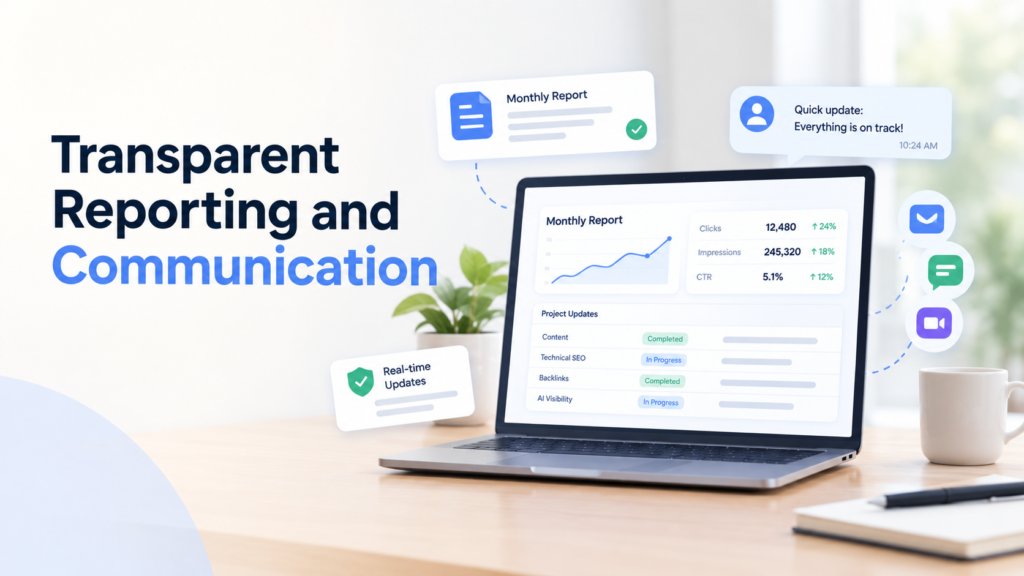
Transparent Reporting and Communication

A trustworthy SEO provider should give you clear, regular reporting on progress – not vague summaries or vanity metrics disconnected from real business outcomes. Reporting should tie SEO activity back to measurable results.

Transparent Reporting and Communication

Good reporting typically covers:

  • Keyword ranking changes over time
  • Organic traffic growth by page and channel
  • Conversion or lead data tied to organic search
  • A summary of work completed each reporting period

This kind of transparency is closely tied to broader content performance data tracking, which shows whether specific pieces of content are actually driving business value, not just traffic.

Red Flags to Watch For

Not every agency delivers what they promise. A few warning signs suggest an SEO service may not be worth the investment:

  • Guaranteed rankings or promises of overnight results
  • Vague reporting with no specific metrics or deliverables
  • Reluctance to explain their strategy or tactics in detail
  • Pricing that seems significantly below market rate
  • No clear process for competitor research or custom strategy

If you’re still deciding whether professional help makes sense at all, it’s worth reviewing whether you need to hire an SEO company or whether your current resources are enough to manage it in-house.


Turn AI Visibility Into Real Revenue.

Automate Leads With SurgeAIO. Don’t Let AI Ignore Your Brand.

Book A Demo →

How SurgeAIO can help in terms of SEO

Choosing the right SEO partner comes down to whether their scope of work actually matches what your business needs to grow. SurgeAIO builds every engagement around a real audit, competitor research, and a strategy tailored to your specific industry and goals – not a generic template applied across every client.

From technical fixes and on-page optimization to content creation and transparent reporting, our approach is grounded in measurable outcomes rather than vanity metrics. Whether you’re just starting to explore SEO or looking to replace an underperforming agency, SurgeAIO builds a roadmap that reflects exactly where your business stands today and where you want it to go.

FAQs

What’s the minimum SEO services should include? 

At a minimum, expect an audit, on-page optimization, technical fixes, content creation, and regular performance reporting.

How do I know if my SEO agency is doing enough? 

Compare their deliverables against a checklist covering audits, competitor research, technical SEO, content, link building, and reporting. Missing several of these areas is a red flag.

Should local SEO be included automatically? 

Only if your business serves a specific geographic area. National or e-commerce businesses may not need heavy local SEO investment.

How often should I receive SEO reports? 

Monthly reporting is standard, though some agencies offer more frequent updates during active campaigns.

Is link building always part of SEO services? 

It should be, since backlinks remain a major ranking factor. Be cautious of any agency that skips this entirely or relies on low-quality, spammy links.

Can I pick and choose which SEO services I want? 

Yes, many agencies offer modular packages, though a fully integrated strategy across technical, on-page, and off-page work generally performs better than piecemeal efforts.

What is the Difference Between Onsite and Offsite SEO?

Onsite vs Offsite SEO

If you’ve ever asked what the difference between onsite and offsite SEO is, you’re really asking about the two halves of every successful search strategy. Onsite SEO covers everything you control directly on your website – content, structure, and technical setup. Offsite SEO covers everything that happens outside your website – backlinks, mentions, and reputation signals. Neither works particularly well alone, and understanding how they fit together is essential before you invest serious time or budget into either one.

This guide breaks down what the difference is between onsite and offsite SEO, why both matter, and how to decide where to focus your energy first.

What is Onsite SEO?

Onsite SEO, sometimes called on-page SEO, refers to every optimization you make directly on your website to help it rank better and serve visitors more effectively. Because you own and control these elements, onsite SEO is usually the first place businesses start.

Core onsite SEO elements include:

  • Content quality: Clear, relevant content that directly answers what a searcher is looking for
  • Keyword placement: Naturally including your target terms in titles, headings, and body copy
  • Site structure: A logical hierarchy of pages that’s easy to navigate
  • Internal linking: Connecting related pages so users and search engines can discover more of your content
  • Technical performance: Page speed, mobile responsiveness, and clean HTML
  • Meta elements: Title tags and meta descriptions that accurately summarize each page

Because these elements are entirely within your control, improvements here tend to show impact faster than off-site work. If you’re wondering how many SEO keywords per page you should realistically target, that’s a core onsite SEO decision that affects both relevance and readability.


Turn AI Visibility Into Real Revenue.

Automate Leads With SurgeAIO. Don’t Let AI Ignore Your Brand.

Book A Demo →

What is Offsite SEO?

Offsite SEO, also known as off-page SEO, refers to actions taken outside your own website that build trust, authority, and credibility in the eyes of search engines. The most common offsite tactic is link building – earning backlinks from other reputable websites that point back to your content.

What is Offsite SEO?

Offsite SEO typically includes:

  • Backlinks: Links from other websites that vouch for your content’s credibility
  • Brand mentions: References to your business across the web, even without a direct link
  • Social signals: Shares and engagement that indicate content resonates with real audiences
  • Guest content: Contributing articles to industry publications that link back to your site
  • Digital PR: Press coverage and outreach that builds broader visibility

Offsite SEO generally takes longer to show results because it depends on relationships, outreach, and content that other sites actually want to link to. Businesses often ask how many backlinks do I need to see meaningful ranking improvement, and the honest answer is that quality and relevance matter far more than raw volume.

Onsite vs. Offsite SEO: The Core Differences

While both strategies aim to improve search visibility, they operate through very different mechanisms. Here’s how they compare directly.

Control

  • Onsite: Fully within your control – you decide the content, structure, and technical setup.
  • Offsite: Largely outside your control – you can influence it through outreach, but you can’t force other sites to link to you.

Speed of impact

  • Onsite: Changes can influence rankings relatively quickly, especially technical fixes.
  • Offsite: Authority-building is slower and compounds gradually over time.

Primary goal

  • Onsite: Relevance – proving your page directly answers the search query.
  • Offsite: Trust and authority – proving other credible sources vouch for you.

Common tactics

  • Onsite: Keyword optimization, internal linking, page speed, content structure.
  • Offsite: Backlink building, guest posting, digital PR, brand mentions.

Measurement

  • Onsite: Site audits, keyword rankings, page-level engagement metrics.
  • Offsite: Domain authority, referring domains, backlink quality.

This distinction lines up closely with how leading SEO resources define the two categories – onsite SEO is about optimizing what’s on your webpages, while offsite SEO is about building credibility through external signals.

Why Onsite SEO Should Come First

Most SEO practitioners recommend starting with onsite SEO because it lays the foundation everything else depends on. There’s little value in earning backlinks to a page that’s slow, poorly structured, or doesn’t actually answer the searcher’s question.

Why Onsite SEO Should Come First

A strong onsite foundation typically starts with:

  • Auditing your sitemap to make sure search engines can crawl and index every important page
  • Reviewing content length and depth, since how many words a blog post should be for SEO varies by topic and competition
  • Fixing broken links, slow-loading pages, and mobile usability issues
  • Ensuring every page has a clear, unique purpose tied to a specific search intent

Once these fundamentals are solid, offsite efforts have something worth linking to – which makes link-building campaigns far more effective.

Why Offsite SEO Still Matters

Even with perfect onsite optimization, a website without any external authority will struggle to outrank established competitors. Search engines use backlinks and brand signals as a proxy for trustworthiness, since a genuinely useful page tends to earn organic mentions from other sites over time.

Offsite SEO becomes especially important in competitive industries. For example, businesses considering SEO proposals for personal injury law firms know that competitive legal markets often require a strong backlink profile just to compete on page one. In these cases, offsite work isn’t optional – it’s often the deciding factor between ranking and not ranking at all.

Effective offsite strategies include:

  • Building relationships with industry publications and bloggers
  • Creating genuinely link-worthy content, such as original research or data studies
  • Actively managing brand mentions and online reputation
  • Pursuing digital PR opportunities tied to newsworthy company updates

Turn AI Visibility Into Real Revenue.

Automate Leads With SurgeAIO. Don’t Let AI Ignore Your Brand.

Book A Demo →

Common Misconceptions About Onsite and Offsite SEO

A lot of confusion around onsite and offsite SEO comes from a few persistent myths. Clearing these up helps set realistic expectations.

  • “More backlinks always means better rankings.” In reality, a handful of high-authority, relevant backlinks usually outperforms hundreds of low-quality ones.
  • “Onsite SEO is a one-time task.” Search engines and user expectations evolve, so onsite elements need regular review and updates.
  • “Offsite SEO is just link building.” While backlinks are central, brand mentions, PR, and social engagement all contribute to offsite authority.
  • “You can skip one and focus only on the other.” Neither works well in isolation; a page with great content but zero authority, or strong backlinks pointing to weak content, both underperform.

Understanding these distinctions is especially important for niche industries. For example, SEO for functional medicine doctors often requires both airtight onsite content that meets strict E-E-A-T standards and offsite authority from credible health-related citations.

How Onsite and Offsite SEO Work Together

The most effective SEO strategies treat onsite and offsite work as complementary, not competing, priorities. Strong onsite content gives you something worth promoting, and offsite authority amplifies the visibility of that content once it’s built.

A practical way to think about the relationship:

  1. Build a strong onsite foundation with content that matches real search intent
  2. Ensure technical elements support crawlability and indexing
  3. Promote that content through outreach, guest posting, and PR to earn backlinks
  4. Monitor performance and refine both onsite and offsite tactics based on results

Businesses evaluating their overall approach often benefit from a broader competitive analysis of keywords to understand where competitors are winning on both fronts – content relevance and backlink authority – before deciding where to focus resources next.

How Long Does It Take to See Results?

Timelines vary significantly depending on competition, industry, and how much work is needed upfront. Onsite fixes, such as correcting technical errors or rewriting underperforming content, can sometimes show movement within weeks. Offsite work, on the other hand, tends to compound gradually, and meaningful authority-building can take several months to materialize into ranking improvements.

Patience matters here – businesses that abandon offsite efforts too early often lose momentum right before backlinks start paying off.

How SurgeAIO can help in terms of SEO

Balancing onsite and offsite SEO effectively requires a strategy that accounts for your industry, competitors, and growth stage – not a generic checklist. SurgeAIO helps businesses build that strategy from the ground up, starting with a thorough audit of your website’s technical health and content structure before layering in offsite authority-building tactics.

Our approach is grounded in real content performance data rather than guesswork, so every recommendation – from internal linking improvements to outreach targets – is tied to measurable outcomes. Whether you’re just starting to build your onsite foundation or ready to scale offsite authority through PR and backlinks, SurgeAIO builds a roadmap that fits where your business actually is today.

Frequently Asked Questions

Which is more important: onsite or offsite SEO? 

Both are essential, but onsite SEO should generally come first since it creates the foundation that makes offsite efforts effective.

Can I improve my rankings with only onsite SEO? 

You can see some improvement, especially for low-competition terms, but most competitive industries also require offsite authority to rank well.

How long does offsite SEO take to show results? 

It varies, but offsite efforts like backlink building typically take several months to meaningfully influence rankings, since they depend on external relationships and content credibility.

What’s the fastest onsite SEO fix I can make? 

Improving page speed, fixing broken links, and updating outdated content are usually the quickest wins with measurable impact.

Do social media shares count as offsite SEO? 

They aren’t a direct ranking factor, but social engagement can indirectly support offsite SEO by increasing visibility and the chances of earning backlinks.

How many backlinks do I actually need? 

There’s no fixed number – quality and relevance matter more than quantity, and a few authoritative links often outperform many low-quality ones.

What is SEO and PPC in Digital Marketing?

SEO & PPC Basics

If you’re building a marketing plan, you’ve almost certainly run into the question of what SEO and PPC in digital marketing are and which one deserves your budget first. Both are search-based strategies, but they work in completely different ways, on completely different timelines, and with completely different cost structures. Understanding the difference is the first step to spending your marketing dollars wisely.

In simple terms, SEO (search engine optimization) is the process of improving your website so it ranks higher in organic, unpaid search results. PPC (pay-per-click) is a paid advertising model where you bid on keywords and pay only when someone clicks your ad. Neither approach is inherently better – they solve different problems, and most mature businesses eventually use both. This guide breaks down what SEO and PPC are in digital marketing, how each one works, their pros and cons, and how to decide where to put your first dollar.

What is SEO?

SEO is the practice of optimizing your website’s content, structure, and technical foundation so that search engines like Google consider it relevant and trustworthy enough to rank for a given query. Unlike ads, you don’t pay for the click itself – you invest time, content, and technical work instead.

SEO generally rests on three pillars:

  • On-page SEO: keyword-optimized titles, headings, meta descriptions, and body content that directly answers what searchers are looking for.
  • Technical SEO: site speed, mobile-friendliness, crawlability, and a clean site structure that search engines can index without friction.
  • Off-page SEO: backlinks, brand mentions, and external signals that tell search engines your site is credible.

Because SEO is a long game, it can take several months before you see meaningful movement in rankings. However, once you’re ranking well, that visibility tends to be far more durable than a paid placement that disappears the moment your budget runs out. If you want a deeper breakdown of realistic timelines, our guide on how long SEO take to work walks through what to expect month by month.

What is PPC?

PPC, or pay-per-click advertising, is a model where advertisers bid on keywords so their ads appear at the top of search results or across a network of partner sites. You only pay when someone actually clicks your ad, which is what makes it “pay-per-click” rather than pay-per-impression.

What is PPC ?

Google Ads is the most recognizable PPC platform, though social platforms and other search engines run comparable systems. In a PPC campaign, you can control:

  • The exact keywords you want to bid on
  • Your daily or monthly budget
  • The geographic area and audience you want to target
  • The ad copy, landing page, and offer shown to searchers

The biggest advantage of PPC is speed. As Google’s own advertising resources put it, a PPC ad lets you reach potential customers at the exact moment they’re searching for a business like yours; moreover, campaigns can be launched and adjusted almost instantly. That immediacy is why PPC is often the go-to channel for time-sensitive promotions, product launches, or businesses that need SEO lead generation results faster than organic growth allows.


Turn AI Visibility Into Real Revenue.

Automate Leads With SurgeAIO. Don’t Let AI Ignore Your Brand.

Book A Demo →

How SEO and PPC Actually Differ

Although both SEO and PPC live inside the search engine results page, the mechanics behind them are almost opposites. Here’s a side-by-side look at the core differences.

Cost structure

  • SEO: No direct cost per click; investment goes into content, tools, and expertise.
  • PPC: You pay for every click, and costs scale directly with traffic volume.

Speed to results

  • SEO: Typically takes weeks to months to show measurable ranking improvement.
  • PPC: Can generate visibility and clicks within hours of launching a campaign.

Longevity

  • SEO: Rankings can persist for months or years with ongoing maintenance.
  • PPC: Traffic stops the moment you pause your budget.

Trust and click-through

  • SEO: Many users trust organic results more because they aren’t labeled as ads.
  • PPC: Ads are clearly marked, but they occupy prime real estate at the top of the page.

Targeting precision

  • SEO: Optimizes for relevance to a topic or intent over time.
  • PPC: Allows granular targeting by location, device, time of day, and audience segment.

This is essentially the same distinction that comparison guides on SEO versus PPC tend to highlight – one is an investment in owned visibility, the other is a rental of paid placement. Once you understand that framing, the decision of where to spend first becomes much easier to reason through.

Why SEO Matters for Long-Term Growth

SEO’s biggest strength is compounding value. A blog post or landing page that ranks well can keep bringing in traffic for years without additional spend, which is part of why so many businesses eventually treat it as a core growth channel rather than a one-off project. Strong technical foundations, such as a clean sitemap, also make it easier for search engines to discover and index new pages as your site grows.

That said, SEO isn’t free in the way people sometimes assume. It requires research, consistent content production, and technical maintenance. Businesses often wonder how much SEO services cost before committing, and the honest answer is that pricing varies widely depending on competition, industry, and the scope of work involved.

A few practical SEO tactics worth prioritizing:

  • Publish content that directly matches search intent, not just keyword volume
  • Build a logical internal linking structure between related pages
  • Improve page speed and mobile usability
  • Earn backlinks from credible, relevant sites
  • Keep content updated as search behavior shifts

Why PPC Matters for Immediate Visibility

PPC exists to solve the problem SEO can’t: speed. If you’re launching a new product, running a seasonal promotion, or need organic traffic strategies for SaaS to be supplemented with something faster, PPC delivers immediate placement in front of people actively searching.

PPC also gives advertisers a level of control that SEO simply can’t match. You can pause a campaign instantly, reallocate budget between keywords, and test multiple ad variations in real time to see what converts best. This flexibility is especially valuable for businesses managing tight budgets or promotions with a fixed end date.

The tradeoff, of course, is that visibility disappears the moment spending stops. Unlike a well-ranked blog post, a paid ad doesn’t leave any lasting footprint in the search results once the campaign ends. That’s an important consideration when weighing whether SEO advertising or marketing is more valuable in terms of long-term strategic value.

Does PPC Help SEO Rankings?

This is one of the most common misconceptions in digital marketing, so it’s worth addressing directly: running paid ads does not improve your organic search rankings. Search engines are designed to keep their organic results as unbiased and relevant as possible, so a business can’t simply pay its way to a higher organic position. If that were possible, the credibility of search results would collapse for everyone.

That doesn’t mean SEO and PPC can’t support each other indirectly. PPC data – like which keywords convert best – can inform your SEO content strategy, and a strong PPC presence can reinforce brand recognition that indirectly boosts click-through rates on your organic listings too.

SEO vs. PPC: Which Should You Invest In First?

The honest answer is that it depends on your goals, timeline, and budget. Businesses that need traffic immediately, such as a new location launch or a seasonal sale, usually lean toward PPC first. Businesses playing a longer game, focused on sustainable brand visibility, usually prioritize SEO.

SEO vs. PPC: Which Should You Invest In First

In practice, most established businesses run both channels simultaneously because they complement each other so well. PPC fills the visibility gap while your SEO efforts mature, and SEO eventually reduces your dependency on paid spend. This blended approach is echoed across most modern comparisons of SEO, PPC, and social media, which generally agree that small businesses see the strongest return when they diversify rather than commit entirely to one channel.

If you’re still narrowing down priorities, consider asking yourself:

  • Do I need results this month, or can I invest in growth over the next year?
  • What’s my available budget, and can it sustain ongoing PPC spend?
  • Is my industry highly competitive in organic search?
  • Do I have the content resources to support a long-term SEO strategy?

Answering these honestly will usually point you toward whether you need to hire an SEO company, start a PPC campaign, or begin building both channels in parallel.


Turn AI Visibility Into Real Revenue.

Automate Leads With SurgeAIO. Don’t Let AI Ignore Your Brand.

Book A Demo →

Common Mistakes Businesses Make with SEO and PPC

Even experienced marketers fall into a few predictable traps when managing these channels:

  • Treating SEO as a one-time project instead of an ongoing process that needs regular content and technical updates.
  • Bidding on overly broad PPC keywords, which drains budget quickly without generating qualified leads.
  • Ignoring landing page quality, which can tank PPC conversion rates even when ad targeting is strong.
  • Skipping keyword research, leading to content and ads that don’t match real keywords important for SEO.
  • Failing to track ROI separately for each channel, which makes it impossible to know where budget is actually working.

Avoiding these mistakes usually comes down to treating both channels with the same level of strategic rigor rather than launching campaigns reactively.

How SurgeAIO can help in terms of SEO

Balancing SEO and PPC well requires more than just picking one channel – it requires a strategy built around your specific market, competitors, and search behaviour. That’s exactly where SurgeAIO comes in. Our team helps businesses build sustainable organic visibility while making sure every piece of content is grounded in real content performance data rather than guesswork.

Whether you’re trying to figure out how many keywords to target per page, how to structure internal links, or how to make your site show up in AI-driven search results alongside traditional Google rankings, SurgeAIO builds a roadmap tailored to your goals. Ultimately, the businesses that grow fastest are the ones that treat SEO as an investment, not an expense, and pair it strategically with paid channels when speed matters most.

Frequently Asked Questions

Is SEO or PPC better for a new business? 

It depends on urgency. PPC gets you visibility immediately, which is useful for a new business that needs leads right away. SEO takes longer but builds an asset that keeps generating traffic without ongoing ad spend.

Can I do SEO and PPC at the same time? 

Yes, and many businesses do. Running both allows you to capture immediate traffic through ads while your organic rankings build in the background.

Does PPC spending improve my organic rankings? 

No. Search engines keep paid and organic rankings separate specifically to preserve the credibility of organic results.

How much does PPC cost compared to SEO? 

PPC costs scale directly with clicks and competition, so budgets can range widely by industry. SEO doesn’t have a per-click cost, but it does require ongoing investment in content, technical work, and expertise.

Which channel gives a better long-term ROI? 

SEO generally delivers stronger long-term ROI because rankings can persist without continuous spend, while PPC traffic stops as soon as the budget does.

Do I need a big budget to start with SEO? 

Not necessarily. SEO can start small with focused content and technical fixes, though results scale with the resources and consistency you put into it.

Your Blog Post
↗ ZERO RISK
Free SEO + Content (30 Days)

No cost. See results first.