surgeaio.com

SurgeAIO — Navbar Mobile CTA

How Do SEO and SEM Differ? A Complete Marketer’s Breakdown

SEO SEM Difference

Two terms come up constantly in digital marketing conversations – SEO and SEM. Many people use them interchangeably. That is a mistake. Understanding how SEO and SEM differ is essential for any business or marketer looking to build a smart, cost-effective search strategy.

This guide breaks both down clearly – what they are, how they work, where they overlap, and how to decide which one is right for your goals.

What Is SEO?

Search Engine Optimisation (SEO) is the process of improving your website so it ranks higher in organic, meaning unpaid, search engine results. When someone types a query into Google and clicks a non-advertised result, that click came from SEO.

SEO is built on four core pillars:

  • Keyword research – finding the search terms your target audience uses
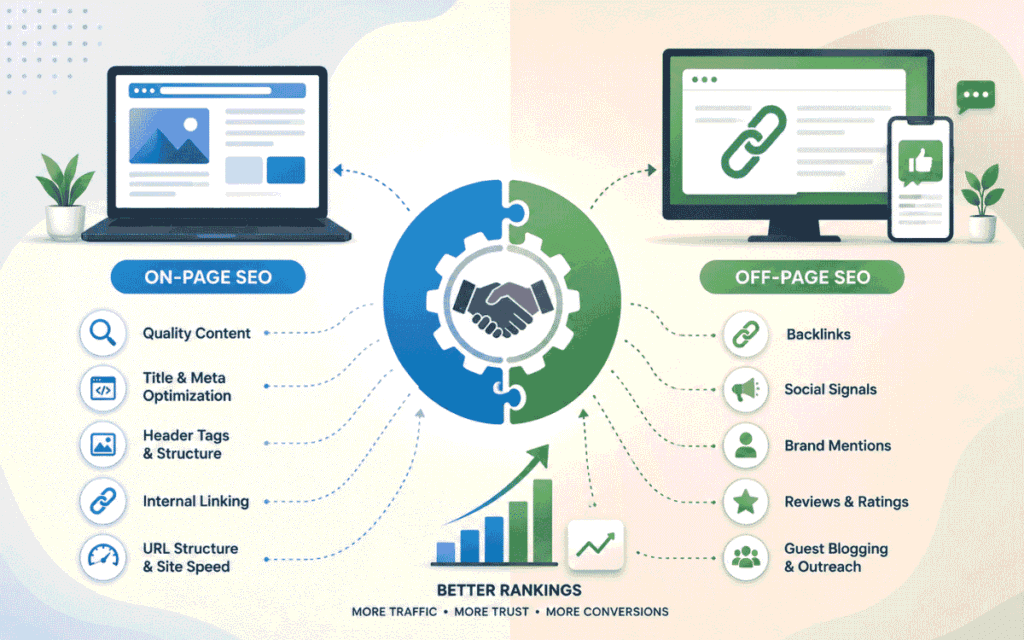
  • On-page optimisation – optimising titles, headings, content, and metadata
  • Technical SEO – improving site speed, crawlability, and structure
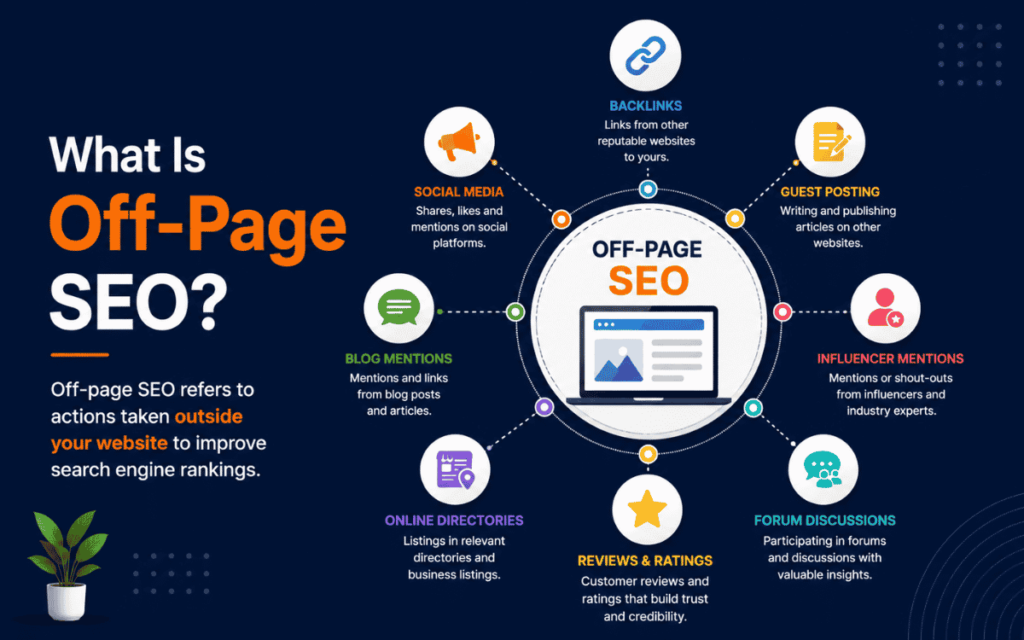
  • Off-page SEO – earning backlinks that signal authority to search engines

Turn AI Visibility Into Real Revenue.

Automate Leads With SurgeAIO. Don’t Let AI Ignore Your Brand.

Book A Demo →

The biggest advantage of SEO is that it compounds over time. A well-optimised page can drive consistent traffic for months or years without ongoing ad spend. However, it takes time – typically 3 to 6 months – before significant results appear.

Understanding whether SEO is advertising or marketing helps clarify exactly where it sits in your overall strategy and how to budget for it correctly.

What Is SEM?

Search Engine Marketing (SEM) is the broader discipline that covers all efforts to gain visibility in search engines – both organic and paid. In practical usage today, however, SEM most commonly refers to paid search advertising, particularly pay-per-click (PPC) campaigns run through platforms like Google Ads and Microsoft Advertising.

What Is SEM

When you search on Google and see results labelled “Sponsored” at the top or bottom of the page, those are SEM ads. Businesses bid on specific keywords through an ad auction. Each time a user clicks their ad, they pay a fee – hence the term cost-per-click (CPC).

SEM delivers immediate visibility. The moment your campaign goes live, your ad can appear at the top of relevant search results. However, the moment your budget runs out, your visibility disappears entirely.

How Do SEO and SEM Differ? Key Comparisons

Now that we’ve defined both, let’s explore the specific dimensions where SEO and SEM diverge.

1. Cost Structure

SEO and SEM have fundamentally different cost models.

SEO does not require payment to search engines for traffic. You invest in content creation, technical improvements, and link building – but organic clicks are free. The costs are time and resources, not per-click fees.

SEM requires an ongoing advertising budget. Every click costs money. If you pause your spend, your ads disappear. For competitive keywords, cost-per-click can reach tens or even hundreds of dollars in some industries.

This is why many businesses rely on SEO services for organic traffic as a long-term cost-efficient strategy alongside short-term SEM campaigns.

2. Speed of Results

This is one of the most significant differences between SEO and SEM.

SEO is a long-term investment. It typically takes several months before pages gain meaningful rankings and traffic. Building authority and trust with search engines does not happen overnight.

SEM delivers instant results. Launch a campaign today, and your ads can appear in search results within hours. This makes it ideal for product launches, seasonal promotions, or any situation requiring rapid visibility.

Therefore, many businesses use SEM to generate leads while their SEO strategy matures in the background.

3. Traffic Sustainability

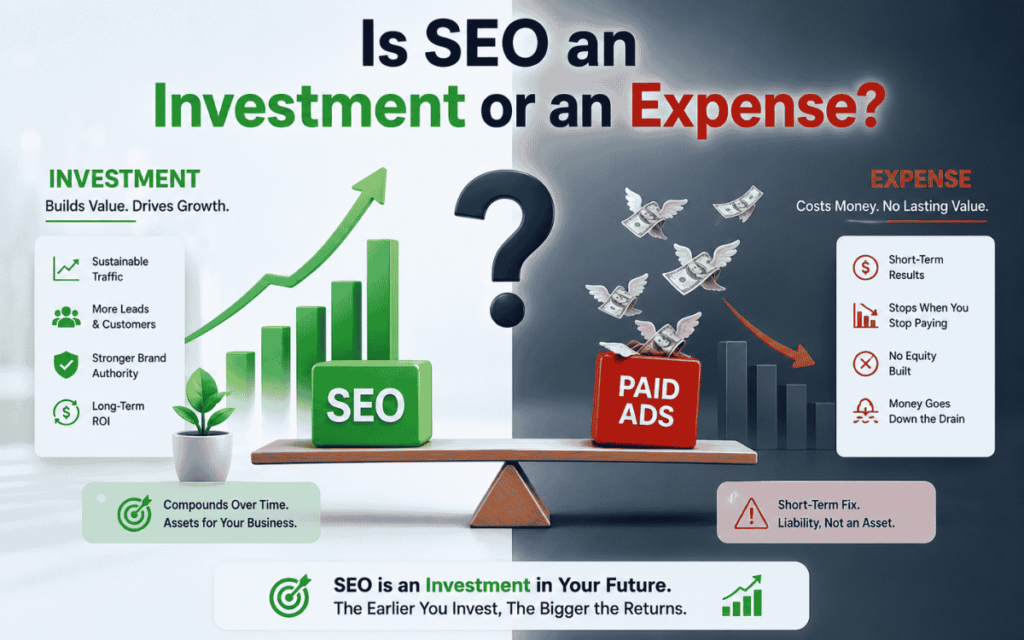
SEO builds sustainable, compounding traffic. A page that earns strong rankings continues to attract visitors without additional spend. Over time, this creates a growing asset for your business.

SEM traffic is entirely dependent on your budget. Stop paying, and the traffic stops immediately. There is no residual benefit once a campaign ends.

For businesses thinking long-term, understanding what SEO lead generation means helps frame organic search as a lead generation engine – not just a traffic source.

4. Credibility and Click Behaviour

Studies consistently show that many users trust organic results more than paid ads. A significant portion of searchers scroll past sponsored listings to reach organic results, particularly for research-oriented or informational queries.

However, SEM performs very well for high-intent commercial queries – searches where users are actively ready to buy. In these cases, a well-crafted paid ad with a strong offer can outperform organic results in conversion rate.


Turn AI Visibility Into Real Revenue.

Automate Leads With SurgeAIO. Don’t Let AI Ignore Your Brand.

Book A Demo →

5. Targeting Capabilities

SEM offers more precise and immediate targeting options. You can target by:

  • Specific keywords and match types
  • Geographic location, device type, and time of day
  • Audience demographics and interests
  • Remarketing lists (targeting previous site visitors)

SEO targeting is less granular. You optimise content for keywords and search intent, but you cannot control who sees your results the way you can with paid ads.

That said, geo targeting in SEO is a powerful technique for businesses serving specific regions – combining local keyword optimisation with targeted content strategies to attract geographically relevant visitors.

6. Measurability and Testing

SEM allows rapid testing. You can run A/B tests on ad copy, landing pages, and bidding strategies in days. Results are immediate and clearly attributable to the spend.

SEO testing is slower by nature. Algorithm changes, competition shifts, and indexing delays mean it can take weeks or months to understand the full impact of any optimisation change.

However, both channels benefit enormously from strong content performance data – tracking which pages and campaigns drive the most meaningful traffic and conversions.

Where SEO and SEM Overlap

Despite their differences, SEO and SEM share important common ground.

Where SEO and SEM Overlap

Keyword research drives both. Whether you’re writing optimised blog content or building a Google Ads campaign, understanding what your audience searches for is the foundation.

Landing page quality matters in both. Google’s Quality Score – which affects how much you pay per click in SEM – is heavily influenced by the relevance and quality of your landing page. Good on-page SEO directly improves SEM performance.

Search intent is central to both. Whether organic or paid, content that matches what users are actually looking for performs better. Misreading intent wastes money in SEM and fails to rank in SEO.

Both benefit from competitive analysis. Understanding what competitors rank for organically – and what they’re bidding on in paid search – informs strategy across both channels. A thorough competitive analysis of keywords gives you a decisive advantage in both SEO and SEM simultaneously.

When to Use SEO vs. SEM

Choosing between SEO and SEM – or deciding how to allocate between them – depends on your specific situation.

Prioritise SEO when:

  • You have a longer time horizon and can invest 6+ months before expecting significant returns
  • You want to build a sustainable, cost-efficient traffic source
  • Your industry has moderate keyword competition
  • You’re focused on informational or research-driven search queries
  • You want to build brand authority and trust over time

Prioritise SEM when:

  • You need immediate traffic or leads – for a new product, event, or promotion
  • You want to test messaging and offers before committing to long-term content
  • You’re competing in a market where top organic positions are dominated by established players
  • Your business has clear short-term revenue targets tied to search traffic
  • You want hyper-specific audience targeting that organic search can’t provide

Use both when:

  • You have the budget to run paid campaigns while your SEO compounds
  • You want to dominate the SERP by appearing in both organic and paid positions
  • You’re using SEM data to identify high-converting keywords to prioritise in your SEO strategy

Many businesses – especially in competitive sectors like legal, healthcare, and finance – find that doing both digital marketing and SEO together delivers results far greater than either channel alone.

Common Mistakes When Mixing SEO and SEM

Understanding how SEO and SEM differ also means avoiding common strategic errors.

  • Treating them as interchangeable – They serve different purposes at different timelines. Replacing SEO with SEM is expensive long-term. Replacing SEM with SEO is risky in the short term.
  • Not sharing data between channels – SEM conversion data can reveal which keywords to prioritise in SEO. SEO ranking data can show where to reduce PPC spend. Both channels should inform each other.
  • Ignoring quality scores in SEM – Poor landing page quality drives up your CPC and reduces ad performance. Good SEO practices directly lower your SEM costs.
  • Neglecting long-tail keywords in SEM – Many advertisers focus only on broad, expensive keywords. Long-tail terms often convert better at a fraction of the cost.

Turn AI Visibility Into Real Revenue.

Automate Leads With SurgeAIO. Don’t Let AI Ignore Your Brand.

Book A Demo →

How SurgeAIO Can Help in Terms of SEO

For businesses that want to master organic search while staying informed about the full search landscape, SurgeAIO provides a powerful unified platform.

Here’s how SurgeAIO supports your SEO strategy:

Keyword Intelligence – SurgeAIO helps you identify the most valuable organic keywords for your business – including long-tail opportunities that competitors miss. This data also informs which keywords may be worth testing in paid campaigns.

Content Optimisation – The platform analyses your existing content against top-ranking pages and identifies exactly what needs to improve. Better content means better rankings and lower SEM costs through improved Quality Scores.

Technical SEO Auditing – SurgeAIO scans your site for the technical issues that silently drag down organic performance – crawl errors, slow load times, broken links, and more.

Competitive Analysis – Understand where competitors are winning in organic search and build a targeted strategy to outrank them. Knowing where rivals are investing heavily in paid search can also reveal gaps in organic coverage.

AI Visibility Tracking – As AI-generated search results reshape how people discover businesses, SurgeAIO tracks your brand’s visibility in AI Overviews and generative search responses – a dimension that goes beyond both traditional SEO and SEM.

Performance Reporting – Clear dashboards track organic traffic growth, keyword movements, and lead generation – making it easy to demonstrate ROI and guide ongoing strategy decisions.

Whether you’re investing purely in SEO or managing a combined SEO and SEM approach, SurgeAIO gives you the data and tools to make smarter decisions and drive better results.

Final Thoughts

Understanding how SEO and SEM differ is not just academic – it directly shapes where you invest your time and budget in digital marketing.

SEO builds long-term authority and delivers sustainable, compounding traffic. SEM offers immediate visibility with precise control. Both are powerful. Both serve different strategic purposes. And when used together intelligently, they create a search marketing engine that is greater than the sum of its parts.

Start by clarifying your goals, timeline, and budget. Then build a strategy that uses each channel where it performs best – and lets data from one channel sharpen performance in the other.

Frequently Asked Questions

Q1. Is SEM the same as PPC? 

Not exactly. SEM is the broader term that technically includes both organic search (SEO) and paid search. However, in common usage, SEM most often refers specifically to paid search advertising – which is also called PPC (pay-per-click). The terms are frequently used interchangeably in industry conversations.

Q2. Which is better – SEO or SEM? 

Neither is universally better. SEO offers long-term, sustainable traffic without per-click costs. SEM delivers immediate visibility with precise targeting. The best approach for most businesses combines both – using SEM for short-term wins while SEO builds for the long term.

Q3. Can I do SEO and SEM at the same time? 

Absolutely – and it’s often the smartest approach. Running both simultaneously means you appear in paid and organic positions, dominate more SERP real estate, and can use SEM data to sharpen your SEO strategy.

Q4. How much does SEM cost? 

SEM costs vary widely depending on your industry, competition level, and targeting. Some keywords cost less than £1 per click. Others – particularly in legal, finance, and insurance – can exceed £50 per click. Your monthly budget determines how much traffic and visibility you can buy.

Q5. How long does SEO take to show results? 

Most businesses see meaningful organic traffic improvement within 3 to 6 months of consistent SEO effort. Highly competitive industries may take 12 months or longer. Technical improvements and content optimisations can sometimes show results in weeks.

Q6. Does running SEM ads help my SEO rankings? 

No. Running paid search ads does not directly influence your organic search rankings. Google has confirmed this repeatedly. However, paid ads can drive traffic that increases brand awareness, and users who click ads may link to your site, which can indirectly support SEO.

Q7. What is a keyword gap, and how does it affect SEO and SEM strategy? 

A keyword gap refers to the keywords your competitors rank for that you currently do not. Identifying these gaps helps you target untapped opportunities in both organic content and paid campaigns – maximising your overall search visibility.

How Do I Become an SEO Specialist? A Complete Step-by-Step Guide

SEO Specialist Guide

If you’ve ever typed “how do I become an SEO specialist” into a search bar, you’re already thinking like one. SEO is one of the most in-demand digital skills today – and for good reason. Organic search drives more than half of all website traffic. Businesses need skilled professionals who can harness that power.

The good news? You don’t need a specific degree. You need the right knowledge, consistent practice, and a clear roadmap. This guide gives you exactly that.

What Does an SEO Specialist Actually Do?

Before diving into the how, let’s clarify the what.

An SEO specialist optimises a company’s website to rank higher on search engine results pages (SERPs). The ultimate goal is to attract more organic – meaning unpaid – traffic from Google, Bing, and other search engines.

Day-to-day responsibilities typically include:

  • Researching and targeting relevant keywords
  • Auditing websites for technical issues
  • Optimising on-page content and metadata
  • Building and earning quality backlinks
  • Tracking performance using analytics tools
  • Staying updated on algorithm changes and industry trends

Turn AI Visibility Into Real Revenue.

Automate Leads With SurgeAIO. Don’t Let AI Ignore Your Brand.

Book A Demo →

Moreover, the role is evolving. Today’s SEO specialists also need to understand what LLM in SEO means and how AI-driven search is reshaping the landscape. The job has never been more dynamic.

Step 1: Build a Strong Foundation in SEO Fundamentals

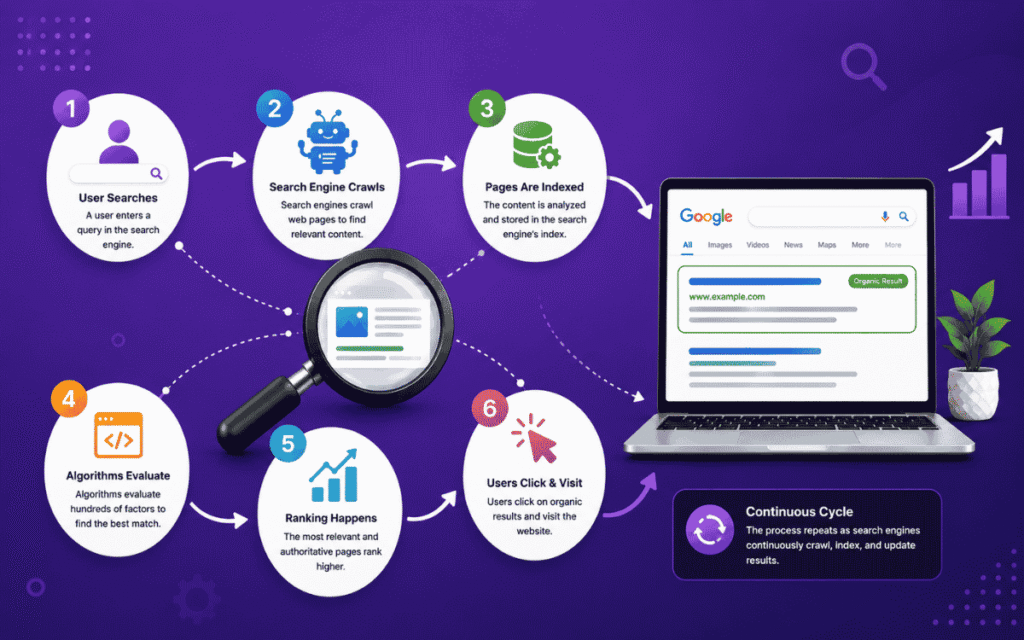
Every SEO specialist starts with the basics. You need to understand how search engines work – how they crawl, index, and rank content.

Build a Strong Foundation in SEO Fundamentals

Start by learning these core concepts:

  • How search engines crawl and index pages
  • What organic vs paid search means
  • How keywords drive search intent
  • The role of on-page, off-page, and technical SEO

Free resources from Google, Moz, Ahrefs, and SEMrush offer beginner-friendly guides. Spend time reading industry blogs. Follow SEO news regularly.

Understanding whether SEO is organic or paid is one of the first concepts new practitioners need to get right. It shapes how you think about strategy, budgets, and goals from day one.

Step 2: Master Keyword Research

Keyword research is the backbone of SEO. Without it, you’re guessing what your audience wants. With it, you’re meeting them exactly where they are.

Learn to:

  • Identify primary and secondary keywords for any topic
  • Understand search intent – informational, navigational, commercial, transactional
  • Evaluate keyword difficulty and search volume
  • Find long-tail keyword opportunities your competitors are missing

Tools like Google Keyword Planner, Ahrefs, and SEMrush are industry standards. However, understanding why keywords are important for SEO goes beyond just finding high-volume terms. It requires aligning keywords with real user needs and business goals.

Practice by building keyword lists for hypothetical businesses. Then learn how to map those keywords to specific pages on a website.

Step 3: Learn On-Page Optimisation

Once you understand keywords, you need to know how to use them effectively on a page.

On-page SEO covers everything that lives within your website’s content and code. Key elements include:

  • Title tags – the clickable headline that appears in search results
  • Meta descriptions – the summary shown below the title
  • Header tags (H1, H2, H3) – structure that signals content hierarchy
  • URL structure – clean, keyword-rich URLs perform better
  • Internal linking – connecting relevant pages across your site
  • Image alt text – descriptions that help search engines understand visuals
  • Content quality – original, well-structured writing that satisfies user intent

Strong on-page SEO is also foundational if you work in niche sectors. For example, the best SEO for a physiotherapy clinic require the same on-page principles but applied to a highly specific audience and set of search queries.

Step 4: Understand Technical SEO

Technical SEO ensures that search engines can efficiently crawl and index your website. Without this, even great content can remain invisible.

Key technical SEO areas to learn:

  • Site speed optimisation – faster pages rank better and convert more
  • Mobile-friendliness – Google uses mobile-first indexing
  • XML sitemaps – help search engines discover your pages
  • Robots.txt – controls which pages get crawled
  • Structured data/schema markup – helps search engines understand your content
  • Canonical tags – prevent duplicate content issues
  • HTTPS security – a confirmed Google ranking signal

Learning schema markup is particularly valuable. Understanding schema markup for marketing consultants shows how structured data can elevate a site’s performance in competitive niches.

Technical SEO may feel intimidating at first. However, practising on a test website makes it manageable quickly.


Turn AI Visibility Into Real Revenue.

Automate Leads With SurgeAIO. Don’t Let AI Ignore Your Brand.

Book A Demo →

Step 5: Learn Link Building and Off-Page SEO

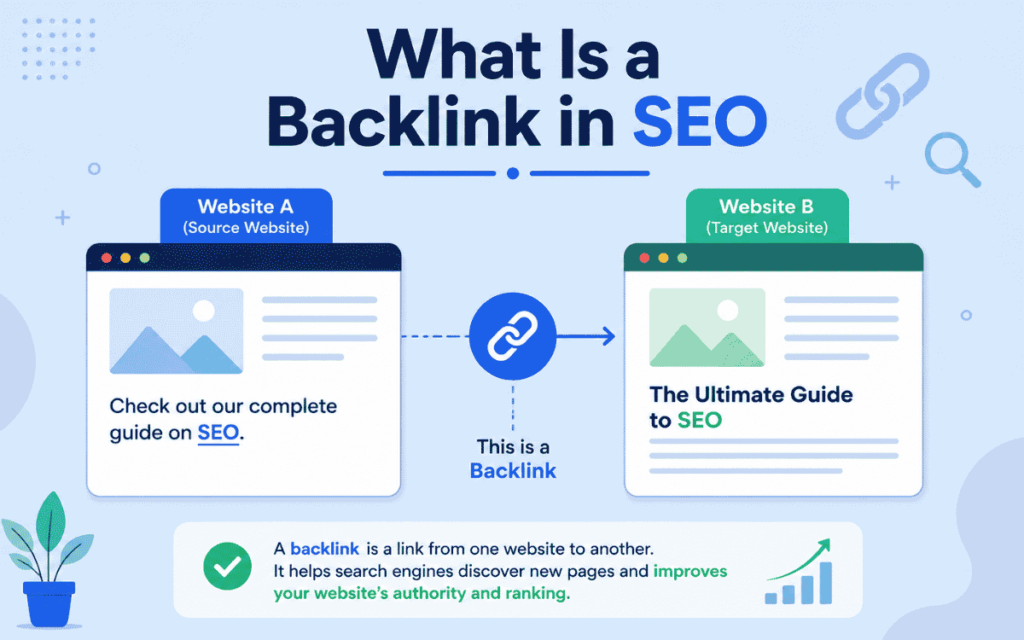
Backlinks – links from other websites pointing to yours – remain one of Google’s strongest ranking signals. Building a healthy backlink profile is a critical skill for any SEO specialist.

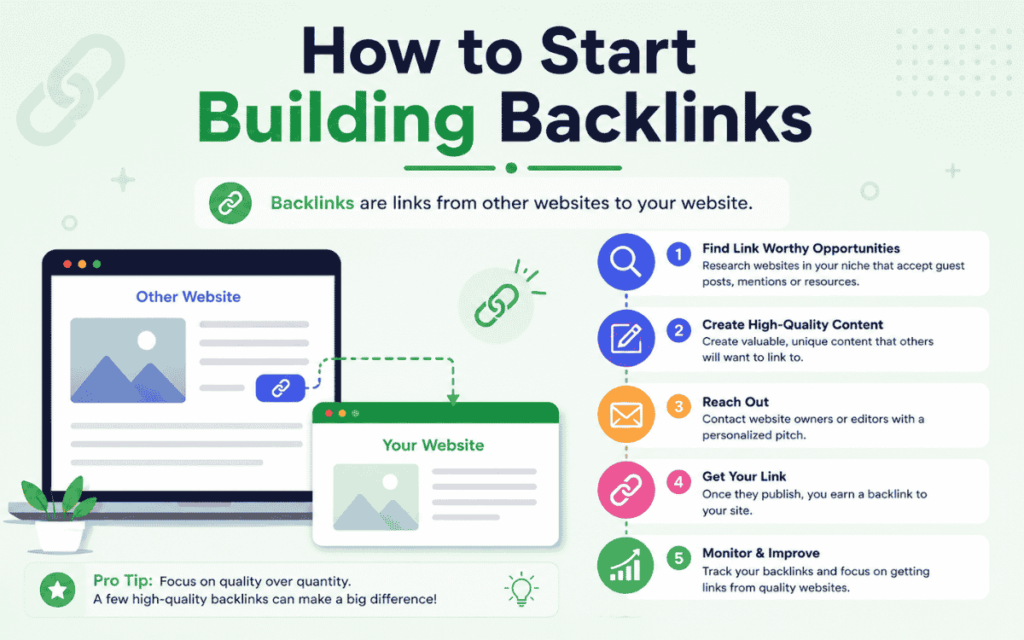
Effective link-building strategies include:

  • Guest posting on authoritative industry sites
  • Creating shareable assets like research, infographics, and guides
  • Digital PR – earning coverage that links back to your site
  • Broken link building – finding dead links and suggesting your content as a replacement
  • Building local citations for geographically targeted businesses

Understanding how many backlinks you need for competitive rankings helps you set realistic expectations and plan campaigns effectively. Quality always outweighs quantity in modern link building.

Step 6: Get Comfortable with SEO Tools

SEO specialists rely on a suite of tools daily. Familiarity with these platforms is essential for the role.

Must-know tools include:

  • Google Search Console – monitors site performance and indexing issues
  • Google Analytics – tracks traffic, user behaviour, and conversions
  • Ahrefs / SEMrush / Moz – for keyword research, backlink analysis, and competitor tracking
  • Screaming Frog – crawls websites to identify technical issues
  • PageSpeed Insights – tests and improves site speed

Beyond these, learning inexpensive SEO tools that deliver strong results is a smart move – especially when working with smaller clients or limited budgets. You don’t always need the most expensive platform to get the job done.

Therefore, build your toolkit progressively. Start with free tools and expand as your skills and budget grow.

Step 7: Develop Content Strategy Skills

SEO and content are inseparable. As an SEO specialist, you need to understand how to plan, create, and optimise content that ranks and converts.

Develop Content Strategy Skills

Strong content strategy skills include:

  • Building topic clusters around pillar pages
  • Writing content that satisfies search intent fully
  • Optimising existing content to improve rankings
  • Identifying content gaps through competitive analysis
  • Using content performance data to refine and improve your strategy over time

Great SEO specialists don’t just optimise pages – they guide the entire content creation process. They know which topics to target, how to structure articles, and when to update or consolidate existing content.

Step 8: Build Real-World Experience

Reading about SEO is valuable. However, doing SEO is what builds real expertise.

Here’s how to gain hands-on experience:

  • Start your own blog or website – your personal SEO laboratory
  • Take on freelance clients – even small local businesses need SEO help
  • Contribute to open-source projects – build credibility and real portfolio work
  • Offer pro bono SEO audits – a great way to build case studies early on
  • Join SEO communities – Reddit’s r/SEO, Twitter/X SEO chats, and LinkedIn groups are full of practitioners sharing real-world insights

Additionally, understand how SEO applies across different industries. For instance, SEO for home service leads requires a local-first approach, while B2B tech companies demand entirely different keyword and content strategies. The broader your experience, the more versatile you become.

Step 9: Stay Current with Algorithm Updates

Google updates its algorithm thousands of times per year. Major updates – like Core Updates, Helpful Content Updates, and spam-related changes – can dramatically shift rankings overnight.

To stay current:

  • Follow Google’s official Search Central blog
  • Monitor industry sites like Search Engine Journal, Search Engine Land, and Moz
  • Track your clients’ ranking changes and correlate them with known updates
  • Test and adapt your strategies based on what’s working now, not what worked two years ago

Furthermore, the rise of AI in search is creating an entirely new dimension to the role. Understanding the future of SEO – including AI Overviews, generative search, and LLM-powered results – is now part of staying competitive as a specialist.

Step 10: Consider Certifications and Specialisations

While no certification will replace hands-on experience, formal credentials demonstrate commitment and baseline knowledge to employers and clients.

Valuable SEO certifications include:

  • Google Analytics Certification (free via Skillshop)
  • Google Search Ads Certification (free via Skillshop)
  • SEMrush SEO Toolkit Course
  • HubSpot SEO Certification
  • Moz SEO Essentials Certificate

You may also choose to specialise in a specific area – local SEO, technical SEO, e-commerce SEO, or content strategy. Specialists who develop deep expertise in one vertical often command higher rates and attract more focused client opportunities.


Turn AI Visibility Into Real Revenue.

Automate Leads With SurgeAIO. Don’t Let AI Ignore Your Brand.

Book A Demo →

How SurgeAIO Can Help in Terms of SEO

Whether you’re learning SEO or already practicing it professionally, having the right platform makes a significant difference. SurgeAIO is built to support SEO specialists at every stage – from research and strategy through to execution and reporting.

Here’s how SurgeAIO adds value:

Keyword Research and Gap Analysis – SurgeAIO helps you identify high-opportunity keywords your competitors are missing. It surfaces low-competition terms with strong intent signals, giving you a strategic edge.

Content Optimisation Guidance – The platform analyses your content against top-ranking pages and provides actionable recommendations to improve relevance, structure, and keyword usage.

Technical SEO Auditing – SurgeAIO scans websites for the technical issues that hold rankings back – from crawl errors to page speed problems – and prioritises fixes by impact.

AI Visibility Tools – As search evolves, SurgeAIO helps specialists track brand visibility in AI-generated answers and AI Overviews – not just traditional rankings.

Performance Reporting – Clear, client-ready dashboards make it easy to demonstrate the value of your SEO work. Track organic traffic, ranking improvements, and lead generation in one place.

For anyone serious about becoming an SEO specialist, SurgeAIO removes the guesswork and gives you a data-driven environment to develop your skills and deliver results.

Final Thoughts

Becoming an SEO specialist is one of the most rewarding paths in digital marketing. It combines analytical thinking, creative writing, technical problem-solving, and strategic planning into a single role.

The path is clear: learn the fundamentals, develop hands-on experience, build your toolkit, and stay current with how search is evolving. There is no single shortcut – but consistent, curious effort gets you there faster than most expect.

Start today. Build a website. Pick a keyword. Optimise a page. Then do it again tomorrow.

Frequently Asked Questions

Q1. Do I need a degree to become an SEO specialist? 

No. SEO is a skills-based profession. Most hiring managers prioritise demonstrated results over formal qualifications. A strong portfolio, certifications, and hands-on experience matter far more than a specific degree.

Q2. How long does it take to become an SEO specialist? 

With consistent effort, you can develop foundational SEO skills in 3 to 6 months. However, becoming truly proficient – with a portfolio of real results – typically takes 12 to 24 months of active practice.

Q3. What is the average salary for an SEO specialist? 

Salaries vary significantly by location, experience, and specialisation. In the US, entry-level SEO specialists typically earn between $40,000 and $55,000 annually. Experienced specialists and managers can earn $70,000 to $100,000 or more.

Q4. Can I become an SEO specialist without a marketing background? 

Absolutely. Many successful SEO specialists come from writing, web development, data analytics, or journalism backgrounds. The key skills – analytical thinking, content creation, and technical problem-solving – transfer well from many fields.

Q5. Is SEO a good career in 2026? 

Yes. Demand for SEO specialists continues to grow as businesses compete for organic visibility. The evolution of AI search has added new dimensions to the role, making it more complex and valuable – not less relevant.

Q6. What is the difference between an SEO specialist and an SEO manager? 

An SEO specialist typically executes a strategy – optimising pages, building links, and running audits. An SEO manager oversees strategy, manages teams or agencies, and aligns SEO with broader marketing goals. The specialist role is usually the entry point into SEO management.

How Does SEO Differ from GEO? A Complete Marketer’s Guide

SEO vs GEO Differences

Search is no longer what it used to be. For years, marketers focused on one goal – ranking on Google’s first page. Today, a new discipline called GEO (Generative Engine Optimization) is changing the rules entirely. Understanding how does SEO differ from GEO is no longer optional. It is a strategic necessity for any brand that wants to stay visible online.

In this guide, we break down both strategies, highlight key differences, and show you how to use them together for maximum impact.

What Is SEO?

Search Engine Optimization (SEO) is the process of improving your website’s visibility in search engine results pages (SERPs). The goal is simple – rank higher so more people click on your link.

SEO relies on several core pillars:

  • On-page optimization – keyword usage, meta tags, headings, and content quality
  • Technical SEO – site speed, mobile-friendliness, crawlability
  • Off-page SEO – backlinks, domain authority, brand signals
  • Local SEO – optimizing for geographic search results

When done right, SEO drives consistent organic traffic to your website over time. It builds authority and generates long-term ROI without relying on paid ads.

What Is GEO?

Generative Engine Optimization (GEO) is a newer practice. It focuses on getting your brand mentioned inside AI-generated answers – not just ranked in a list of links.


Turn AI Visibility Into Real Revenue.

Automate Leads With SurgeAIO. Don’t Let AI Ignore Your Brand.

Book A Demo →

AI tools like ChatGPT, Perplexity, Google AI Overviews, and Claude now answer user queries directly. They synthesize information from multiple sources and deliver one confident response. Your brand either gets mentioned in that response – or it doesn’t.

GEO is the process of optimizing your content so that AI models extract it, trust it, and cite it. Understanding what LLM in SEO means is an important starting point for grasping how generative engines work.

How Does SEO Differ from GEO? The Core Distinctions

Both SEO and GEO aim for visibility. However, they operate in fundamentally different environments. Here is how they compare across key dimensions.

How Does SEO Differ from GEO

1. The Target Platform

SEO targets traditional search engines – primarily Google and Bing. These engines crawl pages, index content, and return a ranked list of links.

GEO, on the other hand, targets AI-powered platforms. These systems don’t return lists. They generate synthesized, conversational answers. The competition shifts from “which link ranks first” to “which brand gets mentioned at all.”

This is why many marketers now explore what SEO and GEO mean together as part of a unified strategy.

2. Rankings vs. Mentions

In SEO, success is measured by position. If you rank #1, you win clicks.

In GEO, success is measured by mentions. If an AI tool includes your brand in its answer, you gain visibility – even if the user never visits your site.

This is a significant shift. You are no longer competing for a spot on a page. You are competing to be included in a single synthesized response. That response might not even contain a clickable link.

3. Keyword Strategy vs. Topical Authority

SEO uses keywords strategically. You research terms people search for and optimize pages around them. Keywords remain important for SEO, but their role is evolving.

GEO requires something deeper – topical authority. AI models favour sources that consistently provide accurate, well-structured, and authoritative information on a topic. A single well-optimized keyword page won’t cut it. You need a body of credible content that AI systems recognize as trustworthy.

4. Click-Through Rates vs. Answer Inclusion

Traditional SEO success metrics include:

  • Organic click-through rate (CTR)
  • Impressions in search results
  • Time on page and bounce rate

GEO success metrics look very different:

  • Brand mention rate in AI responses
  • Position within AI-generated answers
  • Frequency of recommendation by AI tools
  • Sentiment of the mention (positive, neutral, negative)

Users who receive an AI-generated answer may never click through to any website. Therefore, optimizing purely for clicks no longer captures the full picture of digital visibility.

5. Content Structure

SEO content is built around headers, keywords, internal links, and readability. Search engines crawl and index these signals to decide where to rank your page.

GEO content must be structured for extraction. AI models pull specific facts, claims, and data points from your content to synthesize into answers. Clear attribution, structured data, and authoritative sourcing matter enormously. If your content is vague or disorganized, AI models will simply skip it and cite a competitor instead.

This is why AI visibility optimization techniques are rapidly becoming a core competency for content teams.


Turn AI Visibility Into Real Revenue.

Automate Leads With SurgeAIO. Don’t Let AI Ignore Your Brand.

Book A Demo →

Where SEO and GEO Overlap

Despite their differences, SEO and GEO share several common foundations.

Quality content matters for both. Whether you want to rank on Google or get cited by ChatGPT, shallow content won’t work. Both strategies reward original, accurate, and well-structured writing.

Backlinks and authority still count. GEO platforms tend to cite sources that already have strong domain authority. Your SEO link-building efforts directly support your GEO performance.

Technical foundations are shared. Fast-loading, well-structured, crawlable websites perform better in both ecosystems.

Many businesses now pursue SEO and GEO for their website simultaneously, treating them as complementary disciplines rather than competing ones.

Why GEO Is Becoming Impossible to Ignore

The rise of AI Overviews in Google Search has changed how millions of users interact with search results. A large share of queries now get an AI-generated summary at the top of the page – before any organic results appear.

Why GEO Is Becoming Impossible to Ignore

If your brand isn’t included in that summary, users may never scroll down to find you.

Understanding how AI Overviews will change SEO is critical for any business investing in organic growth. The traffic dynamics are shifting – and fast.

Moreover, standalone AI tools like ChatGPT and Perplexity are now primary research tools for a growing number of users. These platforms don’t show organic rankings. They show synthesized answers. Brands that ignore GEO risk are becoming invisible to an entirely new category of searcher.

How to Combine SEO and GEO Effectively

You don’t have to choose one over the other. The most effective approach is an integrated strategy.

Here’s how to build one:

Start with strong SEO fundamentals. Build a technically sound website, create high-quality content, and earn authoritative backlinks. These foundations support both traditional rankings and AI visibility.

Layer in GEO-specific content practices. Write content that AI models can easily extract. Use clear headings, concise definitions, structured data, and factual claims with proper attribution.

Track your AI visibility separately. Use tools designed to monitor brand mentions in AI responses. Standard SEO dashboards won’t capture this data.

Audit your content for topical depth. AI models favour comprehensive topic coverage. Thin content on a keyword won’t earn mentions. Build out full topic clusters that demonstrate genuine expertise.

Optimize for geo targeting in SEO where relevant. For local businesses, combining geographic optimization with AI visibility strategies creates a powerful dual advantage.

How SurgeAIO Can Help in Terms of SEO

SurgeAIO is built for the era where SEO and GEO must work together. It provides businesses with the tools to manage both traditional search optimization and AI visibility – from a single platform.

Here’s what SurgeAIO brings to the table:

AI Visibility Tracking – SurgeAIO monitors how and where your brand appears in AI-generated responses across major platforms. You can see your mention rate, position within responses, and how that changes over time.

Content Optimization Tools – The platform helps you create content structured for both Google rankings and AI extraction. It identifies gaps in your topical coverage and suggests improvements based on real performance data.

Keyword and GEO Analysis – SurgeAIO helps you find the right keywords while also mapping out how AI engines are likely to interpret your content. This dual-layer analysis gives you an edge over competitors still operating in SEO-only mode.

Competitor Intelligence – Understand how your competitors are performing in both traditional SERPs and AI-generated answers. Identify where they’re winning mentions and where you can outmanoeuvre them.

Technical SEO Foundation – SurgeAIO audits your site for the technical issues that affect both search rankings and AI crawlability. A clean, fast, well-structured site performs better across all channels.

Whether you’re a startup building your first SEO strategy or an established brand pivoting to include AI visibility, SurgeAIO gives you the data and tools to act confidently.


Turn AI Visibility Into Real Revenue.

Automate Leads With SurgeAIO. Don’t Let AI Ignore Your Brand.

Book A Demo →

Final Thoughts

Understanding how does SEO differ from GEO is no longer a theoretical exercise. It is a practical requirement for any marketer serious about long-term visibility.

SEO gets you ranked in Google. GEO gets you mentioned in AI-generated answers. Both matter. Both require strategy. And both are best managed together.

The businesses that will thrive in the next phase of digital marketing are those that stop treating SEO and GEO as separate conversations – and start building strategies that address both, intelligently and simultaneously.

SurgeAIO is designed to help you do exactly that.

Frequently Asked Questions

Q1. Is GEO replacing SEO? 

No. GEO is complementing SEO, not replacing it. Traditional search engines still drive significant traffic. However, ignoring GEO means missing a growing share of AI-driven visibility. Both strategies are now essential.

Q2. Do I need separate content for SEO and GEO? 

Not necessarily. High-quality, well-structured content works for both. However, GEO requires additional attention to content clarity, factual attribution, and structured formatting that AI models can easily extract.

Q3. What platforms does GEO target? 

GEO targets AI-powered tools and platforms, including ChatGPT, Google AI Overviews, Perplexity, Claude, Gemini, and similar tools that generate synthesized answers rather than ranked link lists.

Q4. How do I measure GEO performance? 

Unlike SEO, GEO performance is measured by brand mention rate, position within AI responses, and recommendation frequency across AI platforms. Specialised tools are required to track these metrics accurately.

Q5. Does local SEO still matter with GEO? 

Absolutely. Local businesses benefit from both local SEO and local GEO strategies. AI tools increasingly provide location-specific recommendations. Optimizing for both increases your chances of appearing in local AI-generated answers.

Q6. Is GEO relevant for small businesses? 

Yes. AI tools don’t only favour large brands. Well-structured, authoritative content from any business size can earn AI mentions. Small businesses that adopt GEO early will have a significant competitive advantage.

How Does an SEO Company Work? A Complete Business Owner’s Guide

SEO Company Process

If you’ve ever searched for ways to grow your business online, you’ve probably come across the term “SEO.” And right after that, you’ve likely wondered – how does an SEO company work, and is it worth hiring one?

The short answer is yes. But understanding what these companies actually do helps you make smarter decisions. In this guide, we break it all down clearly.

What Is an SEO Company?

An SEO company is a team of specialists who help your website rank higher on search engines like Google. They use a mix of technical, creative, and strategic work to drive organic (unpaid) traffic to your site.

However, SEO isn’t a one-time fix. It’s an ongoing process that requires consistent effort, analysis, and adaptation. A good SEO company stays ahead of algorithm updates and adjusts your strategy accordingly.

These companies serve businesses of all sizes – from local shops to large enterprises. Their core goal is simple: get the right people to find your website.

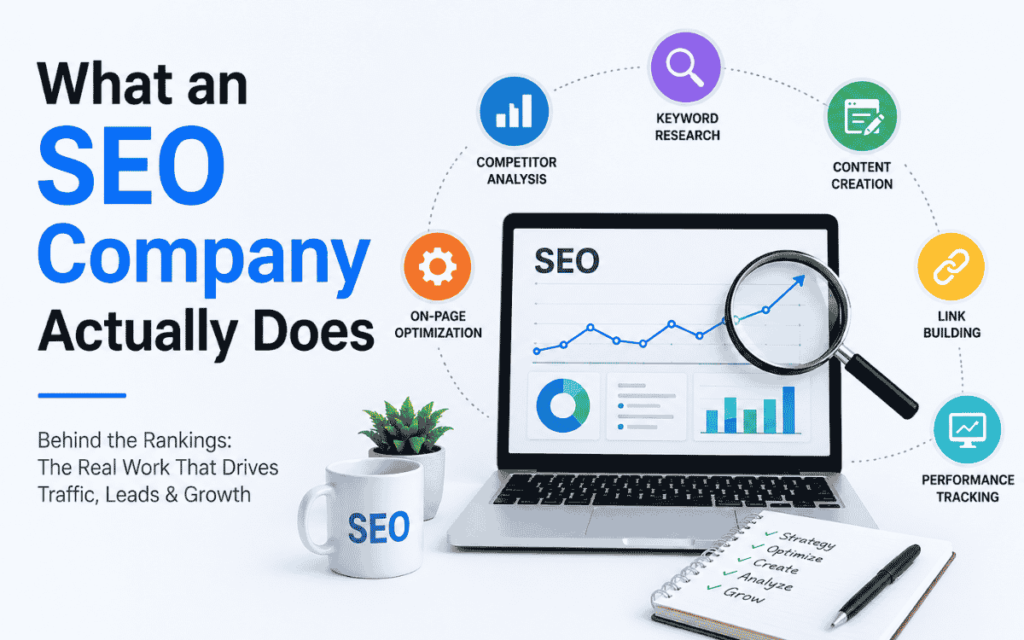
How Does an SEO Company Work? The Core Process

Understanding the process helps you see exactly where your investment goes. Therefore, let’s break it down step by step.

How Does an SEO Company Work

1. Website Audit and Analysis

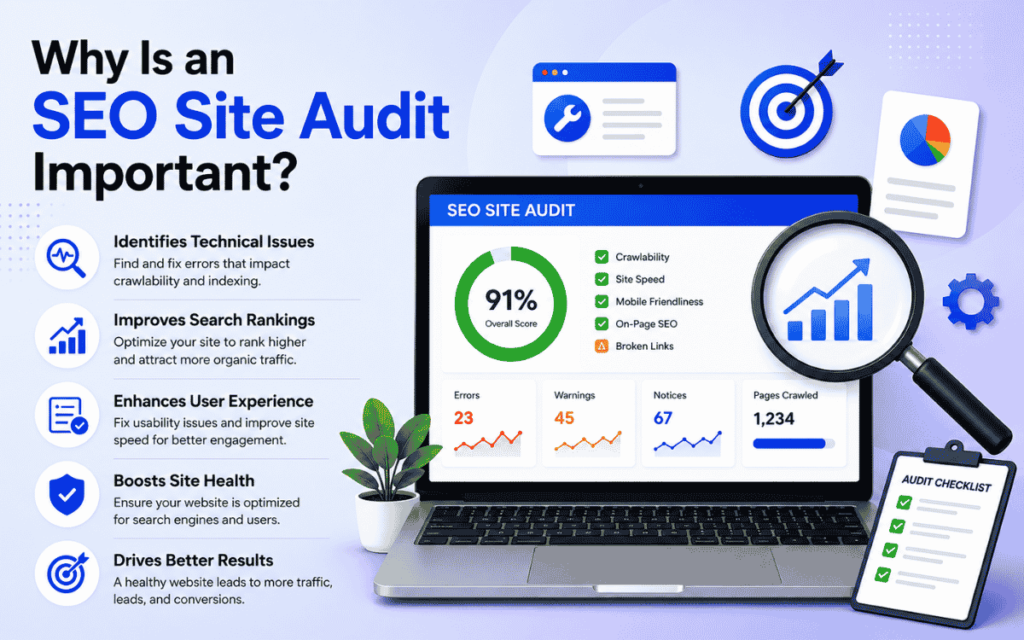
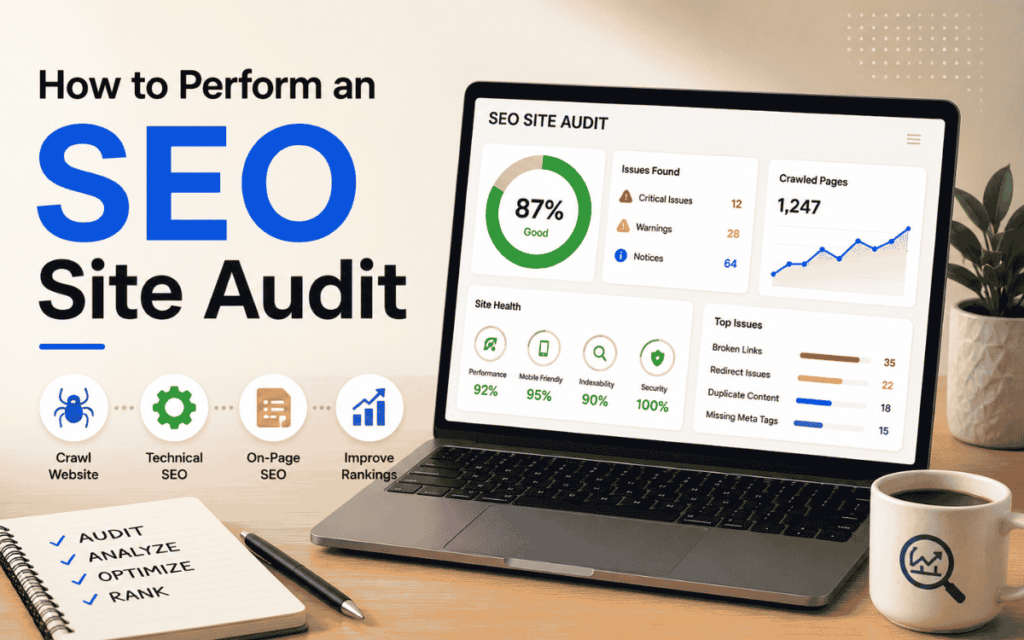
The first thing any SEO company does is audit your current website. This involves examining:

  • Site speed and performance
  • Technical errors (broken links, crawl issues)
  • Existing keyword rankings
  • Backlink profile
  • Content quality and structure

This audit reveals what’s working and what’s holding you back. Moreover, it creates a baseline to measure future progress.

Many businesses are surprised to discover major technical issues during this phase. Fixing these alone can produce significant ranking improvements.


Turn AI Visibility Into Real Revenue.

Automate Leads With SurgeAIO. Don’t Let AI Ignore Your Brand.

Book A Demo →

2. Keyword Research and Strategy

After the audit, the SEO company dives into keyword research. This is where they identify the exact phrases your potential customers type into Google.

An effective keyword gap strategy ensures you’re targeting terms your competitors may be missing. It’s not just about finding high-volume keywords – it’s about finding the right ones.

Good keyword research considers:

  • Search volume – how many people search for it monthly
  • Search intent – what users actually want to find
  • Competition level – how hard it is to rank for the term
  • Business relevance – whether ranking for it drives actual revenue

In addition, SEO companies often focus on long-tail keywords. These are more specific phrases with lower competition but higher purchase intent. They convert better and are easier to rank for early on.

3. On-Page Optimization

Once keywords are identified, the team optimizes your web pages. On-page SEO includes everything visible on your website that affects rankings.

This includes:

  • Title tags and meta descriptions
  • Header structure (H1, H2, H3)
  • Keyword placement throughout content
  • Image alt text
  • Internal linking structure
  • URL optimization

Understanding what elements are foundational for SEO with AI is becoming increasingly important. Search engines now use AI to evaluate content quality, not just keyword presence.

Therefore, top SEO companies go beyond keyword stuffing. They focus on creating content that genuinely satisfies user intent.

4. Technical SEO

Technical SEO is the behind-the-scenes work that ensures search engines can properly crawl and index your site. It’s often overlooked but absolutely critical.

Technical SEO tasks include:

  • Fixing crawl errors in Google Search Console
  • Optimizing site speed and Core Web Vitals
  • Implementing structured data (schema markup)
  • Ensuring mobile-friendliness
  • Setting up proper XML sitemaps
  • Managing canonical tags to avoid duplicate content

Many business owners focus only on content and ignore technical SEO. However, even the best content won’t rank if search engines can’t properly access and index it.

5. Content Creation and Optimization

Content is the backbone of any successful SEO strategy. SEO companies either create new content or optimize your existing content to rank for target keywords.

Quality content:

  • Answers specific user questions
  • Demonstrates expertise and authority
  • Uses natural keyword placement
  • Includes internal and external links
  • Is well-structured and easy to read

Moreover, content isn’t just blog posts. It includes service pages, landing pages, FAQs, case studies, and more. Each piece serves a specific purpose in your overall strategy.

Understanding how keywords are important for SEO helps you see why content creation is data-driven, not guesswork. Every article, page, or post is built around what your audience is actively searching for.

6. Link Building

Backlinks – links from other websites to yours – remain one of Google’s strongest ranking signals. An SEO company actively builds your backlink profile through various outreach strategies.

Common link-building methods include:

  • Guest posting on industry blogs
  • Digital PR and press coverage
  • Broken link building
  • Resource page outreach
  • Competitor backlink analysis

Choosing the right backlink companies for SEO matters enormously. Low-quality or spammy links can actually hurt your rankings. Reputable SEO companies focus on earning high-authority, relevant links.

Quality always beats quantity in link building. A single backlink from a highly authoritative website outperforms dozens of links from low-quality sources.


Turn AI Visibility Into Real Revenue.

Automate Leads With SurgeAIO. Don’t Let AI Ignore Your Brand.

Book A Demo →

7. Local SEO (If Applicable)

If you serve customers in a specific geographic area, local SEO is essential. An SEO company will optimize your Google Business Profile, build local citations, and target location-based keywords.

AI local SEO is transforming how businesses appear in local search results. AI-powered tools now help identify the most impactful local optimization opportunities faster than ever.

Local SEO efforts also include:

  • Optimizing for “near me” searches
  • Building consistent NAP (Name, Address, Phone) citations
  • Earning local reviews
  • Creating location-specific landing pages

8. Reporting and Analytics

A trustworthy SEO company provides transparent, regular reporting. You should always know what’s being done and how it’s performing.

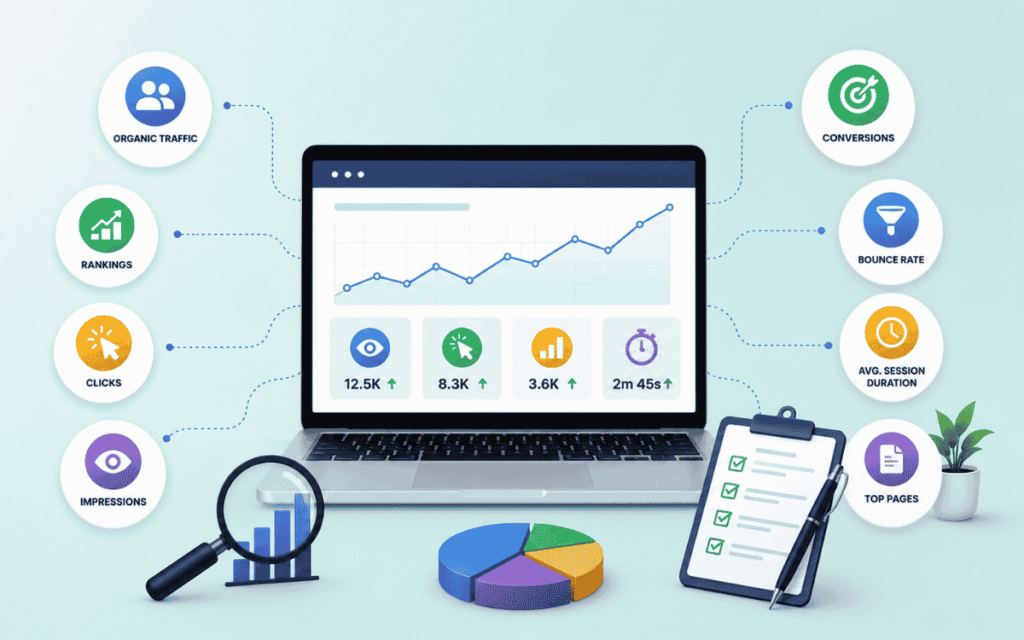
Key metrics reported include:

  • Organic traffic growth
  • Keyword ranking changes
  • Conversion rates from organic traffic
  • Backlink growth
  • Bounce rate and engagement metrics

Analyzing content performance data is how SEO teams identify what’s working and what needs adjustment. Data-driven decisions separate great SEO companies from mediocre ones.

Moreover, reporting should be easy to understand – not filled with jargon. You should walk away from each report knowing exactly how your investment is performing.

Why Businesses Hire SEO Companies

Many business owners try DIY SEO before hiring a professional team. While basic SEO knowledge is helpful, professional execution makes a significant difference.

Here’s why businesses choose to outsource:

  • Time savings – SEO requires consistent, daily attention
  • Expertise – algorithms change constantly; professionals stay updated
  • Tools – enterprise SEO tools are expensive to purchase independently
  • Faster results – experienced teams know what works
  • Scalability – agencies can scale efforts as your business grows

Still wondering if you need to hire an SEO company? The honest answer depends on your goals, budget, and timeline. But for most growing businesses, the ROI justifies the investment.

What Makes a Good SEO Company?

Not all SEO companies are created equal. Here’s what separates the best from the rest:

What Makes a Good SEO Company

Transparency – They explain what they’re doing and why. No vague promises or mystery tactics.

Proven results – They share case studies, testimonials, and data from past clients.

White-hat methods – They use ethical, Google-approved techniques that stand the test of time.

Clear communication – You receive regular updates and can reach your team easily.

Customized strategy – They don’t apply a cookie-cutter approach to every client.

Realistic expectations – They tell you the truth about timelines. SEO takes time – usually 3 to 6 months to see meaningful results.

How SurgeAIO Can Help in Terms of SEO

SurgeAIO is built for businesses that want real, measurable SEO results – not empty promises. It combines AI-powered tools with proven SEO strategies to help you outrank competitors and drive consistent organic traffic.

Here’s what makes SurgeAIO different:

AI-Powered SEO Analysis – SurgeAIO uses advanced AI to audit your website, identify technical issues, and surface high-impact opportunities faster than traditional tools.

Keyword Research and Content Strategy – The platform identifies the exact keywords your audience searches for and builds a content strategy designed to rank and convert.

GEO and Local SEO Capabilities – SurgeAIO includes powerful geo-targeting features that help local and regional businesses dominate their geographic markets.

AI Visibility Optimization – As AI-powered search (like Google’s AI Overviews) reshapes how results appear, SurgeAIO ensures your content is positioned to appear in these new formats.

Transparent Reporting – Every campaign comes with clear, easy-to-understand reporting. You always know how your SEO investment is performing.

Scalable Solutions – Whether you’re a small business or a large enterprise, SurgeAIO’s tools and services scale with your growth.

SurgeAIO doesn’t just tell you what’s wrong – it gives you a clear roadmap to fix it and helps you execute that roadmap efficiently.


Turn AI Visibility Into Real Revenue.

Automate Leads With SurgeAIO. Don’t Let AI Ignore Your Brand.

Book A Demo →

Common Misconceptions About SEO Companies

“SEO is a one-time thing.” False. SEO requires ongoing optimization, content creation, and adaptation. Algorithms change, and so does your competition.

“Results happen overnight.” False. Organic SEO typically takes 3-6 months to show significant traction. Anyone promising instant results is likely cutting corners.

“The cheapest option works just as well.” False. Very cheap SEO often relies on low-quality tactics that can result in Google penalties. Invest in quality.

“I only need SEO if I have a big website.” False. Even small, local businesses benefit enormously from proper SEO. In fact, local SEO can be transformative for small service businesses.

Final Thoughts

Understanding how an SEO company works removes the mystery and empowers you to make smarter business decisions. From technical audits and keyword research to content creation and link building, every step serves a specific purpose: getting your website in front of the right people at the right time.

The best SEO companies don’t just chase rankings. They build sustainable online visibility that drives real business growth.

If you’re ready to take your SEO seriously, SurgeAIO provides the tools, strategy, and expertise to help you get there – faster and more efficiently than traditional approaches.

Frequently Asked Questions

Q: How long does it take for SEO to show results?  

Most businesses begin seeing meaningful improvements within 3 to 6 months. However, competitive industries may take longer. SEO is a long-term investment, not a quick fix.

Q: How much does an SEO company typically charge?  

Pricing varies widely. Monthly retainers typically range from $500 to $5,000+, depending on the scope of work, industry competitiveness, and company reputation.

Q: Can an SEO company guarantee first-page rankings?  

No legitimate SEO company can guarantee specific rankings. Google’s algorithm is complex and constantly evolving. Be cautious of any company that makes such promises.

Q: What’s the difference between on-page and off-page SEO?  

On-page SEO refers to optimizations made directly on your website (content, meta tags, structure). Off-page SEO refers to external factors like backlinks and brand mentions.

Q: Do I need SEO if I’m already running paid ads?  

Yes. Paid ads stop working the moment you stop paying. SEO builds long-term organic visibility that continues to deliver traffic without ongoing ad spend.

Q: How do I know if my SEO company is doing a good job?  

Look for consistent improvements in organic traffic, keyword rankings, and leads generated from organic search. Regular, transparent reporting is a strong indicator of a trustworthy company.

Q: Is SEO still relevant with AI-powered search?  

Absolutely. In fact, AI search makes strong SEO even more important. Content that is authoritative, well-structured, and genuinely helpful is exactly what AI-powered search prioritizes.

How Blogging Platforms Affect Website SEO: What You Need to Know

Blogging Platform SEO

If you run a website, you’ve probably heard that blogging helps SEO. But have you ever asked a deeper question – does the blogging platform itself affect your website SEO? The answer is yes, and it matters more than most people realize.

Your choice of blogging platform shapes how search engines crawl, index, and rank your content. From page speed to URL structure to internal linking flexibility, the platform you pick sets the foundation for every SEO effort you make.

In this guide, we’ll break down exactly how blogging platforms affect website SEO – and what you can do to make the most of whichever platform you use.

Why Blogging Still Matters for SEO in 2026

Before diving into platforms, let’s be clear: blogging remains one of the most powerful SEO tools available. Every new blog post you publish creates a new indexed page. That means more entry points for users to find your site through search.

Moreover, consistent blogging lets you target long-tail keywords your main pages might miss. It builds topical authority over time. It also creates natural opportunities for targeting the keywords important for SEO that your competitors may be overlooking.

However, none of this matters if your blogging platform creates technical barriers. A poor platform can slow down your pages, generate messy URLs, block crawlers, or limit your SEO customization. That’s why your platform choice directly influences your results.

What Makes a Blogging Platform SEO-Friendly?

Not all blogging platforms are built the same. Some give you full control over your SEO settings, while others are quite restrictive. Here are the key factors that determine whether a platform is good for SEO:

What Makes a Blogging Platform SEO-Friendly?

  • Page load speed – Slow pages hurt your rankings. Google considers speed a core ranking signal.
  • Mobile responsiveness – Search engines prioritize mobile-first indexing. Your blog must look great on all devices.
  • URL structure – Clean, readable URLs help both users and search engines understand your content.
  • Customizable meta tags – You need to control your title tags and meta descriptions for every post.
  • Schema markup support – Structured data helps search engines interpret your content more accurately.
  • Internal linking flexibility – The platform should let you link freely across your content.
  • Indexability controls – You should be able to set canonical tags, noindex pages, and sitemaps without workarounds.

When a platform ticks all these boxes, your blogging efforts translate directly into SEO gains.

How Different Blogging Platforms Affect SEO

WordPress

WordPress is the most widely used blogging platform – and for good reason. It offers near-total control over your SEO setup. Plugins like Yoast SEO or Rank Math let you customize meta tags, sitemaps, schema, and more. You can control your URL structure, optimize images, and improve load speed through caching plugins.

Therefore, WordPress tends to perform well for SEO when configured properly. The downside? You need some technical know-how to manage it. However, for businesses serious about content performance data and organic growth tracking, WordPress remains the gold standard.


Turn AI Visibility Into Real Revenue.

Automate Leads With SurgeAIO. Don’t Let AI Ignore Your Brand.

Book A Demo →

Shopify

Shopify is popular for e-commerce, but many users also maintain blogs on it. The platform handles basic SEO well – it auto-generates sitemaps and supports meta tag customization. However, Shopify has some limitations. URL structures for blogs are fixed, often including “/blogs/news/” in the path, which isn’t always ideal. Also, duplicate content issues can arise if you’re not careful.

If you’re wondering if Shopify is good for SEO, the answer is: good enough for e-commerce, but not the most flexible for content-heavy SEO strategies.

Squarespace

Squarespace offers a clean interface and decent built-in SEO features. However, it gives you less control compared to WordPress. You can edit meta titles and descriptions, but advanced customizations – like custom schema or server-side redirects – are limited. Page speed can also be an issue, depending on the template you use.

For businesses wondering WordPress or Squarespace is better for SEO, WordPress generally wins for flexibility and control. Squarespace works well for small blogs or personal sites where deep SEO customization isn’t a priority.

Wix

Wix has significantly improved its SEO capabilities over the years. It now supports custom meta tags, structured data, and mobile-optimized templates. However, its JavaScript-heavy rendering can still cause crawlability issues for some search engines. URL structures are also less customizable compared to WordPress.

Medium and Substack

These platforms are good for building an audience quickly, but they’re poor choices for building your own SEO authority. Content published on Medium or Substack builds domain authority for those platforms – not your website. In addition, you have limited control over technical SEO settings. If SEO is a priority, these platforms should only supplement your main website, not replace it.

The Role of CMS in Your SEO Strategy

Your CMS is not just a publishing tool – it’s a strategic SEO decision. The right CMS for SEO and content optimization allows you to publish fast, optimize thoroughly, and scale your content without hitting technical walls.

A good CMS helps you:

  • Build a logical content hierarchy that search engines can crawl easily
  • Create and manage content for local landing pages for SEO without custom development
  • Maintain clean URL structures across hundreds of blog posts
  • Manage redirects and canonical tags without touching code

Ultimately, your CMS either empowers your SEO or limits it. Choose accordingly.

How Platform Choice Affects Internal Linking

Internal linking is one of the most underrated SEO tactics. It distributes link equity, helps users navigate your site, and signals to search engines which pages are most important.

How Platform Choice Affects Internal Linking

However, some blogging platforms make internal linking unnecessarily difficult. Platforms with poor editors or rigid templates limit your ability to link naturally within content. WordPress, on the other hand, gives you full freedom to link wherever it makes sense.

A strong internal linking structure connects your blog posts to your service pages, product pages, and other high-value content. This becomes especially important when running competitive analyses of keywords – where you want to funnel authority toward the pages you most want to rank.

Platform Speed and Core Web Vitals

Google’s Core Web Vitals measure how fast and stable your pages are. These metrics directly affect your rankings. Your blogging platform plays a huge role here.

Some platforms load heavy scripts by default, use unoptimized image handling, or rely on bloated templates. All of this slows down your site. Faster platforms – or faster configurations of flexible platforms – give you a significant SEO edge.

Therefore, when evaluating a platform, always test its speed using tools like Google PageSpeed Insights or GTMetrix. A blog post that loads in 1.5 seconds will always outrank one that takes 5 seconds – even if the content is identical.


Turn AI Visibility Into Real Revenue.

Automate Leads With SurgeAIO. Don’t Let AI Ignore Your Brand.

Book A Demo →

Mobile Optimization and SEO

Google uses mobile-first indexing. This means it evaluates the mobile version of your site first when deciding how to rank it. If your blogging platform produces poor mobile experiences, your SEO will suffer – regardless of how well-written your posts are.

Look for platforms that use responsive templates by default. Test your blog on mobile devices regularly. Make sure images resize correctly, text is readable without zooming, and buttons are easy to tap. Following best practices for AI visibility SEO also means ensuring your content is accessible and fast on every device.

URL Structure and Permalink Settings

Your blog post URLs tell search engines what the page is about. A clean URL like /blog/how-blogging-platforms-affect-seo is far better than /p=1234 or /blog?id=abc.

Some platforms give you full control over permalinks. Others assign auto-generated URLs that are hard to change later. WordPress lets you choose your URL structure from the settings panel. Shopify adds fixed prefixes. Squarespace gives moderate control.

Always configure your URLs to include the target keyword. Keep them short, descriptive, and free of unnecessary parameters.

Schema Markup and Structured Data

Schema markup helps search engines understand your content and display it in rich results – like featured snippets, FAQs, or how-to results. Not all blogging platforms support schema markup out of the box.

WordPress supports schema through SEO plugins. Some other platforms require custom code or third-party tools. Understanding what is LLM in SEO and how AI-driven search reads your content is becoming a critical part of platform selection. If you want to appear in AI overviews and featured snippets, structured data is no longer optional.

How SurgeAIO Can Help in Terms of SEO

Choosing the right blogging platform is just the first step. The bigger challenge is making sure every blog post you publish is fully optimized – from keyword targeting to content structure to internal linking.

SurgeAIO simplifies this entire process. Here’s how it helps:

  • Keyword research and tracking – Identify the right keywords for each blog post and monitor your rankings over time.
  • Content optimization – Get actionable recommendations to improve your blog content before you publish.
  • AI visibility monitoring – Track how your content appears in AI-powered search results and generative engine responses.
  • Internal link suggestions – Identify the best linking opportunities across your blog to strengthen your site structure.
  • Competitor analysis – See what’s working for your competitors and find content gaps you can fill.

Whether you’re using WordPress, Shopify, or any other platform, SurgeAIO gives you the data and tools to make every blog post count. It removes the guesswork from SEO and helps you build a content strategy that delivers consistent, measurable results.

Best Practices for Blogging Platforms and SEO

No matter which platform you use, these practices will strengthen your blogging SEO:

  • Publish consistently – Regular content signals to search engines that your site is active and relevant.
  • Optimize every post – Always include your target keyword in the title, first paragraph, and at least one subheading.

Turn AI Visibility Into Real Revenue.

Automate Leads With SurgeAIO. Don’t Let AI Ignore Your Brand.

Book A Demo →
  • Use short, clear paragraphs – Readability matters for both users and search engine crawlers.
  • Add alt text to all images – This helps search engines index your visual content and improves accessibility.
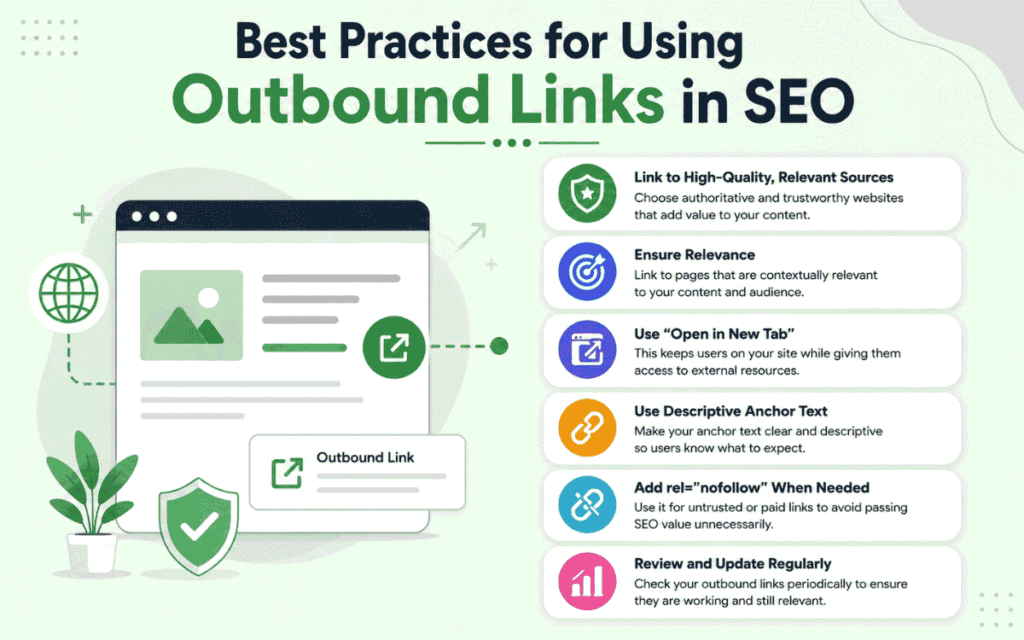
  • Link internally and externally – Internal links build site structure; external links add credibility.
  • Monitor your performance – Use tools to track rankings, click-through rates, and organic traffic regularly.
  • Avoid duplicate content – Make sure your platform doesn’t auto-generate duplicate pages for tags, categories, or archives.

Final Thoughts

How blogging platforms affect website SEO is not a minor detail – it’s a foundational decision that shapes every SEO effort that follows. The right platform gives you the tools to publish fast, optimize deeply, and grow your organic presence over time.

Whether you’re just starting or planning a platform switch, take platform capabilities seriously. Evaluate speed, flexibility, and SEO controls before committing. And once you’ve chosen your platform, make sure every blog post is optimized to its fullest potential.

With the right platform and the right strategy, your blog becomes one of the most powerful assets in your entire SEO arsenal.

Frequently Asked Questions

Q1: Does the blogging platform really affect my Google rankings? 

Yes, significantly. Your platform controls critical technical factors like page speed, URL structure, crawlability, and schema markup support. All of these directly influence how Google evaluates and ranks your content. A poorly optimized platform can hold back even your best blog posts.

Q2: Which blogging platform is best for SEO? 

WordPress is widely considered the best blogging platform for SEO. It offers unmatched flexibility, a powerful plugin ecosystem, and full control over technical settings like meta tags, sitemaps, and structured data. For businesses serious about organic growth, WordPress provides the strongest SEO foundation available.

Q3: Can I do SEO on Squarespace or Wix? 

Yes, but both platforms come with notable limitations. They support basic SEO functions like meta titles and mobile-friendly templates. However, they restrict advanced customizations such as custom schema markup, server-side redirects, and granular URL control. For deeper SEO strategies, these platforms may slow your progress.

Q4: Does blogging on a subdomain hurt SEO? 

It can, and here’s why. Google may treat a subdomain like blog.yoursite.com as an entirely separate website. This means your blog content won’t pass authority back to your main domain. Using a subfolder structure like yoursite.com/blog/ is the safer, more SEO-friendly choice for most websites.

Q5: How often should I publish blog posts for SEO?

Consistency matters far more than posting frequency. Starting with two to four quality posts per month is a strong and sustainable approach. Focus on producing well-researched, valuable content rather than rushing to publish thin articles. Search engines reward consistent, high-quality output over time.

Q6: Can I switch platforms without losing my SEO rankings? 

Yes, but the migration must be handled with great care. You need to implement proper 301 redirects for every URL to preserve your existing rankings and link equity. Maintaining your URL structure as closely as possible also minimizes ranking drops. A poorly executed migration can undo months or even years of SEO work, which is why understanding SEO for a site migration is critical before making any platform switch.

Does Responding to Google Reviews Help SEO?

Google Reviews SEO

If you run a local business, you have likely asked this question at least once. Does responding to Google reviews help SEO – or is it simply good customer service? Most business owners treat review responses as an afterthought. That is a costly mistake.

The truth is, responding to Google reviews sends real signals to Google. It influences where your business ranks in local search, how trustworthy your profile looks, and how often potential customers choose you over a competitor. In this guide, we break down exactly how review responses impact SEO, what the data proves, and how to respond strategically for maximum results.

Why Google Reviews Matter for Local SEO

Before diving into responses, it helps to understand why reviews carry weight in the first place. Google ranks local businesses using three core factors: relevance, distance, and prominence. Reviews – and how actively you engage with them – directly shape your prominence score.

Prominence measures how well-known and trusted your business appears online. It draws from reviews, backlinks, citations, and active engagement signals. A business that consistently gathers and responds to reviews tells Google it is legitimate, active, and customer-focused.

This is why SEO for home service leads almost always includes reputation management as a core pillar. Reviews and responses work together – you cannot fully separate one from the other.

Does Responding to Google Reviews Help SEO? What the Data Shows

Yes – and the evidence is compelling. A study analyzing 5,000 local businesses across 47 industries over 12 months found a clear pattern. Businesses responding to 75% or more of their reviews ranked 2.3 positions higher in local pack results on average. That gap is the difference between page one and page two. It is the difference between getting the call and watching a competitor get it.

Does Responding to Google Reviews Help SEO

Furthermore, response speed matters significantly. Businesses that replied within 24 hours ranked 1.6 positions higher than those that took a week or longer. Here is how the numbers broke down:

Response RateAvg. Local Pack Position
0-25%4.7
26-50%4.1
51-75%3.4
76-100%2.4

The pattern is clear. More responses – and faster responses – equal stronger local rankings. Moreover, most competitors are not doing this. The average response rate across industries sits below 50%. Simply responding consistently puts you ahead of the majority.

How Review Responses Directly Impact SEO

Let us look at the specific mechanisms through which responding to Google reviews helps your search performance.


Turn AI Visibility Into Real Revenue.

Automate Leads With SurgeAIO. Don’t Let AI Ignore Your Brand.

Book A Demo →

1. Fresh Content on Your Business Profile

Google treats your review responses as indexable content. Every reply adds new, relevant text to your Google Business Profile. That text carries freshness signals, keyword context, and semantic relevance – all things Google weighs when ranking local listings.

A profile where your last response was six months ago tells Google your business may be inactive. A profile with weekly replies signals that your business is running and paying attention. Tracking how this engagement compounds over time is exactly what content performance data strategies are built around – active profiles generate stronger authority signals month after month.

2. Engagement Signals That Google Tracks

Google monitors engagement across all its platforms. When you respond to reviews, you confirm that a real, active business operates behind the listing. This distinguishes legitimate businesses from spam or abandoned profiles – something Google weighs heavily when populating local search results.

3. Natural Keyword Integration

Customers naturally use valuable local search terms in their reviews. Phrases like “best dentist in downtown Chicago” or “affordable plumber near me” appear organically in feedback. When you respond thoughtfully, you can mirror those terms naturally.

For example, if a customer writes “Great roofing service in Atlanta,” a reply like “Thank you for trusting us with your roofing needs in Atlanta!” adds keyword context without manipulation. However, avoid stuffing keywords artificially – Google and customers both notice, and it damages credibility. Understanding keywords important for SEO helps you identify exactly which terms are worth reinforcing in your responses.

4. E-E-A-T Trust Signals

Google’s algorithm increasingly weighs E-E-A-T: Experience, Expertise, Authoritativeness, and Trustworthiness. Review responses demonstrate all four. They show that you actively run the business, address customer concerns knowledgeably, and engage honestly with feedback – all qualities Google values in local search results.

5. Improved Click-Through Rates

A Google Business Profile with active, professional responses looks far more trustworthy to users scrolling through results. Businesses that respond consistently see higher click-through rates. Higher CTRs send a positive relevance signal back to Google. One industry estimate suggests a 5–10% improvement in CTR for businesses that maintain active review engagement.

The Impact of Responding to Negative Reviews

Many business owners focus on positive reviews and quietly hope negative ones disappear. That approach backfires. Ignoring negative feedback does more damage than the review itself.

Responding professionally to negative reviews shows both Google and potential customers that your business takes accountability seriously. The same 5,000-business study found that companies responding to negative reviews saw a 12% improvement in overall rating over 12 months. Those who ignored negative reviews saw only a 4% improvement.

Why does this happen? A thoughtful response can prompt the customer to update their review. It also reassures future visitors who see the exchange. They trust a business that handles problems openly far more than one that goes silent. This is also a principle behind what is SEO lead generation – trust drives conversions, and trust is built through every customer touchpoint.

How to Respond to Google Reviews for Maximum SEO Benefit

The right approach combines authenticity with strategic thinking. Here is how to do it well.

How to Respond to Google Reviews for Maximum SEO Benefit

Respond to Every Review – Positive and Negative

Make it a policy to respond to all reviews, not just the ones that feel comfortable. Even a brief, personalised response to a five-star review adds fresh content to your profile and signals engagement to Google.

Respond Within 24 Hours

Speed matters more than most people realise. Set up notifications in your Google Business Profile so you know immediately when a new review arrives. A prompt response demonstrates that your business is active and customer-focused – both of which matter for local rankings.

Personalise Every Response

Generic, copy-pasted responses hurt more than they help. Google can recognise duplicate content, and customers can spot a template instantly. Reference specific details from each review – the service mentioned, the experience described, or the outcome achieved.

For example:

  • Weak: “Thank you for your feedback. We appreciate your support!”
  • Strong: “Thank you, Sarah! We are so glad the deep tissue massage helped with your back pain. Our team specialises in therapeutic relief – we look forward to seeing you again.”

The second response is personal, specific, and naturally contains relevant service keywords. That is exactly the standard to aim for.


Turn AI Visibility Into Real Revenue.

Automate Leads With SurgeAIO. Don’t Let AI Ignore Your Brand.

Book A Demo →

Naturally Include Location and Service Context

When it fits naturally, weave in your location or service category. This reinforces geographic relevance and helps Google connect your profile to specific local searches. Do not force it into every reply – use it where it flows conversationally. Businesses investing in geo-targeting SEO understand that location signals across every touchpoint – including review responses – compound into stronger local authority.

Keep Responses Substantive

Data shows that responses of 50 or more words correlate with better rankings than very short replies. Quality matters more than length, but a thoughtful response that genuinely addresses the reviewer will naturally reach that threshold without padding.

Avoid These Common Mistakes

  • Stuffing responses with repetitive keyword phrases
  • Using an identical template language across multiple reviews
  • Responding defensively or emotionally to criticism
  • Ignoring negative reviews entirely
  • Responding only to five-star reviews and skipping everything else

The Compound Effect: Reviews, Responses, and Rankings

Review responses do not work in isolation. They are part of a broader content and engagement ecosystem. When you respond well, your ranking improves. Better rankings bring more visibility. More visibility drives more customers. More customers leave more reviews. More reviews give you more opportunities to respond and generate fresh content.

This flywheel builds compounding SEO momentum over time. It connects directly to your organic traffic strategies – the stronger your reputation signals, the more Google trusts your profile, and the more consistently you appear for high-intent local searches.

Additionally, review responses work best alongside a fully optimised Google Business Profile. That means complete business information, regular posts, high-quality photos, and consistent NAP data across all platforms. If you are unsure whether to handle this yourself or bring in help, understanding whether you need to hire an SEO company often comes down to how consistently you can dedicate time to each of these moving parts.

Industry Benchmarks: How Does Your Response Rate Compare?

Here is how response rates look across industries, based on the 5,000-business study:

IndustryAvg. Response RateTop Performers
Restaurants34%85%+
Healthcare52%95%+
Home Services28%75%+
Professional Services61%90%+
Retail22%70%+
Hospitality67%95%+

Most industries show a significant gap between the average response rate and what top performers achieve. That gap is your competitive opportunity. If your competitors in home services respond to 28% of reviews on average and you respond to 90%, you hold a consistent SEO advantage. This principle applies across every vertical – whether you are running SEO for wedding planners or managing a multi-location service brand.

How SurgeAIO Can Help in Terms of SEO

Managing review responses is just one piece of a complete local SEO strategy. However, it is a piece that compounds quickly – and SurgeAIO gives you the infrastructure to execute it alongside every other SEO priority.

Here is how SurgeAIO supports your local SEO performance:

  • Local Rank Tracking – Monitor your Google Business Profile rankings in real time. See the direct impact of your review engagement on local pack positions as it happens.
  • Keyword Research and Gap Analysis – Identify the exact terms customers use to find businesses like yours. Naturally incorporate them into review responses and profile content. A solid competitive analysis of keywords reveals exactly which search terms your competitors are winning – and where you have room to take ground.
  • Content Optimisation Tools – Build profile posts, landing pages, and business descriptions that reinforce local keyword signals alongside your review strategy.
  • AI Visibility Monitoring – Track how your brand appears across AI-powered search results, not just traditional rankings. Understanding AI visibility metrics is increasingly important as Google integrates generative AI into local search.
  • Competitor Intelligence – See what your top local competitors are doing with their profiles and reviews. Find the gaps you can exploit before they do.

Turn AI Visibility Into Real Revenue.

Automate Leads With SurgeAIO. Don’t Let AI Ignore Your Brand.

Book A Demo →

Whether you handle your own SEO or manage multiple client accounts, SurgeAIO gives you the data and tools to turn review management into a measurable ranking advantage.

Final Thoughts

Does responding to Google reviews help SEO? The data, Google’s own guidelines, and the experience of thousands of local businesses all point to the same conclusion – yes, significantly.

Review responses add fresh content to your profile, signal active engagement, reinforce local keyword relevance, and build the kind of trust that both Google and customers reward. The businesses sitting at the top of local search results are not there by accident. They respond consistently, respond quickly, and respond thoughtfully.

Start today. Check your current response rate. Reply to any unanswered reviews, beginning with the most recent. Then commit to responding to every new review within 24 hours. That discipline – consistently applied – will put you ahead of most local competitors and build a reputation that drives both rankings and revenue.

Frequently Asked Questions

Q1. Does responding to Google reviews directly affect rankings?

Yes. Review responses influence local search rankings through content freshness, engagement signals, keyword reinforcement, and trust indicators. Studies consistently show that businesses with high response rates outrank those that ignore reviews.

Q2. How quickly should I respond to a Google review?

Within 24 hours is the benchmark for maximum SEO benefit. Businesses responding within that window rank an average of 1.6 positions higher than those who wait a week or more. Set up profile notifications so you never miss a new review.

Q3. Should I respond to negative reviews?

Absolutely. Responding professionally to negative reviews demonstrates credibility, can prompt customers to update their rating, and reassures potential customers who read the exchange. Ignoring negative reviews does more long-term damage than the review itself.

Q4. Can I include keywords in my review responses?

Yes – but naturally. Mention your location and service category when it flows conversationally. Never force keywords artificially, as it signals spam to both Google and customers and undermines your credibility.

Q5. How long should a review response be?

Aim for at least 50 words when possible. Longer, personalised responses correlate with stronger ranking signals than brief one-liners. Focus on quality and relevance first – appropriate length will follow naturally.

Q6. Does responding to reviews matter if I already have a high star rating?

Yes. A high rating with no responses signals a passive business. An active response pattern – even on four- and five-star reviews – tells Google your profile is managed, engaged, and relevant. That consistency drives sustained local rankings.

Q7. Can I use AI tools to help write review responses?

Yes, with the right approach. AI-drafted responses that are personalised, unique, and contextually relevant perform just as well as manually written ones. The key is ensuring each response addresses the specific review. Generic AI templates copied across multiple reviews will dilute the SEO benefit significantly.

Does Google My Business Help SEO? Everything You Need to Know

Google My Business SEO

If you run a local business, you have probably asked this at least once: Does Google My Business help SEO? The short answer is yes – significantly. However, many business owners still treat their Google Business Profile (GBP) as an afterthought. That is a costly mistake.

Google My Business (now officially called Google Business Profile) is one of the most powerful free tools available for local visibility. When optimised correctly, it directly influences where your business appears in local search results, Google Maps, and even AI-generated search overviews.

In this guide, we break down how GMB impacts SEO, what Google looks at when ranking local listings, and what you can do today to get ahead of competitors.

What Is Google My Business (Google Business Profile)?

Google My Business is a free platform that lets business owners manage how they appear on Google Search and Google Maps. You can add your business name, address, phone number, hours, photos, reviews, and posts – all in one place.

When someone searches for a service near them, Google pulls data from these profiles to populate the “local pack” – the top three business listings that appear above organic results. Landing in that local pack can dramatically increase your visibility and foot traffic.

Moreover, this is not just for restaurants or retail shops. Any local business – from law firms and clinics to plumbers and contractors – benefits from a well-maintained profile. Understanding what SEO lead generation means for your business starts with local visibility, and GMB is the foundation of that.

Does Google My Business Help SEO? Here’s What the Data Says

Yes, Google My Business directly helps SEO – especially local SEO. Studies show that 97% of people search online to find local businesses. Furthermore, local searches lead to purchases 28% of the time.

Does Google My Business Help SEO

A complete and active GBP profile signals to Google that your business is relevant, trustworthy, and worth showing to local users. Businesses that optimise their profile consistently outperform those that don’t – both in rankings and in customer engagement.

However, simply creating a profile is not enough. You need to actively manage and optimise it. This is where most businesses fall short.

How Google Ranks Local Business Listings

Google uses three primary factors to determine local rankings. Understanding these factors helps you see exactly how GMB influences your SEO.

1. Relevance

Relevance measures how well your profile matches a user’s search query. The more complete your profile, the easier it is for Google to connect your business with the right searches. This includes your categories, business description, services, and even the keywords in your posts and reviews.


Turn AI Visibility Into Real Revenue.

Automate Leads With SurgeAIO. Don’t Let AI Ignore Your Brand.

Book A Demo →

2. Distance

Google considers how close your business is to the person searching – or to the location they mention. Filling in your service area accurately helps Google recommend you to nearby users even when they don’t type your exact location.

3. Prominence

Prominence reflects how well-known and trusted your business is online. Positive reviews, high-quality backlinks, and consistent citations across directories all contribute to prominence. Additionally, businesses that actively post updates and engage with customers tend to score higher here.

If you want to understand how geo-targeting SEO ties into local search prominence, it is worth exploring how location-based signals work across your entire digital presence.

Key Ways Google My Business Helps SEO

Let’s look at the specific ways a well-optimised GMB profile boosts your search performance.

Improves Local Pack Rankings

An optimised Google Business Profile increases your chances of appearing in the local 3-pack – the prime real estate at the top of local search results. These three listings capture the most clicks and drive significant offline visits.

Drives Organic Traffic

Your GBP profile links directly to your website. When users click through from your listing, it sends positive engagement signals to Google. This, in turn, can improve your organic rankings over time.

Boosts Click-Through Rates

A complete profile – with photos, reviews, hours, and posts – attracts far more clicks than an empty or incomplete one. Listings with 100 or more photos receive significantly more clicks, calls, and direction requests than those without visuals.

Supports AI Local SEO

As AI-powered search grows, Google increasingly pulls structured business data into AI Overviews and generative search results. A well-maintained GBP gives Google the verified, structured information it needs to feature your business in these new formats.

Does Posting on Google My Business Help SEO?

Absolutely. Regular GMB posts are one of the most underused SEO tactics for local businesses. Research shows that fewer than 20% of businesses post on GMB weekly. An even more striking 40% never post at all.

Posting fresh content tells Google that your business is active and engaged. It also gives you additional opportunities to use local keywords, promote offers, and drive customer action. Here is what consistent posting does for your SEO:

  • Reinforces relevance signals – Posts with local keywords help Google understand your service areas.
  • Increases engagement – Posts with images and videos receive more views, clicks, and actions.
  • Keeps your profile fresh – Google favours active profiles over dormant ones.
  • Drives website traffic – Calls-to-action in posts direct users straight to your site.

Think of GMB posts as mini content pieces that compound over time. They work alongside your broader organic traffic strategies to strengthen your overall digital footprint.

How to Optimise Your Google Business Profile for SEO

Now that we have established that GMB helps SEO, here is how to make the most of it.

How to Optimise Your Google Business Profile for SEO

Complete Every Section of Your Profile

Fill out every available field. This includes:

  • Business name, address, and phone number (NAP)
  • Website URL
  • Business hours (including holiday hours)
  • Business description with relevant keywords
  • Products and services list
  • Attributes (e.g., “wheelchair accessible,” “free Wi-Fi”)

An incomplete profile is a missed opportunity. Google rewards completeness with better visibility.

Choose the Right Categories

Your primary category is the single most important field in your profile. It tells Google what your business does. Be specific – choose the most accurate category available, then add secondary categories where relevant.

Avoid stuffing your profile with too many categories. A focused, accurate selection performs better than a broad, vague one.


Turn AI Visibility Into Real Revenue.

Automate Leads With SurgeAIO. Don’t Let AI Ignore Your Brand.

Book A Demo →

Use High-Quality Images Consistently

Photos matter more than most business owners realise. Businesses with photos receive 42% more requests for directions and 35% more website clicks than those without.

Upload images of:

  • Your storefront or office exterior
  • Interior spaces
  • Team members
  • Products or services in action
  • Customer interactions (with permission)

Update your photo library regularly. Fresh images signal an active, credible business.

Gather and Respond to Reviews

Reviews are one of the most powerful ranking signals for local SEO. Positive reviews boost your prominence score and build trust with potential customers.

Ask satisfied customers to leave reviews. Make it easy by sending a direct link to your review section. Then, respond to every review – positive and negative alike. Responding shows Google and potential customers that you are engaged and professional.

This ties directly into broader content performance data strategies – the more your audience engages with your brand, the stronger your authority signals become.

Post Regularly

Aim for at least one or two posts per week. Use different post types to keep things varied:

  • What’s New – Share updates, announcements, or blog posts.
  • Offers – Promote discounts or limited-time deals.
  • Events – Highlight upcoming workshops, webinars, or in-person events.
  • Products – Showcase specific products with images and descriptions.

Include a clear call to action in every post. Phrases like “Learn More,” “Book Now,” or “Call Today” guide users toward the next step.

Keep Your NAP Consistent

Your business name, address, and phone number must match across every online platform – your website, GBP, social media, and other directories. Inconsistencies confuse both Google and users, which can hurt your local rankings.

This consistency is a core principle of SEO for home service leads and applies equally to any industry trying to rank locally.

Enable Messaging and Booking Features

If available for your business type, enable the messaging and booking features on your GBP. These features allow users to contact or book directly from your listing, increasing conversions and engagement – both of which send positive signals to Google.

Common GMB Mistakes That Hurt Your SEO

Even businesses that have a profile often make critical errors. Avoid these:

  • Incorrect business hours – Listing wrong hours frustrates users and damages trust.
  • Ignoring reviews – Failing to respond to negative reviews can cost you future customers.
  • Using a keyword-stuffed business name – Google penalises fake or spammy business names.
  • Neglecting to verify the listing – An unverified profile has limited visibility.
  • Never updating the profile – Stale profiles rank lower than active ones.

How SurgeAIO Can Help in Terms of SEO

Managing your Google Business Profile is just one piece of the local SEO puzzle. To compete effectively, you need a comprehensive strategy – one that covers on-page SEO, content, keywords important for SEO, backlinks, and now AI visibility.

SurgeAIO is built for exactly that. It combines traditional SEO tools with cutting-edge AI visibility features, helping businesses track and improve their performance across Google, AI Overviews, and generative search platforms.

Here is how SurgeAIO can help:


Turn AI Visibility Into Real Revenue.

Automate Leads With SurgeAIO. Don’t Let AI Ignore Your Brand.

Book A Demo →
  • AI Visibility Tracking – Monitor how your brand appears in AI-generated search results, not just traditional rankings. Explore AI visibility metrics to understand where you stand.
  • Keyword Research and Gap Analysis – Identify which keywords your competitors rank for that you do not, then build a strategy to close that gap.
  • Content Optimisation – Use built-in content tools to create SEO-rich articles, landing pages, and GMB posts that align with search intent.
  • Local SEO Intelligence – Track your local pack rankings and get actionable insights to improve your GBP performance.
  • Competitor Analysis – Understand what your top local competitors are doing and where you have the opportunity to outperform them.

Whether you are a small business owner managing your own SEO or an agency handling multiple clients, SurgeAIO gives you the data and tools to make smarter decisions. Understanding what SEO and GEO and how they work together is increasingly essential – and SurgeAIO helps you act on that knowledge at scale.

Final Thoughts

Does Google My Business help SEO? Without question, yes. It is one of the highest-impact, lowest-cost tools available for local search visibility. However, its benefits only materialise when you treat it as an active part of your marketing strategy – not a one-time setup.

Verify your profile, complete every section, post consistently, gather reviews, and keep your information accurate. Do these things well, and your GBP becomes a consistent engine for local traffic, leads, and sales.

Combine that with a platform like SurgeAIO, and you have everything you need to dominate local search – and stay ahead as search itself continues to evolve.

Frequently Asked Questions

Q1. Does Google My Business directly affect Google search rankings?

Yes. A well-optimised Google Business Profile improves your chances of appearing in the local 3-pack and Google Maps results. It also sends trust and relevance signals that can positively influence your broader organic rankings.

Q2. How often should I post on Google My Business?

Aim to post at least once or twice per week. Consistent posting keeps your profile active, which Google rewards with better visibility. Even one post per week puts you ahead of the majority of local businesses.

Q3. Do reviews on Google My Business impact SEO?

Absolutely. The quantity, quality, and recency of reviews all factor into your local ranking. Businesses with more positive reviews and active responses tend to rank higher and convert better.

Q4. Is Google My Business free?

Yes, Google Business Profile is completely free to create and manage. However, the time and strategy invested in optimising it can determine whether it generates results or sits idle.

Q5. Can GMB help my business appear in AI Overviews?

Yes. Google increasingly draws from structured business data – including GBP – to populate AI-generated search answers. Keeping your profile accurate and active increases your chances of being featured.

Q6. What is the most important part of a Google Business Profile for SEO?

Your primary category, business description, and reviews are the most influential elements. However, every completed section contributes to your overall profile strength.

Are Internal Links Good for SEO? Here’s What You Need to Know

Internal Linking for SEO

You’ve probably heard that internal links matter for SEO. But the real question is – are internal links good for SEO in a way that actually moves the needle? The answer is a clear yes. However, placing links randomly across your pages isn’t enough. You need a smart, structured approach.

Internal links connect one page of your website to another on the same domain. They guide your readers, help search engines crawl your content, and distribute ranking authority across your site. When used strategically, they become one of the highest-impact tactics in any SEO plan.

In this guide, we’ll walk through every core benefit, best practice, and mistake to avoid – so you can build an internal linking strategy that actually works.

What Exactly Are Internal Links?

Internal links are hyperlinks that point from one page on your website to another page on the same domain. They are different from external or backlinks, which connect to other websites entirely.

Think of them as roads within your website. Users follow them to find related content. Search engines follow them to discover and index your pages. Without internal links, some of your content may never be found by either.


Turn AI Visibility Into Real Revenue.

Automate Leads With SurgeAIO. Don’t Let AI Ignore Your Brand.

Book A Demo →

There are four common types of internal links:

  • Navigational links – found in your main menu, pointing to core sections of the site
  • Contextual links – embedded naturally within body copy to connect related topics
  • Footer links – placed at the bottom of pages, usually pointing to legal or secondary pages
  • Sidebar links – widget-style links pointing to popular or related articles

Among these, contextual links carry the most SEO weight. They sit within relevant content and pass the strongest topical signals to search engines.

Why Are Internal Links Good for SEO? The Core Benefits

Why Are Internal Links Good for SEO?

1. They Make It Easier for Search Engines to Crawl and Index Pages

Search engine bots like Googlebot discover new pages by following links. If a page has no internal links pointing to it, crawlers may never find it – making it what SEOs call “orphaned content.”

By linking to new or underperforming pages from existing content, you create clear crawl paths. This leads to faster indexing and greater potential for ranking. Naturally, the time it takes for SEO to work can be shortened when internal links make discovery effortless for crawlers.

Moreover, a logical link structure signals to search engines which pages on your site matter most. Pages that receive more internal links are treated as higher-priority.

2. They Distribute Link Equity Across Your Site

Link equity is the ranking authority passed from one page to another through hyperlinks. Your homepage typically earns the most backlinks and therefore holds the most authority.

When you link from your homepage or high-traffic posts to deeper pages, that authority flows through. This helps pages that may not attract many backlinks still gain SEO strength. If you’ve been thinking about how many backlinks you actually need, internal links let you get the most value from the ones you already have.

Therefore, every internal link you place is an opportunity to strengthen a page without waiting for external link building.

3. They Improve User Experience and Reduce Bounce Rates

Visitors who land on your website are looking for answers. Internal links guide them toward more content they care about, naturally extending their session. This reduces bounce rate and increases pages per session – both signals that search engines use to evaluate quality.

For example, someone reading about organic traffic might click through to a related article on organic traffic strategies for SaaS businesses. That single click keeps the user engaged, increases trust, and signals content value to search engines.

In addition, a well-linked site feels more professional. Readers are more likely to convert when they can navigate your site smoothly.

4. They Build Topical Authority Through Content Clusters

Search engines reward websites that demonstrate deep expertise across a topic. Internal linking helps you build what’s known as a topic cluster – a network of related pages anchored by one central pillar page.

When you cover a subject through multiple interconnected articles, you signal to search engines that your site is an authoritative source. This is especially important for content performance data, where demonstrating depth across a topic directly impacts how well your pages rank.

Moreover, this cluster approach helps AI-driven search systems understand the relationships between your pages and surface them in relevant results.


Turn AI Visibility Into Real Revenue.

Automate Leads With SurgeAIO. Don’t Let AI Ignore Your Brand.

Book A Demo →

5. They Clarify Context Through Anchor Text

Anchor text – the clickable phrase in a hyperlink – tells both users and search engines what the linked page covers. Descriptive anchor text like “best SEO practices for physiotherapy clinics” is far more valuable than vague terms like “learn more” or “click here.”

When you use keyword-rich, natural anchor text, you reinforce the relevance of the destination page for specific search queries. This is one area where internal links give you full control – unlike external backlinks, you choose the anchor text every time.

However, keep anchor text varied and natural. Over-optimizing with the same phrase repeatedly can raise red flags with search engines.

How Internal Links Shape Your Site Architecture

Internal linking isn’t just a technical checkbox – it’s a structural decision that shapes how your entire website is understood.

How Internal Links Shape Your Site Architecture

Build Content Hubs Around Core Topics

The most effective internal linking approach uses a hub-and-spoke model. One comprehensive pillar page covers a broad topic. Cluster pages explore specific subtopics in depth, and all link back to the pillar.

This creates a clear hierarchy that search engines value. It also makes your site easier for users to navigate and explore. Understanding what elements are foundational for SEO with AI helps you plan these hubs around topics that align with both traditional and AI-driven search behavior.

Identify and Fix Orphaned Pages

Run regular audits to find pages with no internal links pointing to them. These pages miss out on link equity and are often ignored by crawlers entirely. Once identified, add links from contextually relevant existing articles.

This is one of the fastest, highest-impact SEO fixes available – and it costs nothing beyond time and attention.

Prioritize Your Most Important Pages

Not every page deserves equal attention. Your key service pages, product pages, and cornerstone articles should consistently receive the most internal links. This tells search engines they are central to your site’s purpose.

However, always link naturally. Forcing links into unrelated content only dilutes your site structure and confuses readers.

Common Internal Linking Mistakes to Avoid

Even well-intentioned internal linking can cause problems if handled incorrectly. Here are the most common mistakes to watch for:

  • Generic anchor text – phrases like “read more” or “click here” give search engines zero context
  • Over-linking on a single page – too many links dilute the value each one passes
  • Ignoring older content – older high-authority articles should regularly link to newer pages
  • Linking to irrelevant pages – always match the link to the topic being discussed
  • Broken internal links – dead links damage both crawlability and user experience

Furthermore, adding links purely to increase link count is never a good strategy. Every internal link must add genuine value to the reader’s journey.

Best Practices for a Strong Internal Linking Strategy

Building an effective internal link network doesn’t require a technical background. Follow these proven practices to get it right:

Best Practices for a Strong Internal Linking Strategy

  • Map your content structure first – know which pages are pillar pages and which are supporting content
  • Use descriptive, keyword-aligned anchor text – help both readers and crawlers understand the destination
  • Link deep, not just to your homepage – guide users to specific, useful pages
  • Update older content regularly – add links to new pages from established, high-authority articles
  • Keep link counts reasonable – aim for 3-10 contextual links per article, focused on quality
  • Fix broken links consistently – schedule regular crawl audits to keep your link structure healthy

Additionally, think about your reader’s next logical question as you write. Asking “what would someone naturally want to explore next?” often reveals the most natural place to add an internal link.

For sites running digital marketing for distributors or complex B2B operations, internal linking also plays a key role in moving prospects through content that matches their buyer stage – from awareness to decision.

How SurgeAIO Can Help in Terms of SEO

Managing internal links manually across a growing website becomes difficult quickly. That’s exactly where SurgeAIO makes a real difference.

SurgeAIO is an AI-powered SEO platform built to help businesses identify linking opportunities, track keyword performance, and build site structures that search engines trust. Here’s specifically how it helps with internal linking:

Site Crawl and Audit: SurgeAIO crawls your site to surface orphaned pages, broken internal links, and pages that receive too few or too many inbound links. You get a complete picture of your internal link health in one place.


Turn AI Visibility Into Real Revenue.

Automate Leads With SurgeAIO. Don’t Let AI Ignore Your Brand.

Book A Demo →

Topical Gap Analysis: The platform identifies content gaps based on your existing pages and keyword targets. This helps you plan new cluster content that connects naturally to your current pillar pages.

AI-Powered Link Recommendations: SurgeAIO analyzes your content and recommends which pages should link to each other based on topical relevance and keyword alignment. You stop guessing and start linking with purpose.

Rank Tracking After Implementation: Once you apply a new internal linking strategy, SurgeAIO tracks how your keyword positions respond. You can clearly see which changes are improving rankings.

AI Visibility Optimization: With search moving toward AI-generated results, SurgeAIO also helps you improve your AI visibility optimization techniques so your content appears in AI Overviews and gets cited by tools like ChatGPT and Perplexity.

In short, SurgeAIO removes the guesswork and replaces it with data, giving you a foundation to build stronger SEO faster.

Internal Links and AI Search: Why They Matter Even More Now

Search behavior is evolving rapidly. Google’s AI Overviews, ChatGPT, and similar tools now surface direct answers in response to queries. However, internal linking still plays a vital role – perhaps more than ever.

AI search systems rely on structured, well-connected content to understand what a website covers and how deeply it covers it. A clear internal link structure helps these systems recognize your site as a contextually rich, credible source. This increases the chance that your content gets referenced in AI-generated answers.

In fact, if you’re actively trying to show up in AI overviews, a strong internal link network combined with topical depth and quality content is one of the most reliable approaches available today.

Internal links give AI crawlers a roadmap – helping them understand your expertise, the breadth of your coverage, and how each piece of content connects to specific user queries.

Final Thoughts

So, are internal links good for SEO? Without question. They help search engines index your pages, distribute authority, strengthen topical relevance, and keep users engaged longer. They are one of the few SEO tactics that benefit both your visitors and your rankings at the same time.

The key is intention. Map your content structure, use clear and descriptive anchor text, update older articles regularly, and audit your links consistently. When combined with strong content and a focused keyword strategy, internal links become one of your most reliable ranking tools.

Platforms like SurgeAIO make the entire process smarter – giving you the insights to link strategically and the data to measure real results. Start building your internal link network today, and watch your site’s authority compound over time.

Frequently Asked Questions

Q1: How many internal links should I include per page? 

There’s no fixed number, but 3-10 contextual internal links per article is a practical range for most sites. Always prioritize relevance over quantity. Too many links can overwhelm readers and dilute their SEO value.

Q2: Do internal links directly improve search rankings? 

Yes. Internal links help search engines discover pages, pass link equity, and understand your site structure – all of which directly influence how individual pages rank in search results.

Q3: What makes good anchor text for internal links? 

Use descriptive, keyword-relevant phrases that clearly describe the destination page’s topic. Avoid generic phrases like “click here.” Vary your anchor text naturally to avoid appearing manipulative.

Q4: Should I also link out to external websites? 

Yes. Linking to credible external sources adds trust signals and value for readers. Make sure those links open in a new tab so users remain on your site.

Q5: How often should I audit my internal links? 

Conduct a full audit every 3-6 months. Additionally, whenever you publish new content, update relevant older articles to include a link to the new page.

Q6: Can bad internal linking hurt SEO? 

Poor internal linking – such as using irrelevant anchor text, over-linking, or creating circular link loops – can confuse search engines and frustrate users. Done correctly, internal links always deliver a positive SEO impact.

Q7: What is a pillar page, and why does it matter for internal linking? 

A pillar page is a comprehensive article covering a broad topic. Cluster pages – focused articles on related subtopics – link back to them. This hub-and-spoke model signals topical authority and strengthens rankings across the entire cluster.

New York Medical SEO Marketing: The Complete Guide for Healthcare Practices

New York Medical SEO

If you run a medical practice in New York, you already know the competition is intense. Thousands of doctors, clinics, specialists, and hospitals compete for the same patients – often in the same zip code. New York medical SEO marketing is the strategy that separates practices that grow from those that stay invisible.

This guide breaks down exactly what medical SEO means in the New York market, why it matters more here than anywhere else, and how to build a strategy that consistently brings new patients through your door.

What Is New York Medical SEO Marketing?

New York medical SEO marketing is the practice of optimizing your healthcare website – and your entire online presence – so that patients in New York City and the surrounding metro area find you first on Google, Bing, and AI-powered search tools.

It combines traditional SEO for home service leads principles with healthcare-specific strategies. This includes medical keyword research, local citations, content authority, and technical site health.

However, medical SEO is not generic SEO. It requires expertise in HIPAA compliance, Google’s YMYL (Your Money Your Life) guidelines, and the trust signals patients look for before booking an appointment. Therefore, your strategy must be built specifically for a healthcare audience – not repurposed from a general business playbook.

Why New York Is a Uniquely Competitive Healthcare Market

New York City is home to over 8 million residents and draws millions more from New Jersey, Long Island, Westchester, and Connecticut. Patients have access to world-class hospitals, solo practitioners, boutique clinics, and telehealth providers – all competing for attention.

New York Is a Uniquely Competitive Healthcare Market

Moreover, patients in New York are digitally savvy. They search online before they call. They read reviews before they book. They compare multiple providers before they commit. If your practice does not appear on page one of Google, those patients simply go to a competitor.

This is why understanding what is SEO lead generation matters so much for healthcare providers in this market. Organic visibility is not a nice-to-have – it is the primary driver of new patient acquisition for most practices.

The Core Pillars of Medical SEO in New York

1. Local SEO and Google Business Profile Optimization

Local SEO is the foundation of any New York medical SEO marketing strategy. Patients searching “cardiologist near me” or “dermatologist in Brooklyn” are ready to book. You need to show up in those results.

Key local SEO actions include:

  • Claiming and fully optimizing your Google Business Profile
  • Ensuring your NAP (Name, Address, Phone) is consistent across all directories
  • Building citations on Healthgrades, Zocdoc, WebMD, and Yelp
  • Generating and responding to patient reviews consistently
  • Adding location-specific landing pages for every borough or neighborhood you serve

AI local SEO is also becoming a major factor. AI-powered search tools increasingly pull local results from structured data and trusted directories. Therefore, ensuring your listings are accurate and complete is more important than ever.

2. Medical Keyword Research and Search Intent

Effective New York medical SEO marketing starts with the right keywords. However, keyword volume alone does not determine value. You need to understand search intent – what the patient actually wants when they type a query.

For example, someone searching “symptoms of appendicitis” is in research mode. Someone searching “emergency surgeon in Manhattan” is ready to act. Your content strategy must serve both – but your highest-priority pages should target high-intent, service-specific queries.


Turn AI Visibility Into Real Revenue.

Automate Leads With SurgeAIO. Don’t Let AI Ignore Your Brand.

Book A Demo →

A strong keyword approach for a New York medical practice includes:

  • Primary service keywords: “orthopedic surgeon New York,” “pediatrician Brooklyn”
  • Condition-based keywords: “knee pain treatment NYC,” “diabetes management Manhattan”
  • Comparative keywords: “best cardiologist in Queens,” “top-rated dermatologist near me”
  • Long-tail queries: “What to expect after hip replacement surgery in New York”

Understanding competitive analyses of keywords helps you identify gaps your competitors have missed – and rank faster by targeting lower-competition, high-intent terms.

3. On-Page SEO for Healthcare Websites

On-page SEO ensures each page on your website is built to rank and convert. For medical practices, this means more than just adding keywords. It means building pages that demonstrate Expertise, Authoritativeness, and Trustworthiness – the three pillars of Google’s E-E-A-T framework for healthcare content.

Every core service page and location page should include:

  • A clear, keyword-rich H1 heading
  • Descriptive meta title and meta description
  • Structured content that answers patient questions directly
  • Physician credentials and bios linked from service pages
  • Schema markup for medical providers, FAQs, and local business data

In addition, your website must load fast, render correctly on mobile devices, and meet Google’s Core Web Vitals standards. A slow, poorly structured medical site will not rank – regardless of how good the content is.

4. Content Marketing That Builds Authority

In the New York healthcare market, content marketing is one of the most powerful long-term tools available. Publishing informative, medically accurate blog posts, FAQs, and patient guides builds trust with both search engines and prospective patients.

Think about what your patients search for before they call you. A pain management clinic in Manhattan might publish content on topics like “when to see a doctor for lower back pain” or “non-surgical treatment options for herniated discs.” Over time, this content attracts consistent organic traffic and establishes the practice as a trusted authority.

Moreover, content supports SEO services for organic traffic over the long run. Unlike paid ads that stop the moment you pause your budget, well-optimized content compounds in value – attracting patients month after month without additional spend.

5. Link Building and Off-Page Authority

Google treats backlinks as votes of confidence. For medical practices in New York, earning links from local news outlets, medical associations, hospital networks, and health publications can significantly boost domain authority.

However, link quality matters far more than volume. A single link from the New York Times health section or the American Medical Association is worth more than dozens of links from low-quality directories.

To learn more about how many backlinks you realistically need, and what quality thresholds matter at different stages of growth, explore how many backlinks do I need for a detailed breakdown.

6. Technical SEO for Medical Websites

Technical SEO ensures search engines can crawl, index, and understand your site correctly. For healthcare websites, technical issues are surprisingly common – especially on older practice management systems or legacy sites built without SEO in mind.


Turn AI Visibility Into Real Revenue.

Automate Leads With SurgeAIO. Don’t Let AI Ignore Your Brand.

Book A Demo →

Key technical SEO priorities for medical practices include:

  • Fixing broken internal links and redirect chains
  • Submitting an accurate XML sitemap to Google Search Console
  • Implementing canonical tags to prevent duplicate content issues
  • Ensuring HTTPS is active across all pages
  • Optimizing image alt text with descriptive, keyword-relevant descriptions
  • Adding structured data (schema markup) for medical providers, reviews, and services

The Role of AI Search in New York Medical SEO Marketing

AI-powered search is changing how patients find healthcare providers. Tools like Google’s AI Overviews, ChatGPT, Perplexity, and Gemini increasingly answer health-related questions directly – and they cite specific sources and providers.

The Role of AI Search in New York Medical SEO Marketing

This shift makes it essential for New York medical practices to optimize not just for traditional Google rankings but also for AI visibility optimization techniques. Practices that appear in AI-generated answers gain enormous trust and visibility advantages over those that do not.

To show up in AI-powered results, your content needs to:

  • Answer specific patient questions directly and clearly
  • Use structured formatting (headers, bullets, FAQs)
  • Demonstrate medical authority through physician credentials and citations
  • Be published on a technically sound, well-linked website

In addition, understanding what is LLM in SEO gives medical marketers a clearer picture of how large language models select sources – and what it takes to become a consistently cited resource.

Common Mistakes New York Medical Practices Make with SEO

Even well-funded practices make avoidable errors. Here are the most common ones:

  • Targeting the wrong keywords: Focusing on high-volume terms with no realistic chance of ranking, instead of precise, high-intent local queries.
  • Neglecting local SEO: Not optimizing Google Business Profile or ignoring patient reviews – both of which heavily influence local rankings.
  • Thin service pages: Creating one generic “services” page instead of individual, detailed pages for each specialty or treatment.
  • Ignoring mobile performance: Most patients search on smartphones. A site that performs poorly on mobile loses rankings and patients simultaneously.
  • No content strategy: Publishing inconsistently or not at all, leaving competitors to capture all the informational search traffic.
  • Over-relying on paid ads: PPC drives immediate traffic, but it stops the moment you stop paying. SEO builds lasting value that compounds over time.

How SurgeAIO Can Help in Terms of SEO

SurgeAIO is built for businesses and healthcare practices that want to compete at the highest level – without wasting budget on guesswork. For New York medical practices, SurgeAIO delivers a complete SEO and AI visibility platform that addresses every layer of your digital marketing strategy.

Here is what SurgeAIO brings to the table for medical SEO:


Turn AI Visibility Into Real Revenue.

Automate Leads With SurgeAIO. Don’t Let AI Ignore Your Brand.

Book A Demo →
  • AI-powered keyword research that identifies high-intent, low-competition medical queries specific to your specialty and location
  • Content performance tracking so you know exactly which pages are driving patient inquiries and which need improvement – aligned with content performance data best practices
  • AI visibility monitoring to track whether your practice appears in AI-generated answers on ChatGPT, Google AI Overviews, Perplexity, and other platforms
  • Competitive analysis tools that show you exactly what your top-ranking New York competitors are doing – and where they are vulnerable
  • On-page optimization recommendations delivered in actionable, prioritized reports that your team can implement immediately
  • Local SEO support to improve your Google Business Profile rankings and citation consistency across all major healthcare directories

Furthermore, SurgeAIO helps medical practices stay ahead of the curve as search evolves. Whether it is adapting to Google algorithm updates or ensuring your content surfaces in AI-powered search results, SurgeAIO gives you the data and tools to make smart decisions – not reactive ones.

For practices serious about growing their patient base through organic search, SurgeAIO is not just a tool – it is a competitive advantage.

Building a Long-Term Medical SEO Strategy in New York

SEO is not a one-time project. It is an ongoing investment that builds compounding returns over time. The practices that dominate Google in their specialty did not get there overnight – they built authority consistently, month after month.

A realistic timeline for New York medical SEO marketing looks like this:

  • Months 1-3: Technical fixes, local SEO setup, foundational content creation, and keyword targeting
  • Months 4-6: Rankings begin improving for lower-competition terms; traffic starts growing
  • Months 7-12: Competitive keywords move to page one; patient inquiries from organic search increase noticeably
  • Year 2 and beyond: Compounding growth as domain authority rises and content library expands

The key is consistency. Practices that publish high-quality content regularly, build links steadily, and monitor their performance with the right tools outperform competitors who treat SEO as a one-time task.

Final Thoughts

New York is one of the most competitive healthcare markets in the world. Patients have options – and they research those options online before making a single phone call. New York medical SEO marketing gives your practice the visibility, authority, and trust signals needed to win that search moment.

The practices that invest in a structured, data-driven SEO strategy today will dominate their specialties in the years ahead. The ones that wait will find themselves spending more on paid ads to catch up with competitors who built organic authority while they hesitated.

Start with a clear strategy, focus on the right keywords, publish content your patients actually need, and use the right tools to measure and refine your efforts. Done consistently, medical SEO is the highest-ROI marketing investment a New York practice can make.

Frequently Asked Questions

Q: How long does it take to see results from medical SEO in New York? 

Most practices begin seeing meaningful improvements in rankings and traffic within 4-6 months. However, competitive specialties in dense markets like Manhattan may take 9-12 months to reach page one for their primary keywords.

Q: Is SEO better than paid advertising for medical practices? 

Both have a role. Paid ads (PPC) deliver immediate traffic but stop when the budget runs out. SEO builds lasting visibility that compounds over time. Most successful New York practices use both PPC for immediate patient acquisition and SEO for long-term, cost-efficient growth.

Q: Do I need separate SEO strategies for each borough in New York? 

Yes, ideally. If your practice serves patients across multiple boroughs – say, Brooklyn, Queens, and Manhattan – you should create dedicated location pages for each area. This allows you to rank for location-specific searches in each neighborhood.

Q: How does Google’s E-E-A-T affect medical website rankings? 

Google applies strict quality standards to healthcare content because it directly impacts people’s health decisions. Websites that demonstrate Experience, Expertise, Authoritativeness, and Trustworthiness rank significantly better. This means featuring physician credentials, linking to credible medical sources, and publishing accurate, well-researched content.

Q: Can AI-generated content hurt my medical website’s SEO? 

AI-generated content is not inherently bad, but low-quality, generic, or medically inaccurate AI content can absolutely harm your rankings and your reputation. The key is using AI as a writing tool while ensuring all content is reviewed, fact-checked, and enhanced by qualified medical professionals.

Q: What is the most important local SEO factor for New York medical practices? 

Your Google Business Profile is the single most important local SEO asset. A fully optimized, actively managed GBP with accurate information, regular posts, and consistent patient reviews significantly improves your visibility in local map results – which is often the first thing patients see when searching for a doctor.

Your Blog Post
↗ ZERO RISK
Free SEO + Content (30 Days)

No cost. See results first.